A journey from one modern signature scent into five thousand years of Indian perfumery.
01
Shah Rukh Khan's much-discussed blend of Diptyque and Dunhill is not just a celebrity detail. It is a doorway into an older Indian instinct: to remember identity, ritual, power, and place through fragrance.
Begin the trail
A superstar's signature fragrance feels modern, but the impulse behind it is ancient. India has long treated scent as memory made visible.
The spark
It begins with an arresting contrast: a Bollywood icon, perfume bottles, and an archaeological vessel. Recognition draws us in, then quietly reveals that celebrity scent-making has a civilizational echo.
Yes, you read that right.
Our ancestors were masters of aroma, blending natural essences long before fragrance became a global lifestyle language.
3300 BCE – 1300 BCE
Before perfume was luxury, it was technology.
Imagine walking through the bustling streets of the Indus Valley Civilization, where the air is filled with the scents of exotic spices and fragrant oils. It is like stepping into an ancient marketplace brimming with the world's earliest perfumes.
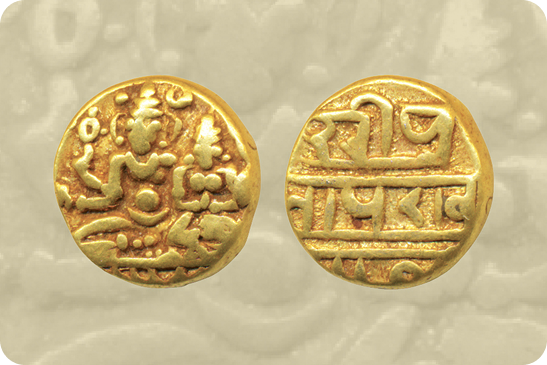
The story deepens with evidence: a terracotta distillation apparatus and oil containers uncovered in western and north-western India, pointing to a culture already experimenting with extraction, storage, and aroma.
Archaeology becomes scent memory.
Carbon-dated discoveries around 3000 BCE suggest that perfume-making in India was not a late luxury. It was part of an early material intelligence.
The Rig Veda, one of the oldest texts in the world, mentions the word "sugandhi," meaning "well perfumed."
The fascination with scents does not stop there. Expressions involving "gandha," meaning fragrance, appear through the Taitriya Samhita, Maitrayani Samhita, Satapata Brahmana, and Taitriya Aranyaka.
In Ayurvedic traditions such as the Charaka Samhita and Sushruta Samhita, perfume is more than adornment. It becomes connected to charm, vitality, pleasure, medicine, and courtly life.
The Brihat Samhita
The ancient laboratory of scent.
Varaha Mihira's Brihat Samhita turns fragrance into a system. The trail moves from manuscript to workshop: text, ingredients, extraction, process, and transformation.
He does not simply list sandalwood, musk, camphor, spices, and herbs. He describes a disciplined craft of extracting essential oils and harmoniously blending them into fragrant substances.
04Perfume WorkshopProcess and transformation
The workshop as ritual and science.
01
Bhavanam
Infusion
02
Pacanam / Paka
Cooking or decoction
03
Bodhah
Awakening or extraction
04
Vedhah
Penetration or infusion
05
Dhupanam
Fumigation
06
Vasanam
Perfumation
The royal harems
Fragrance becomes courtly power.
During the Sultanates and Mughal period, perfumes known as 'itra,' 'ittar,' or 'attar' were lavishly used in royal harems.
Queen Noorjahan is famously rumored to have crafted a unique 'itra' blending over 50 rose essences with five types of sandalwood oils.
05Royal Court SceneMughal fragrance culture
Courtly fragrance visual placeholder.
This era saw a flourishing trade that carried Indian fragrances into Iran, Egypt, Turkey, the Arab world, and Afghanistan.
IranEgyptTurkeyArab worldAfghanistan
SPThe living archive
Kannauj keeps the fragrance alive.
Today, Kannauj is renowned worldwide for its distinctive attars and perfumes. The city has gained international acclaim for producing these fragrances on an industrial scale while still preserving the traditional hydro-distillation process.
Place
A city known for translating flowers, herbs, woods, and earth into aroma.
Method
Hydro-distillation remains the bridge between ancient technique and contemporary perfume-making.
Memory
The scent is not only worn. It is inherited, traded, gifted, and remembered.
This legacy, born from the ingenuity of our ancestors, proves that perfume-making is not just a modern trend, but a timeless tradition rooted in our cultural DNA.
Hassan is the most convenient base for an overnight stay, offering a variety of heritage hotels, guest houses, and budget accommodations. For those seeking a closer experience, KSTDC Hotel Mayura Shantala in Halebidu provides comfortable rooms right at the doorstep of the temple.
By Road
Halebidu is excellently connected by road. Regular KSRTC (State) buses and private operators run from Bangalore, Mysore, and Hassan. If driving from Bangalore, take the NH75 toward Hassan; the scenic route offers a deep dive into the Karnataka heartland.
By Train
The closest railhead is Hassan Railway Station (27 km). It is well-connected to major cities like Bangalore, Mysore, and Mangalore. From the station, frequent local buses and private taxis are available for the short journey to the temple site.
By Air
The nearest airport is Mangalore International Airport (168 km). Bengaluru Airport (230 km) is another convenient option. Taxis and buses are available to Halebidu.
Experience the Local Flavors
The culinary landscape of Halebidu reflects the rich agricultural heritage of Karnataka’s heartland. Savour the authentic taste of Bisi Bele Bath, a spicy, comforting blend of rice, lentils, and vegetables, or the iconic Jolada Rotti, a hearty sorghum flatbread served with piquant brinjal curry. These traditional dishes have sustained the people of the Hoysala region for generations, offering a true taste of local history.
No visit to this historic region is complete without indulging in the famous Mysore Pak, a melt-in-the-mouth sweet made from gram flour and ghee. Pair your meal with a cup of strong Filter Coffee, brewed from locally sourced beans from the nearby Chikmagalur hills. These flavours are more than just food; they are a celebration of the vibrant culture and warm hospitality that define the modern spirit of the ancient Hoysala capital.
F
Fairs & Festivals
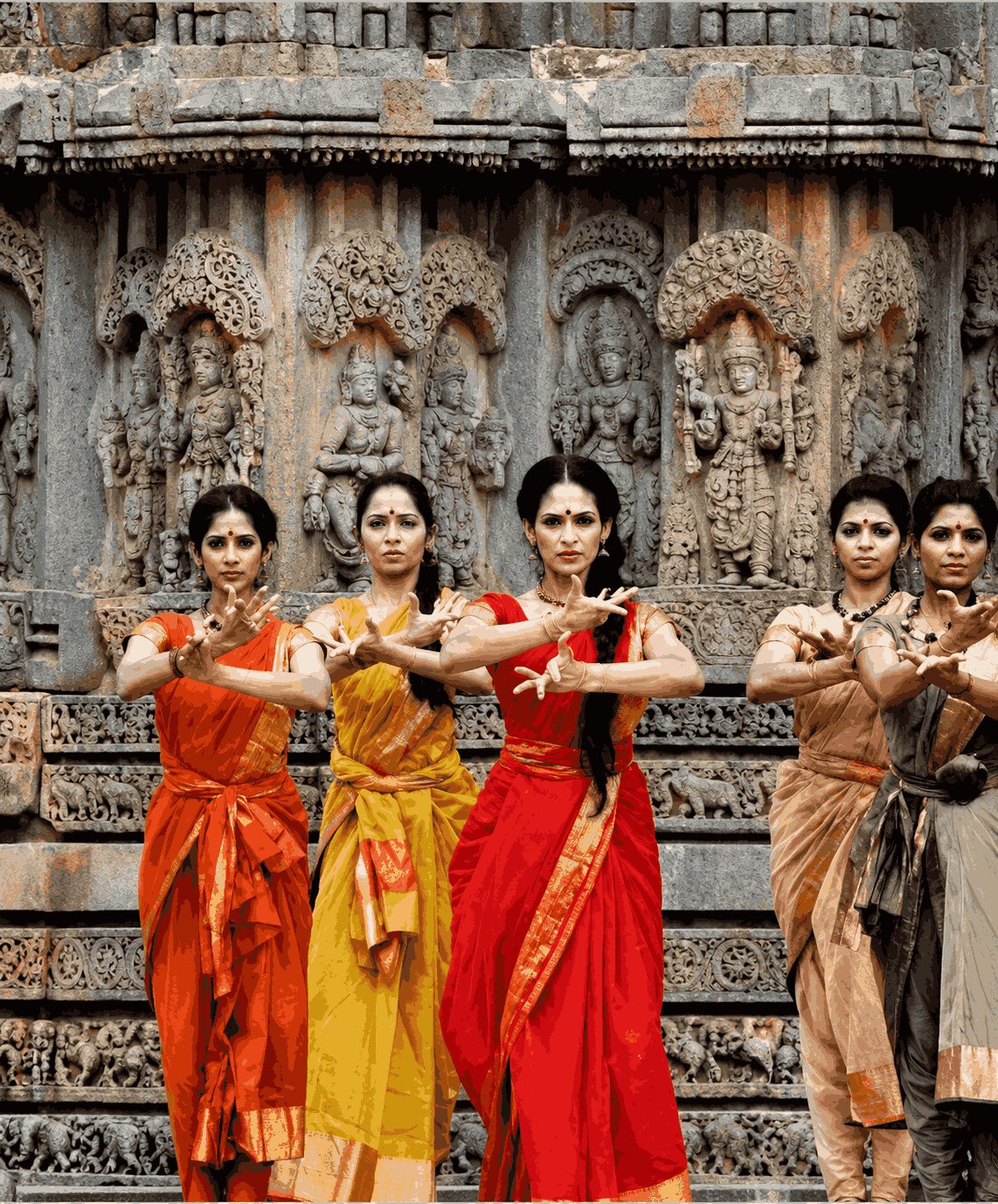
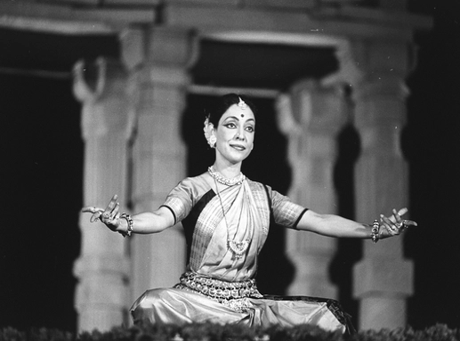
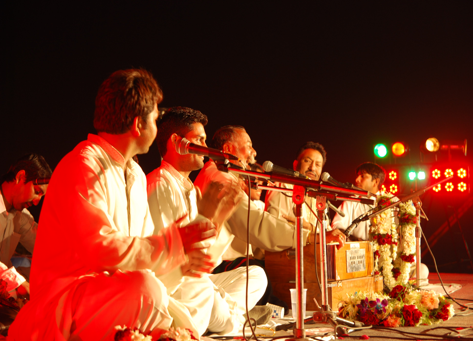
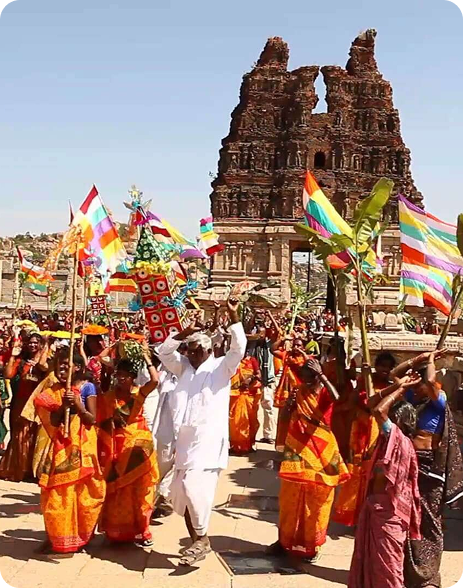
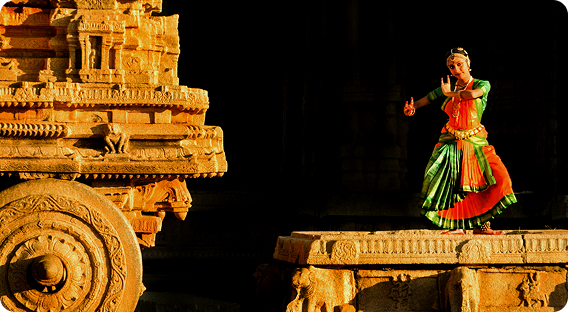
The Hoysala Mahotsava is the principal festival celebrated in Halebidu. It is a vibrant festival of dance and music held in the magnificent setting of the Hoysala temples of Belur and Halebid in Karnataka. The festival takes place in the month of March or April.
The Mahotsava showcases grand Hoysala temples amidst their architectural splendour and features Indian classical dance forms, Carnatic music, and diverse art forms performed by renowned artists from across India. It is a magnificent celebration of living heritage.
Photography of the Hoysala Mahotsava is most welcomed — visitors are invited to share their images to help document and promote this cultural event.
Art and Craft Enthusiast
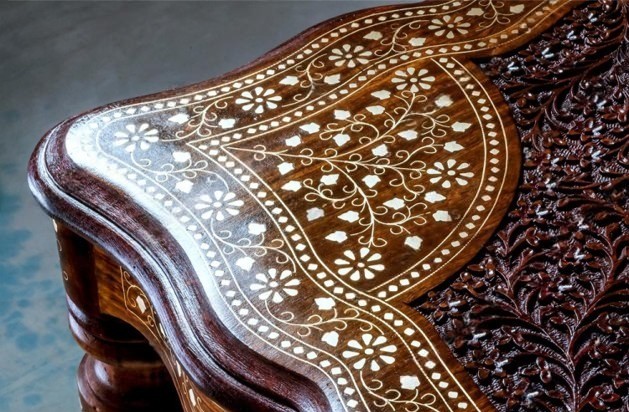
Mysore wooden inlay work is a stunning traditional art form from Karnataka, India. These exquisite creations are traditionally crafted in rosewood, yellow wood, and ebony — carved out and filled with sandalwood inlay. The finished pieces are then painted in gold and silver and plastic-coated with hydrogen peroxide for preservation.
The designs depict scenes of nature, mythology, and daily life executed with meticulous precision. The resulting artwork adorns furniture, wall panels, and paintings, bringing timeless elegance to any space.
Remember — support local crafts and artists who preserve the beauty of our heritage through years of hard work and training!
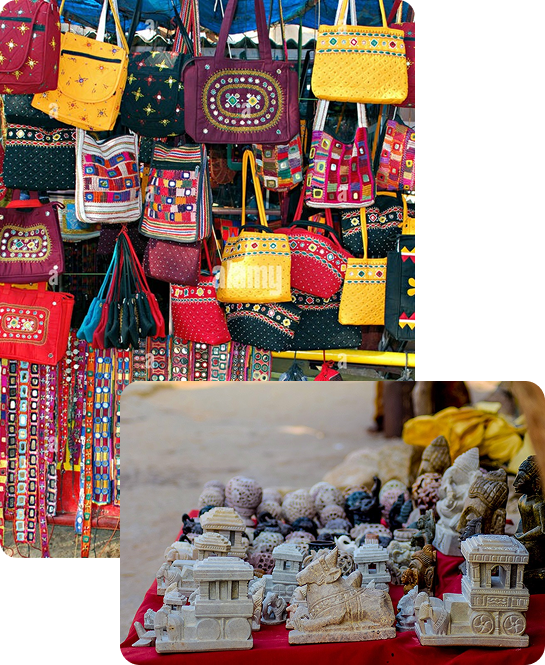
Where to Shop
Cauvery Handicrafts Emporium
Sayyaji Rao Road, Mysore
H
D
Delicacies
Bisi Bele Bath, a signature rice dish of Karnataka, is a staple of local menus. This wholesome meal is typically prepared with a spicy blend of lentils, rice, and assorted vegetables. Cooked to a soft consistency with generous ghee, it is served piping hot and often accompanied by khara boondi or potato chips. It is a hearty and satisfying meal enjoyed by people of all ages.
Mysore Pak, a legendary sweet, is a rich and indulgent treat featuring gram flour, sugar, and a significant amount of ghee. Originating from the royal kitchens, it has a soft, melt-in-the-mouth texture that is highly addictive. It is often enjoyed during festivals or as a sweet conclusion to a traditional meal and is a popular choice among both locals and visitors to the region.
Jolada Rotti is a classic North Karnataka dish that has become synonymous with the region’s rustic food scene. It consists of unleavened sorghum bread (rotti) served alongside piquant brinjal curry (ennegayi). The rottis are hand-patted and cooked on a griddle, resulting in a flavorful and healthy dish. Paired with spicy chutneys and fresh onions, it is a satisfying meal that is enjoyed especially for lunch or dinner.
Plan ahead with real-time weather updates! Check today’s conditions, along with past and upcoming forecasts, to ensure a comfortable and safe trip.
Emergency Contacts
Save these essential helpline numbers for a worry-free journey:
National Emergency Helpline
112
Police
100
Ambulance
108
Tourist Helpline
1363
Women’s Helpline
1091
Tips & Suggestions
✔Dress Comfortably: Wear weather-appropriate clothing and footwear, especially at sites requiring long walks. ✔ Stay Hydrated: Carry water, especially in hot climates. ✔ Respect Local Norms: Follow dress codes and site-specific regulations. ✔ Cash & Connectivity: Keep some cash for entry fees or local purchases; internet signals may be weak in remote areas. ✔ Navigation Ready: Download offline maps and save important contact details. ✔ Safe Exploration: Avoid isolated areas after dark and always be aware of your surroundings
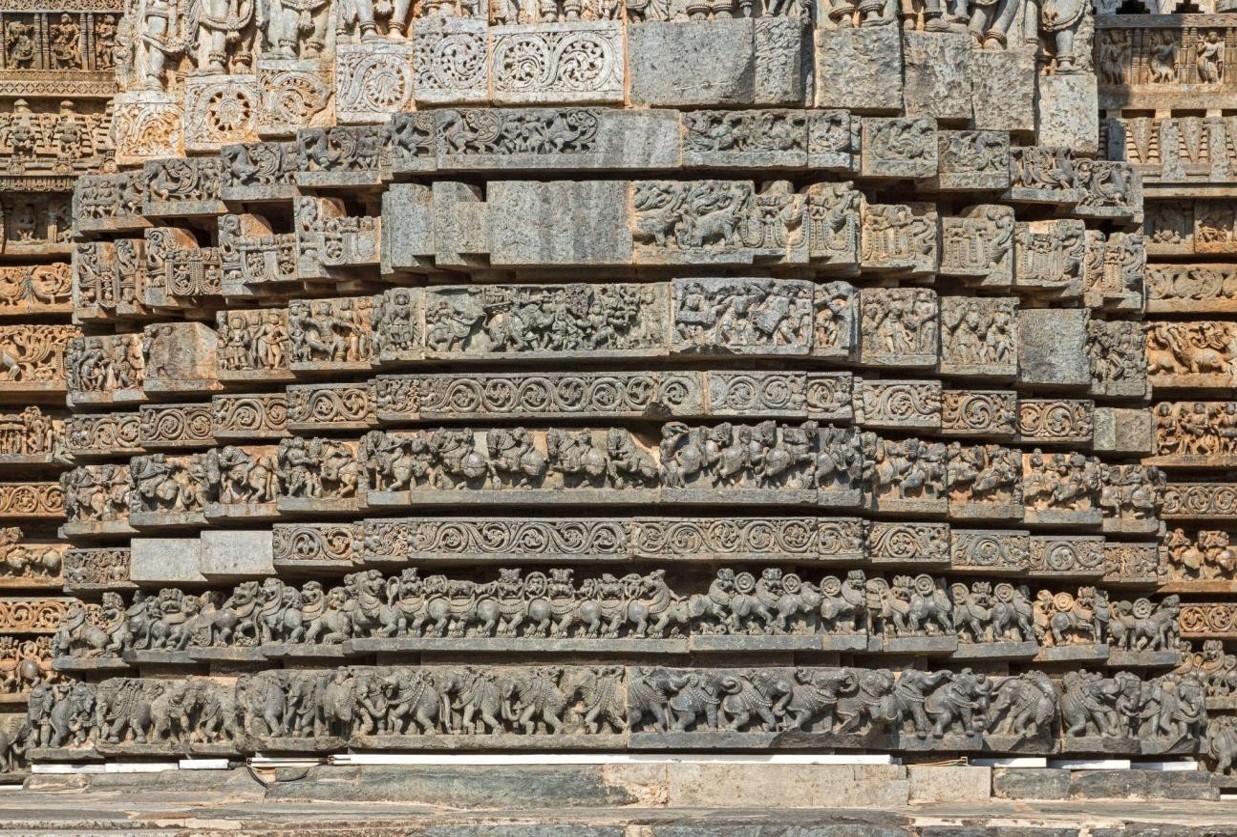
The animal friezes at Hoysaleshwara extend for over 700 feet of outer wall and carry more than 2,000 individual animal carvings.
These are not decorative fill. Each animal is observed, characterized, and imbued with symbolic register.
The Foundation
Elephants
& Lions
Slide 1 Heading
Slide 2 Heading
Slide 3 Heading
The elephants that form the lowest band march with a joyful energy—ears spread, trunks in various attitudes, bodies in motion.
Elephants in the Hoysala symbolic vocabulary carry wisdom, auspiciousness, and royal power, and their placement at the very base of the temple grounds the structure in that symbolism.
"No two elephants across the entire frieze are identical."
The same holds for the lions in the register above. Archaeologist Settar specifically noted that no two lions repeat across the full extent of the wall.
This is not a pattern. It is sustained, individual attention to form across hundreds of carved beasts.
Guardians
Horses
& Yali
Slide 1 Heading
Slide 2 Heading
Slide 3 Heading
Horses appear in the cavalry friezes with a nobility of bearing—different postures, different caparisons, riders shown in varied states of movement.
They carry the symbolic valor of the Hoysala martial culture.
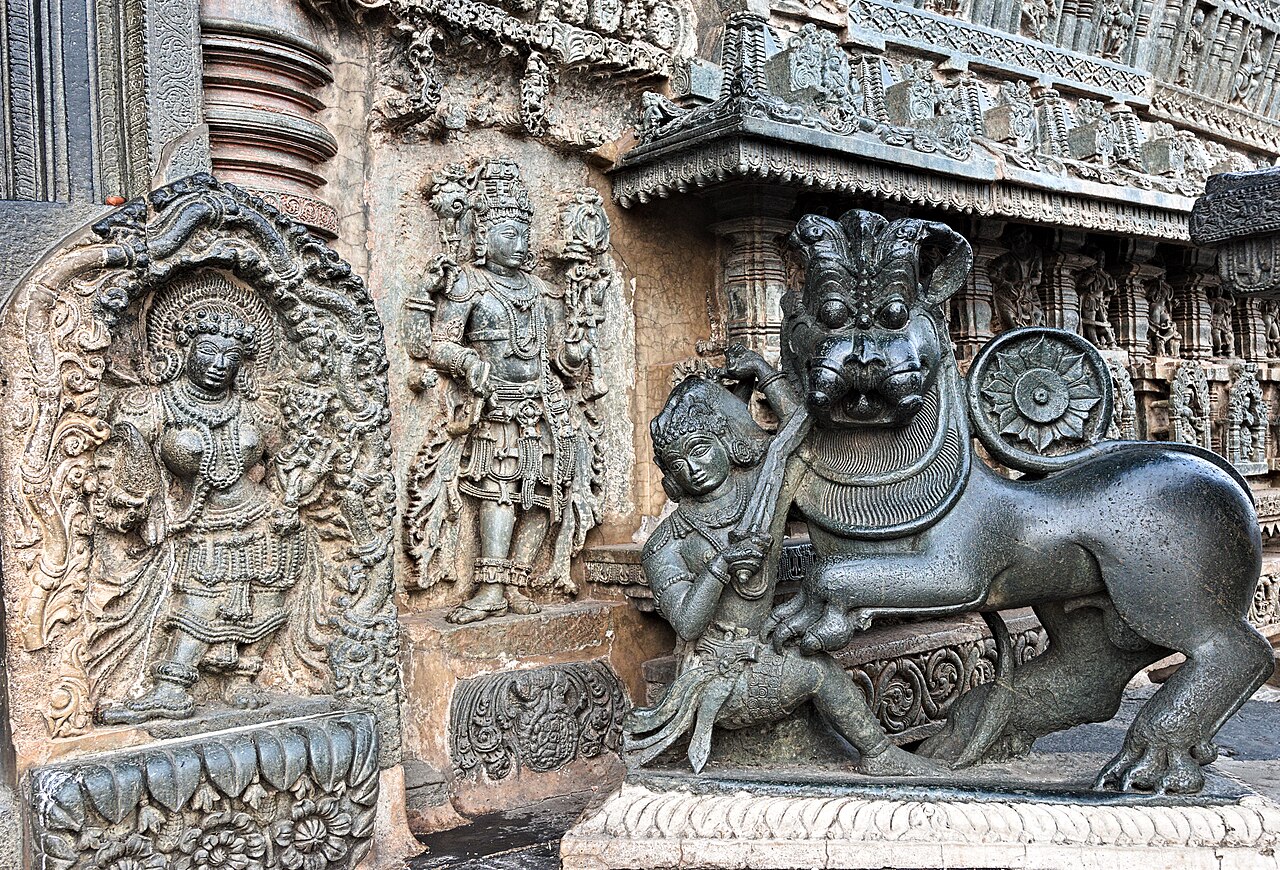
The Yali — a mythical leonine hybrid guardian flanks doorways with a ferocity clearly intended to deter rather than welcome.
The Ethereal
Avian
& Cosmic
Slide 1 Heading
Slide 2 Heading
Slide 3 Heading
Swans — hamsas — appear in the upper friezes and near the plinths of certain sections, their association with purity, discernment, and beauty marking a deliberate contrast to the powerful animals below. Peacocks are carved with the same meticulous observation.
The makara, that fantastical composite creature associated with water and the cosmic boundary, frames doorways and appears in the upper narrative registers — a threshold guardian in both architectural and symbolic terms.
The Living Stone
Scrolling
Flora
The scrolling flora between the animal and narrative bands is no less refined.
These scrolls carry densely worked vegetation — leaves, tendrils, miniature figures embedded within the foliage — that belongs to the same carving tradition as the great floral pillar capitals of Belur.
"The stone has been persuaded to imitate the logic of growth."
From the hall, the layout leads to the dual sanctums, each measuring approximately 25 feet wide. The material is high-grade chloritic schist.
If the deity panels carry theology, the frieze bands carry literature. The sculptors drew from the epics with evident familiarity—selecting not just the canonical moments but scenes of narrative nuance.
From the Ramayana
Slide 1 Heading
Slide 2 Heading
Slide 3 Heading
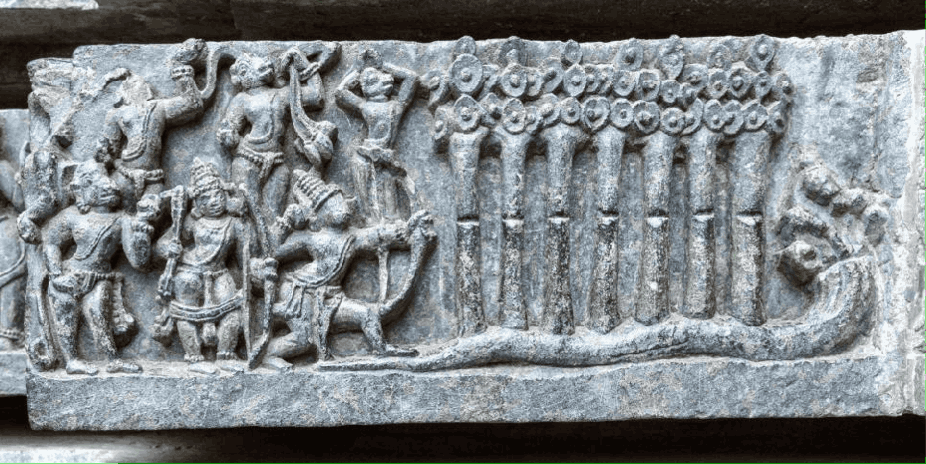
Rama is shown piercing seven sala trees with a single arrow, demonstrating his strength to Sugriva. In another panel, Rama and Lakshmana are depicted taking shelter at Kishkindha with Sugriva, the scene rendered with compositional intimacy.
One scene shows Rama entrusting his ring to Hanuman—a small gesture loaded with emotional weight, a symbol of devotion and the bond between lord and servant. These are not generic scenes of triumph. The sculptors chose moments of relationship and consequence.
The Mahabharata
Slide 1 Heading
Slide 2 Heading
Slide 3 Heading
The panels are equally considered. The Pancha Pandavas appear together alongside Draupadi, the composition holding the family unit in its fullness.
A panel devoted to Arjuna depicts him in the moment of archery instruction under Dronacharya—the training ground, not the battlefield—which says something about what the patrons valued showing.
Abhimanyu’s entry into the Chakravyuha, that fatal spiralling military formation, is represented here—and scholars note that this depiction may be the only known carved representation of that episode anywhere. Its presence at Halebidu makes the temple a unique documentary source.
The Shiva Purana
Slide 1 Heading
Slide 2 Heading
Slide 3 Heading
This contributes a magnificent Ravana panel: the ten-headed king attempting to uproot Mount Kailash, the composition known as Ravananugrahamurti.
The carving rewards prolonged observation. Ravana’s multiple heads and arms are rendered without confusion, the mountain pressing down, the figure straining with every limb. Close attention reveals details in the lower portions of the scene that would be missed in a cursory glance. It is a composition designed to be studied, not merely seen.
Bhagavata Purana
From this epic comes the scene of King Bali fulfilling his promise to Vamana—a moment of sovereignty surrendered willingly, captured at the precise instant of the gift.
Rama Piercing Seven Sala Trees with a Single Arrow
The temple is dedicated to Shiva, but the sculptural programme refuses to be confined to a single theological affiliation. Shaiva, Vaishnava, and Shakta iconography coexist across the walls with a deliberate inclusiveness that speaks to the Hoysala court’s syncretic sensibility.
Shiva appears in multiple forms. His most celebrated manifestation here is as Nataraja, the cosmic dancer — whose image graces the ceilings of the mandapas before both sanctums.
One ceiling carries Nataraja surrounded by the Ashtadikpalas, the guardians of the eight directions: Indra, Agni, Yama, Nirrti, Varuna, Vayu, Kubera, and Isana. The carving achieves a composition at once cosmologically complete and visually dynamic.
Another panel presents Nataraja encircled by Brahma, Vishnu, Durga, Lakshmi, and Ganesha alongside dancers and musicians, making the composition a
condensed theology of the Hindu pantheon..
The Sacred Thresholds
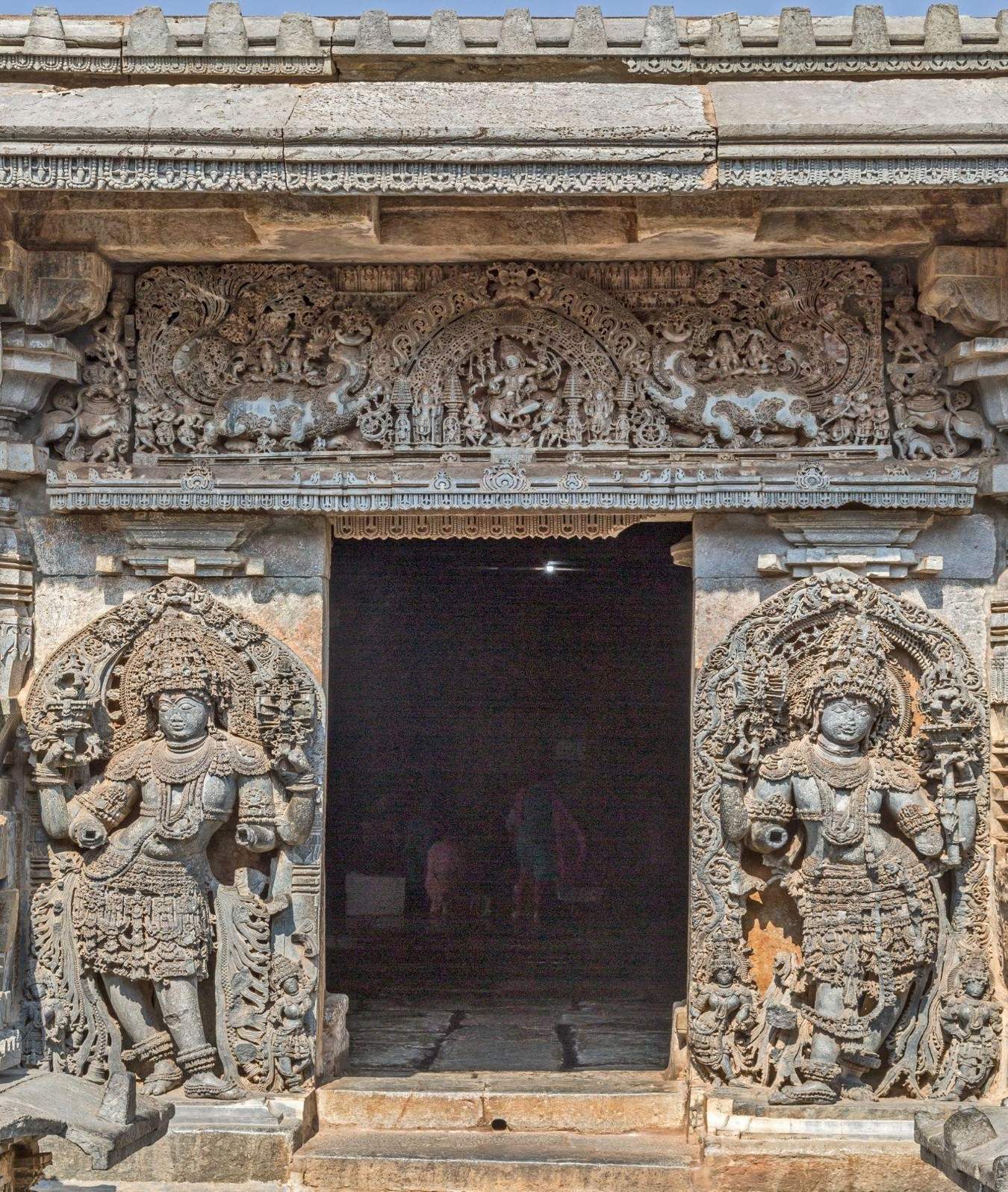
The doorways carry their own iconographic grammar. One entrance door frame places Shiva at the centre, seated on a makara, flanked by Varuna on either side. The Dvarapalas — the guardian figures of the sacred threshold stand watch with a presence that is simultaneously fierce and formal.
The Shiva Dvarapala
He is among the most studied of these: his figure draped in jewelry of convincing weight, his clothing rendered with flowing folds, his facial expression caught at a precise moment between vigilance and serenity. The headgear alone stacked and intricate rewards extended attention.
The Majesty of Vishnu
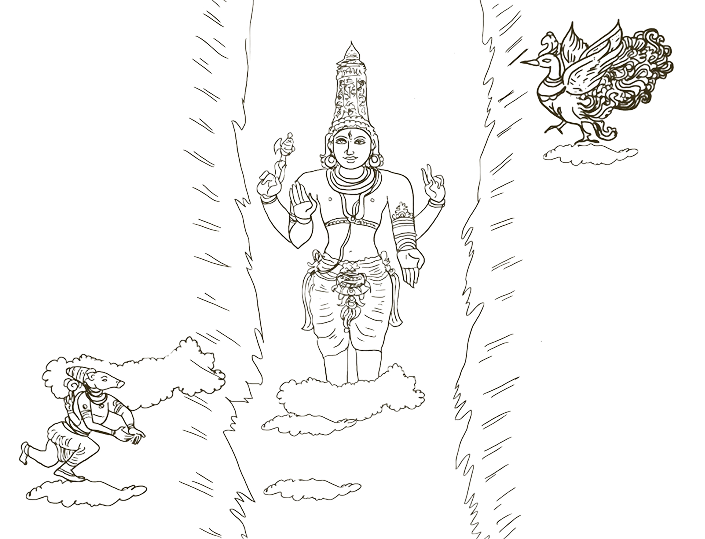
Vishnu appears in one particularly arresting composition seated upon Garuda, receiving a visit from Indra and his queen Saci arriving on Airavata. The scene carries a stately grandeur — two divine hierarchies in respectful congress.
Elsewhere, Shiva and Vishnu appear together in their wrathful aspects — Bhairava and Narasimha in proximity — a theological statement about the unity of the preserver and destroyer principles rather than their opposition.
The Hoysala Ganesha
Housed here is considered one of the finest medieval representations of the deity anywhere in the country. The sculptural treatment achieves fullness without heaviness, ornament without clutter — a quality that marks the best Hoysala work consistently.
The Canvas of Devotion
The outer walls of the Hoysaleshwara temple at Halebidu are not simply decorated. Every inch of the soapstone surface carries intent.
"
Eminent archaeologist Prof. S. Settar described it plainly as “a manual of Hindu Iconography.” That is not an overstatement.
This is a temple where theology, narrative, natural observation and sheer technical ambition exist simultaneously in stone.
Built through the 12th century under Hoysala patronage, the temple is among the most densely carved monuments in the Indian subcontinent, housing an estimated—
2,300+
Sculptures
Across its walls, pillars,
ceilings, & doorways.
The Friezes
An Ordered Universe
The outer walls of both shrines are organised into horizontal registers, ascending from the plinth upward in a deliberate sequence.
The Sequence of Stone
The lowest band carries elephants, above which we have lions marching, followed by a scroll of foliate and floral patterns, then cavalry, another scroll and then the figurative narrative panels drawn from Hindu texts.
Above these come makaras, then hamsas and peacocks, then scenes of everyday life and ceremony, then erotic and occupational imagery and finally the large deity panels at the uppermost register.
Nothing is Accidental
“The layering itself encodes a movement from the earthly to the divine.”
The Medium
The stone used throughout is chloritic schist — soapstone — soft enough to carve with extraordinary detail when freshly quarried, hardening upon prolonged exposure to air.
This material choice was not incidental. It enabled the gossamer treatment of fabric folds, the differentiation of jewelry types, the rendering of hair braided or pinned or cascading, that makes Hoysala sculpture so immediately identifiable.
John Faithfull Fleet
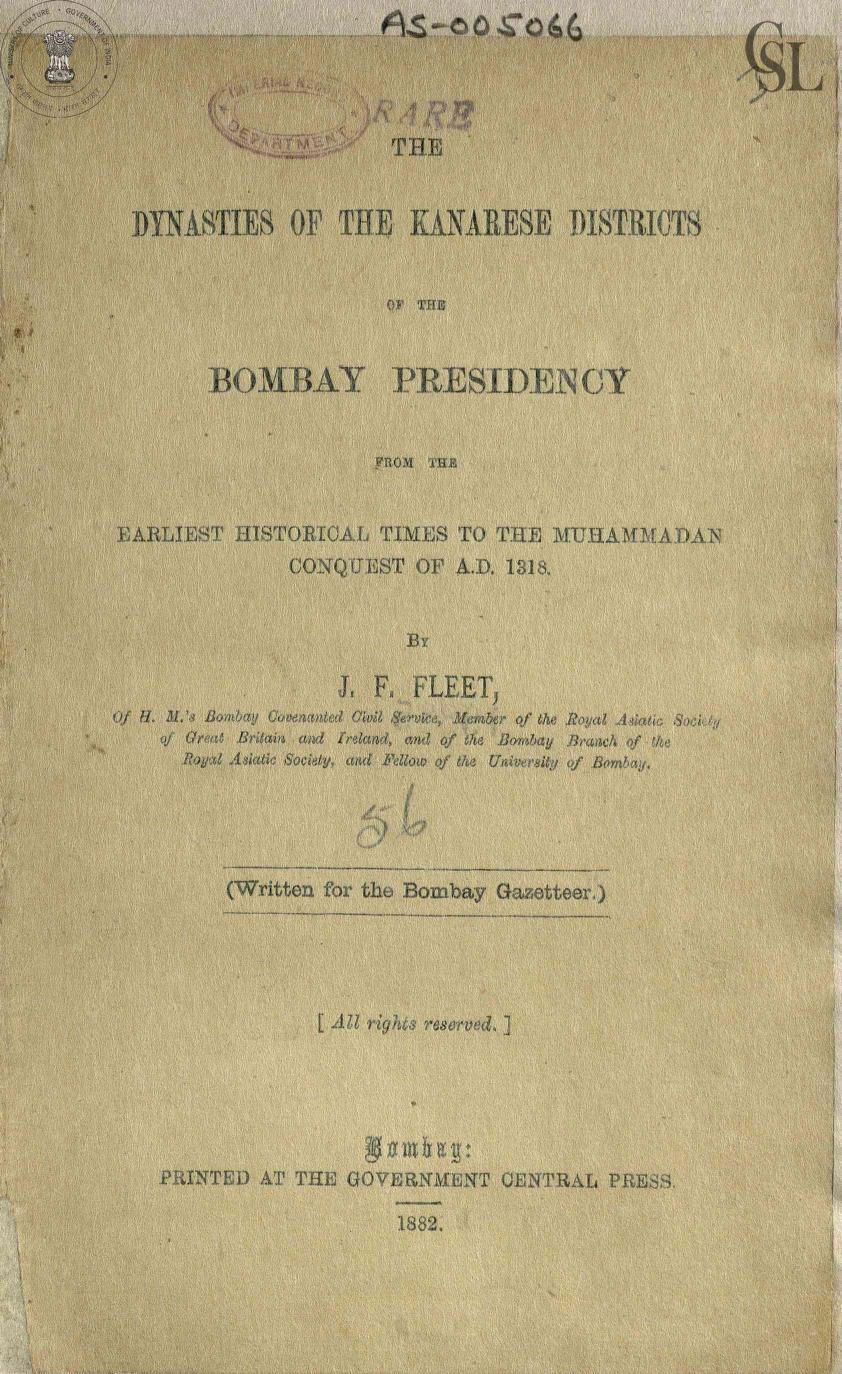
John Faithfull Fleet (1847-1917), English Civil Servant turned eminent historian and epigraphist played a significant role in bringing global attention to Hoysala temples through his renowned work, The Dynasties of The Kanarese Districts of The Bombay Presidency, 1882.
This influential book garnered widespread recognition, with even Eleanor Roosevelt, the First Lady of the United States, inspired to visit the Hoysala temples. Subsequently, she documented her experiences and insights in her own book, India and the Awakening East, 1954.
Curated Bibliography
For the serious reader
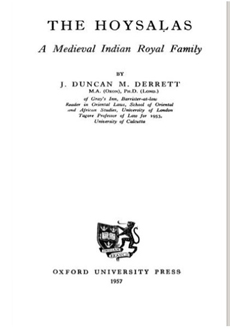
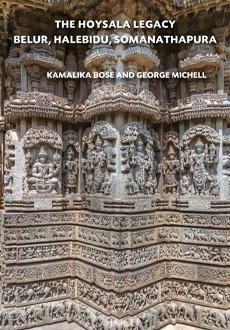
“A collection of definitive texts exploring the architectural and political legacy of the Hoysalas.”
Hoysalas rose from the misty hills of the Malnad region in the Western Ghats — their own inscriptions proudly called the founders Maleparolganda, “Lord of the Hills”.
Their earliest known chieftain, Arekalla (c. 950 CE), was succeeded by Maruga, Nripa Kama I, and Munda—a quiet but steady build-up of local power.
Mid-10th century Deccan was in turmoil. The Rashtrakutas and Cholas were locked in relentless warfare, the Gangas were grabbing Kadamba territory west of the Tungabhadra and right in the middle of this chaos, the Hoysalas who began as feudatories of the Western Chalukyas of Kalyani (c. 973 – 1189 CE) patient, watchful and waiting for the right moment quietly made their entrance.
That moment came when the Chalukyas and the Kalachuris of Kalyani (c. 1156 – 1181 CE) tore into each other. The Hoysalas stepped into the vacuum and never looked back.
Veera Ballala II (c. 1173 – 1220 CE)
Emperor of the South
He took the dynasty’s ambitions to a new level when he defeated the Yadavas, crushed the Kadambas, and formally declared independence in 1193.
The Deccan then became a four-way contest between the Hoysalas, Pandyas, Kakatiyas, and Seunas—a grand political chess game with no easy outcomes (c. 1190 – 1310 CE).
In 1217, Veera Ballala II pulled off a masterstroke when he defeated the invading Pandyas, restored the Chola king to his throne, and claimed the magnificent title
Dakshina Chakravarthi
“Emperor of the South”
By around 1225, the Hoysalas had planted their flag in modern Tamil Nadu, making Kannanur Kuppam near Srirangam a provincial capital. The empire now stretched from the misty hills of Karnataka to the deep plains of the south.
The Hoysala state ran on a well-oiled administrative machine. Senior ministers were called Pancha Pradhanas, foreign affairs were handled by the Sandhivigrahi, armies were commanded by Dandanayakas, and justice was dispensed by the Dharmadhikari.
The kingdom was carved into provinces—Nadu, Vishaya, Kampana, and Desha—each with its own minister, treasurer, and ground-level administrators called Heggaddes and Gavundas.
The Garuda Guards
“The royal family was protected at all times by an elite bodyguard corps called the Garudas…”
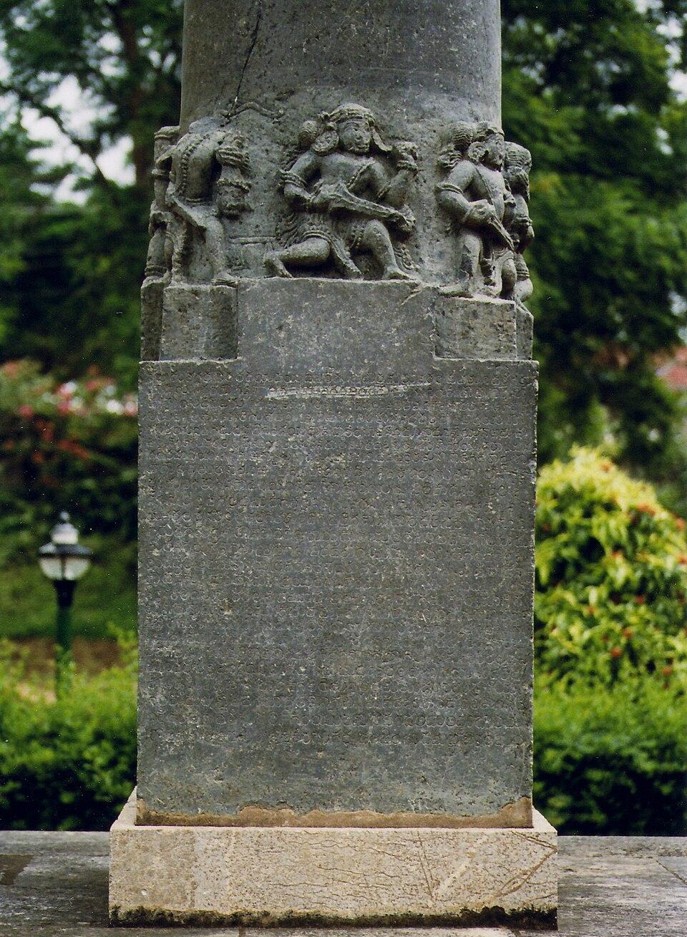
…who were so devoted that they took their own lives upon the death of their king. Hero stones erected in their memory stand as Garuda pillars to this day, a chilling testament to absolute loyalty.
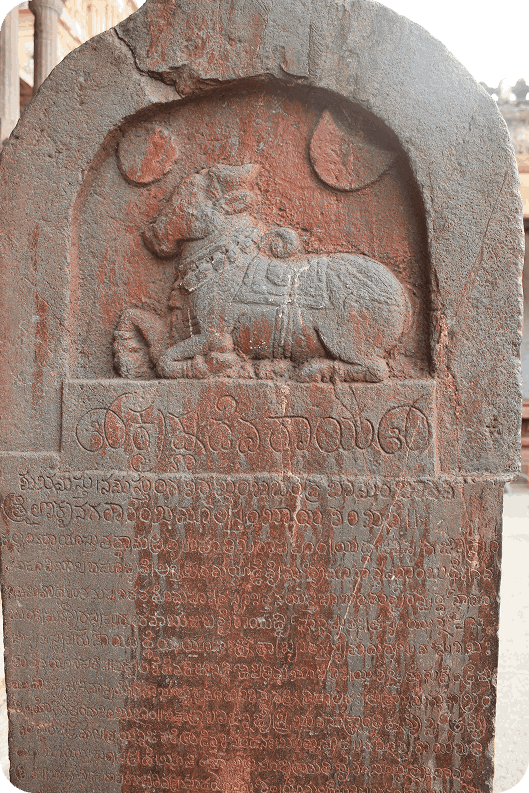
Garuda pillar Hero stone (virgal) at Halebidu with old Kannada inscription of about 1220 CE.
There are dynasties built on bloodlines, and then there are dynasties built on a single moment of courage. The Hoysalas belong to the second kind.
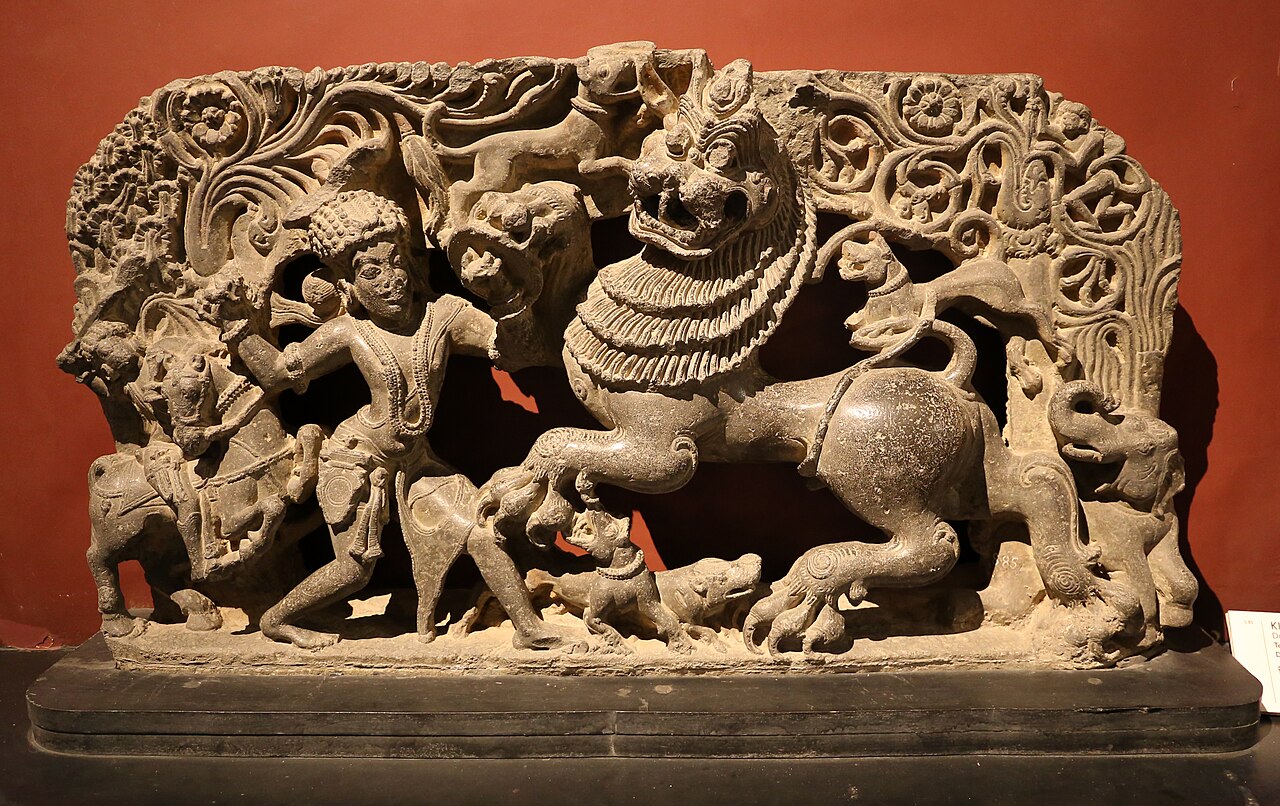
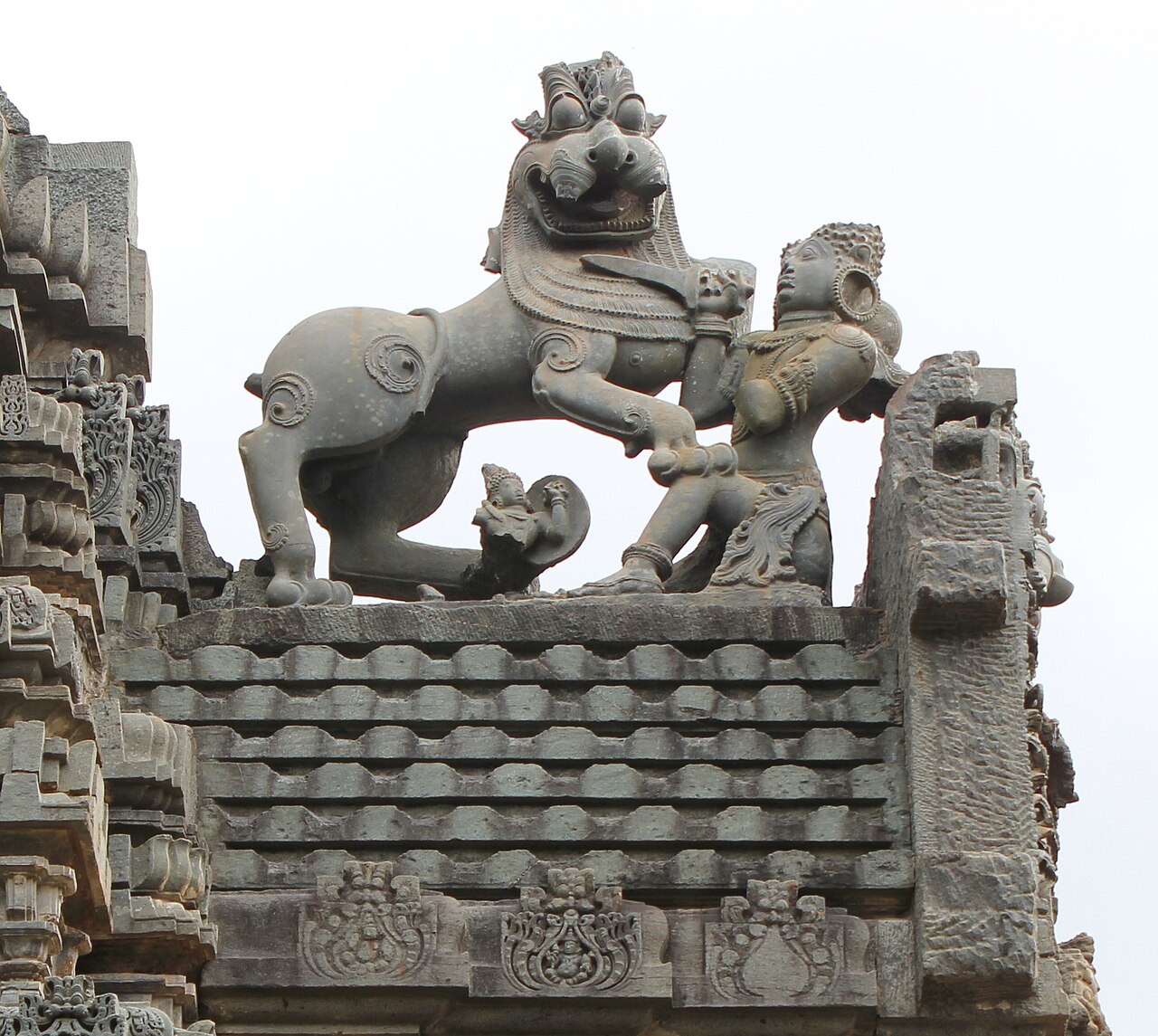
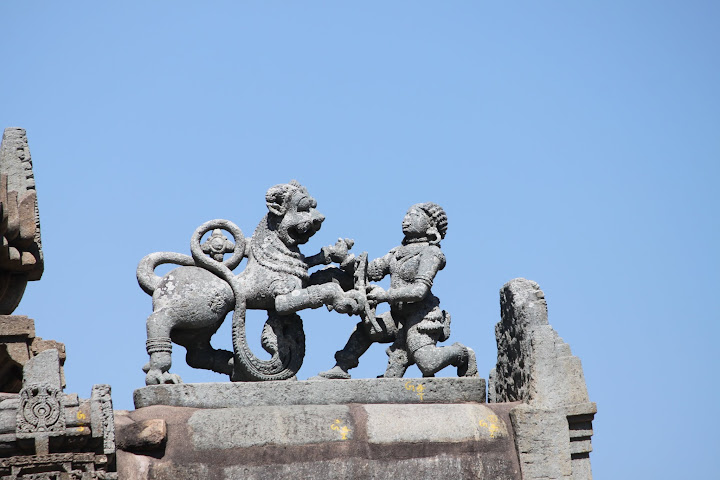
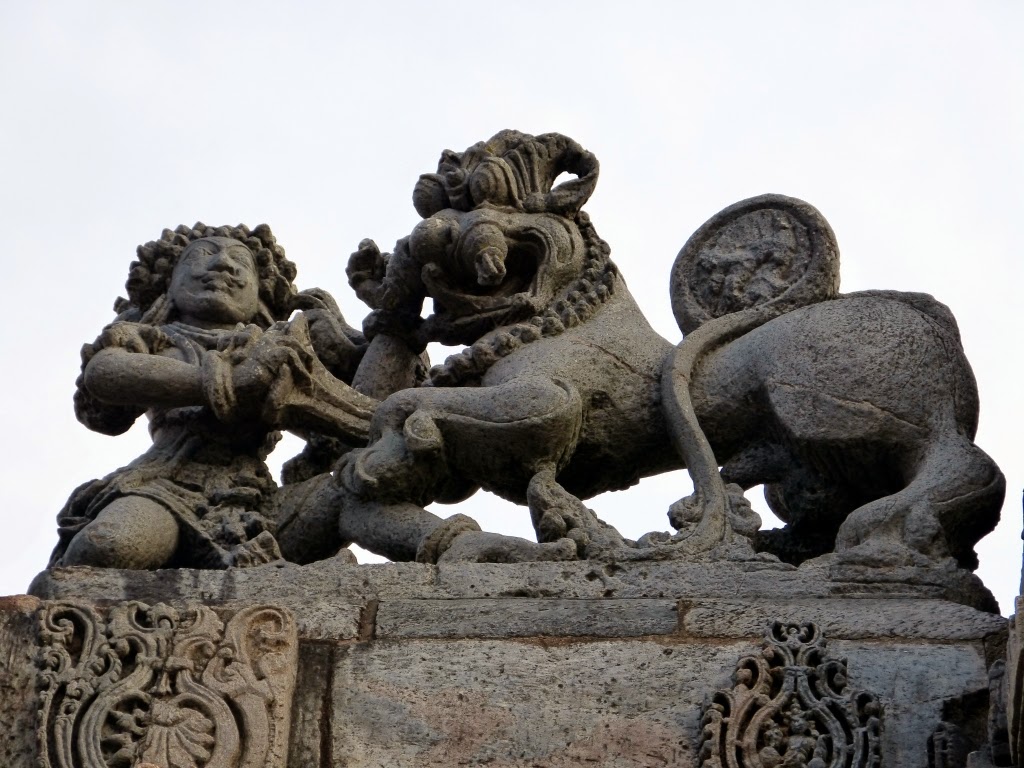
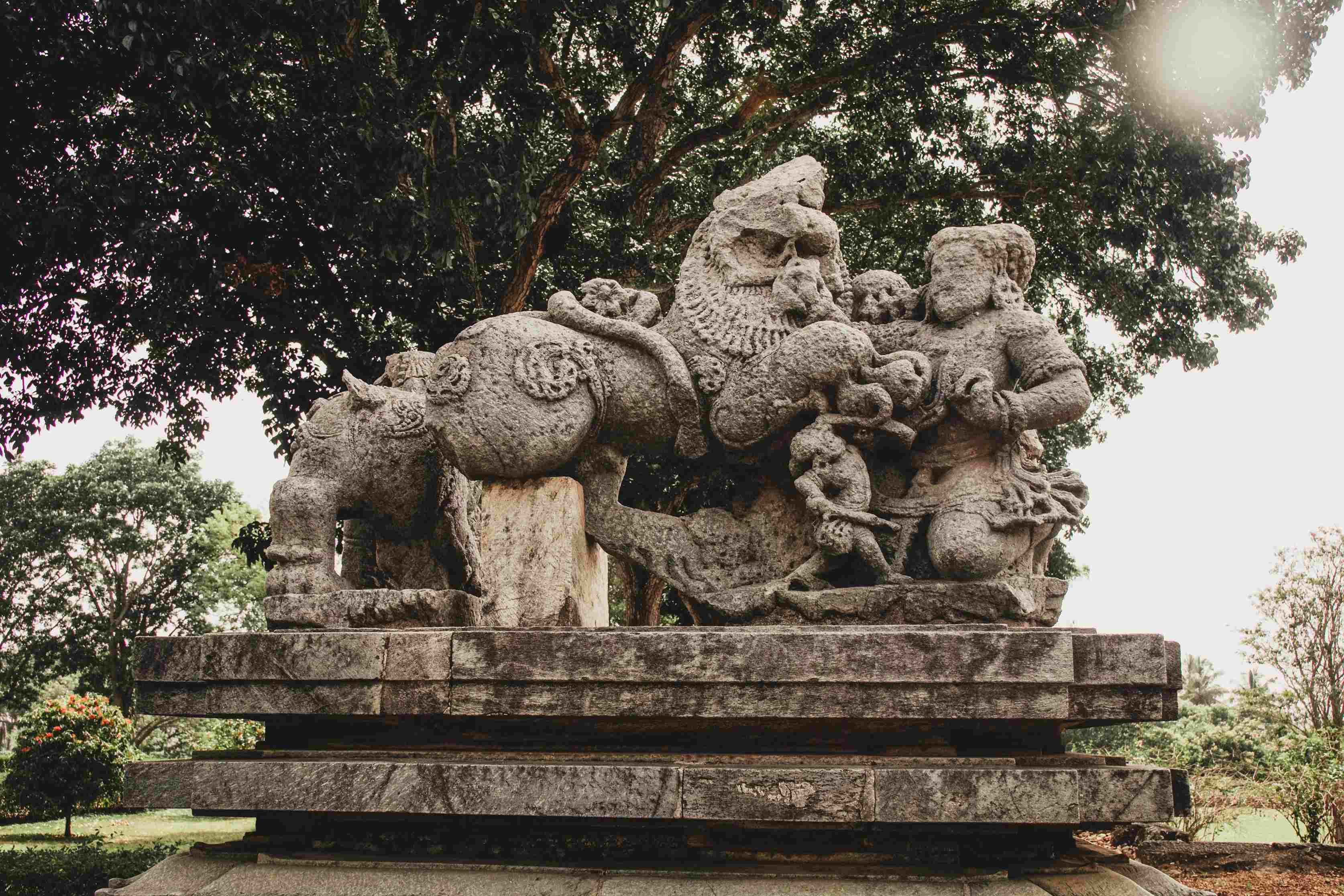
The story goes back to the 9th cen. CE. A young man named Sala was walking with his Jain guru, Sudatta, near the temple of the Goddess Vasantika at Angadi, a place known today as Sosevuru. Without warning, a tiger appeared. What happened next was on instinct. Sala fought the tiger, and he won.
His guru, shaken but alive, cried out in the heat of that moment
“Hoy Sala!”
In Old Kannada, it means simply, “Strike, Sala!“
Those two words outlasted everyone in that story.
The young man’s act gave a name to a lineage that went on to rule over a large part of southern India for centuries. The Belur inscription of Hoysala king Vishnuvardhana, dated 1117 CE, does not treat this as folklore set aside from history. It places this moment at the very foundation of the dynasty.
Hoysala Architecture
Chennakeshava Temple
Belur, 12th Century CE
Lakshmi Devi Temple
Doddagaddavalli, Hassan
Bucesvara Temple
Koravangala, Hassan
Amrutesvara Temple
Amruthapura
Tripurantaka Temple
Balligavi, Karnataka
Kedareshvara Temple
Balligavi, Hassan
Mallikarjuna Temple
Basaralu
Nageshvara-Chennakeshava Complex
Mosale
Hoysaleswara Temple
Halebidu, 12th Century CE
Halebidu Site Museum
Step into a realm of timeless art and captivating history, established in the early 1970s.
The Centerpiece
The museum comprises an enclosed sculpture gallery as well as an open-air museum with an extensive reserve collection. Among its most remarkable exhibits stands an
18-foot Tirthankara image
a majestic relic rescued from the depths of a Jaina basadi’s tank.
1500
Sculptures & Fragments
Here, an astounding collection of ancient inscriptions, architectural fragments, and sculptures from Halebidu and its enchanting surroundings await discovery.
The Open-Air Collection
The open-air museum features iconic figures including:
★
The graceful dancing Shiva
★
Govardhanagiridhari Krishna
★
The serene Veena Saraswati
★
The divine Nataraja
★
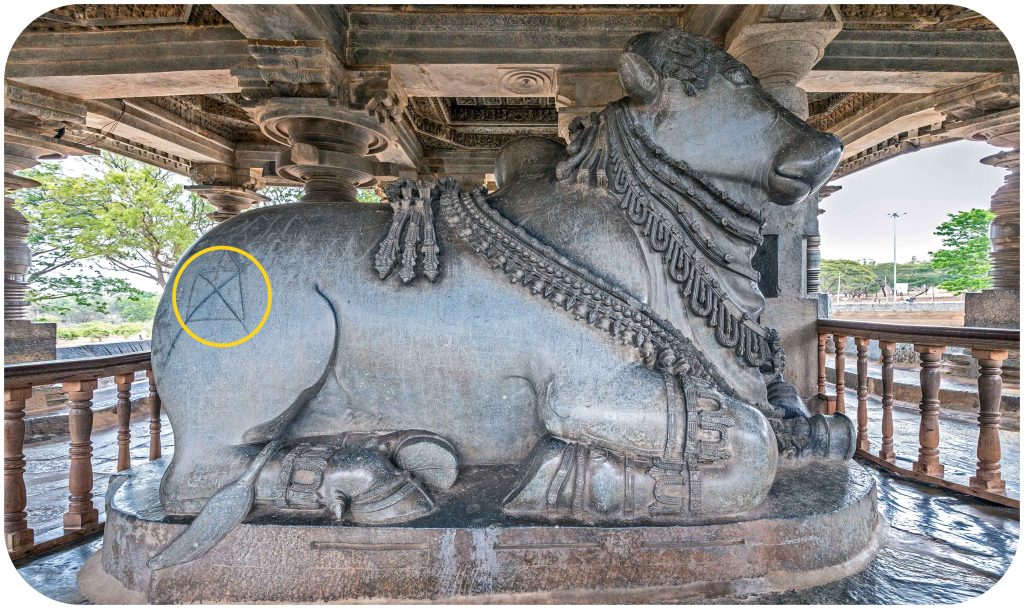
The exquisite reclining Nandi
★
The dancing Ganesha
Intricate wooden carvings and a timeless bronze Tirthankara statue round out the gallery’s treasures.
Visitors can marvel at Brahma-Saraswati, the formidable Nagna Kala Bhairava, and the tender depiction of Mother and Child.
Inside
The Sculpture Gallery
Global Impact
Several of these masterpieces have represented India’s rich heritage at international exhibitions in France, Japan, and beyond.
Of all the Hoysala rulers, Vishnuvardhana (c. 1108–1152 CE) turned a hill chieftaincy into a genuine sovereign power, ascending to the throne around 1108 CE from the hills Northwest of Dvarasamudra (modern Halebidu).
His military campaigns were relentless when the Cholas had raided Gangavadi and reportedly destroyed Jain basadis around Talakadu…
…His general Gangaraja defeated the Chola general Adiyamma near Talakadu, and recovered lost territory.
Trivia
Trivia
The Karnataka government honors the legacy of Natyarani Shantala, the legendary queen-consort of Vishnuvardhana, celebrated as one of the finest classical dancers of her time through the prestigious Shantala Natya Sri Award, given to outstanding artists in the field of dance.
Shantala is immortalized in sculpture at the Hoysala temples, her dancing form carved with such grace and anatomical precision that she remains one of the most iconic figures in the entire corpus of Indian temple art.
The Sovereign Power
Conqueror of Talakadu
Earning King Vishnuvardhana the thundering title
“Talakadugonda”
Hoysala armies chased the Cholas all the way to Vellore, deep inside Tamil territory. He also fought the Western Chalukyas in Nolambavadi, asserting Hoysala independence from the very lords the dynasty had once served.
By 1130 CE, he had taken on the Chalukyas, the Kadambas and the Cholas all at once.
?
Did You Know?
Did You Know?
Vishnuvardhana was originally a Jain but his encounter with the great Vaishnava philosopher-saint Ramanujacharya, who visited the Hoysala court, is said to have led to his conversion to Vaishnavism.
The very temple he built at Belur the Chennakeshava Temple is believed to reflect this personal transformation in stone.
As a builder, King Vishnuvardhana set a high benchmark that all later Hoysala kings would strive to match up to. He sponsored the Hoysalesvara Temple at Halebidu and made generous land grants to Gangaraj at Kambadahalli, which grew into a significant center of Jainism—a reminder that this king balanced piety with politics.
With a powerful combination of military genius, architectural patronage, and political vision his reign stood out in the annals of the Hoysala story.
Vishnuvardhana did not just build an empire in stone and battle; he actively constructed the Hoysala identity for all posterity.
While its grand architecture is widely celebrated, the temple’s sculptures reveal a world of intricate narratives, divine imagery, and cultural expressions carved in stone. Lets explores the temple’s sculptural brilliance under various thematic categories.
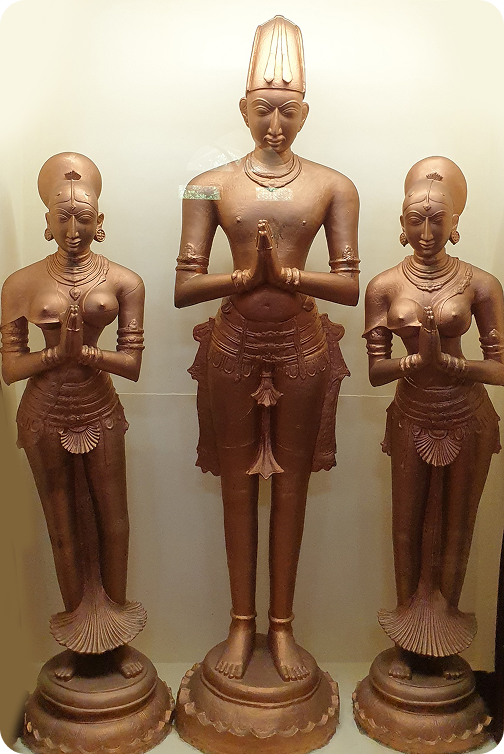
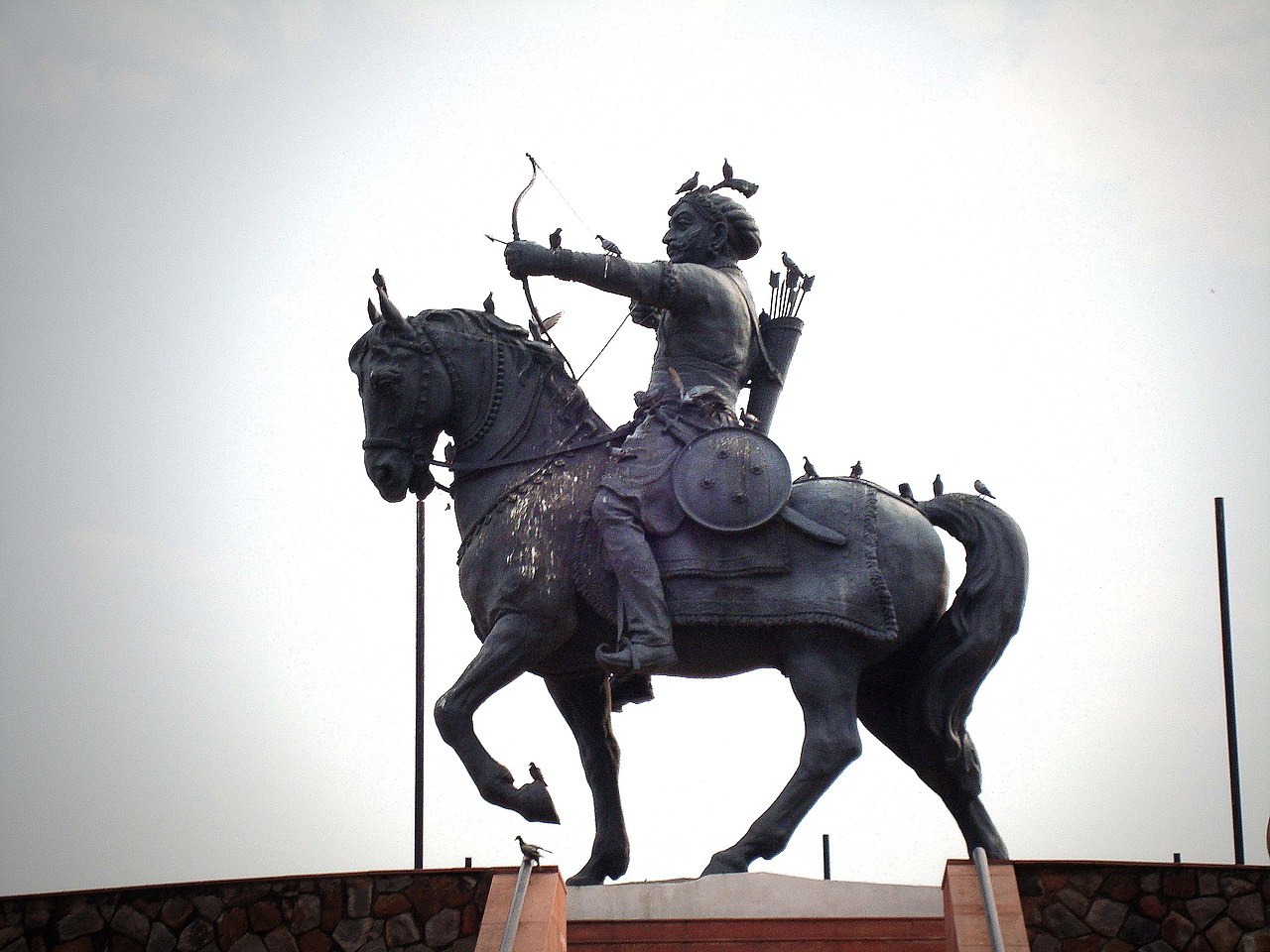
Statue of Krishnadevaraya and his wives
Sri Krishnadevaraya (reigned 1509–1529 CE) was the greatest monarch of the Vijayanagara Empire, belonging to the Tuluva dynasty.
His reign is often described as the “Golden Age” of Vijayanagara due to the empire’s political power, cultural brilliance, and economic prosperity during his rule.
Ascending the throne in 1509, he consolidated the empire by defeating rivals such as the Bahmani Sultanate, Gajapatis of Odisha, and other regional powers.
His military campaigns expanded Vijayanagara’s boundaries from the Krishna River in the north to the deep south of Tamil Nadu, making it one of the most powerful empires in India at the time.
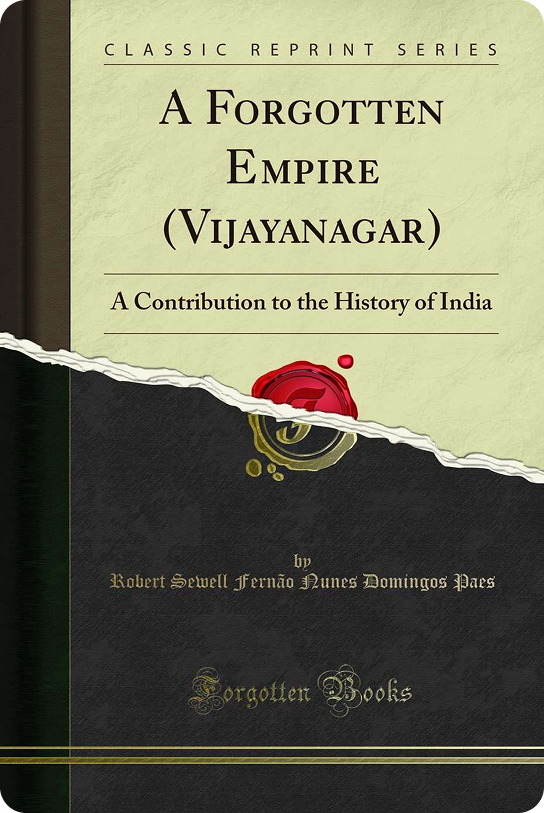
The Portuguese traveler Domingo Paes, who visited his court, wrote:
“The king is of medium height, and of fair complexion and good figure, rather fat than thin. He is the most feared and perfect king there could possibly be.”
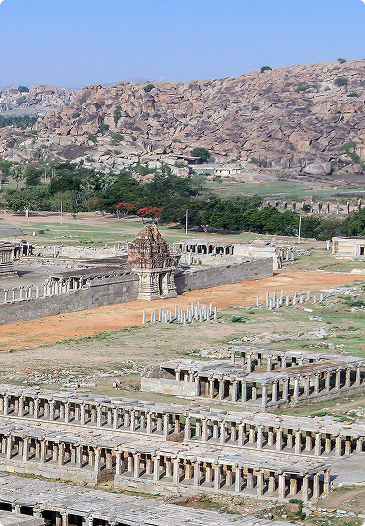
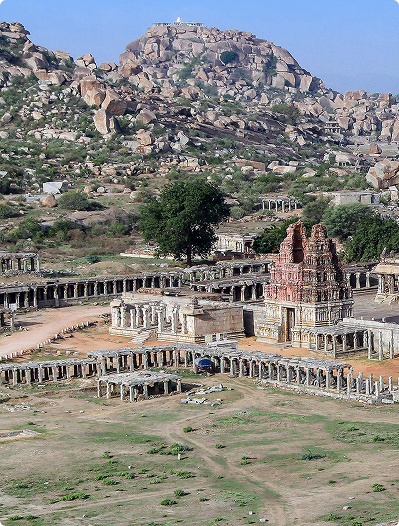
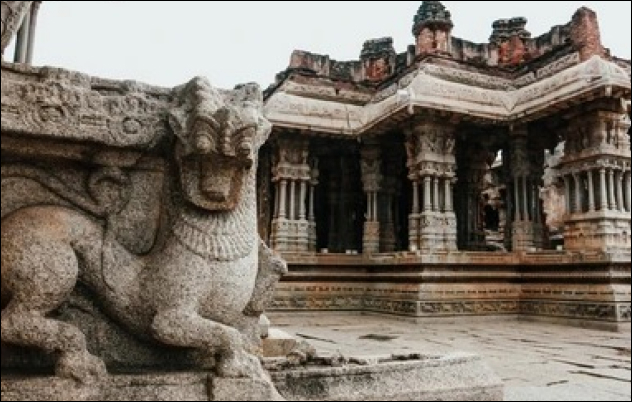
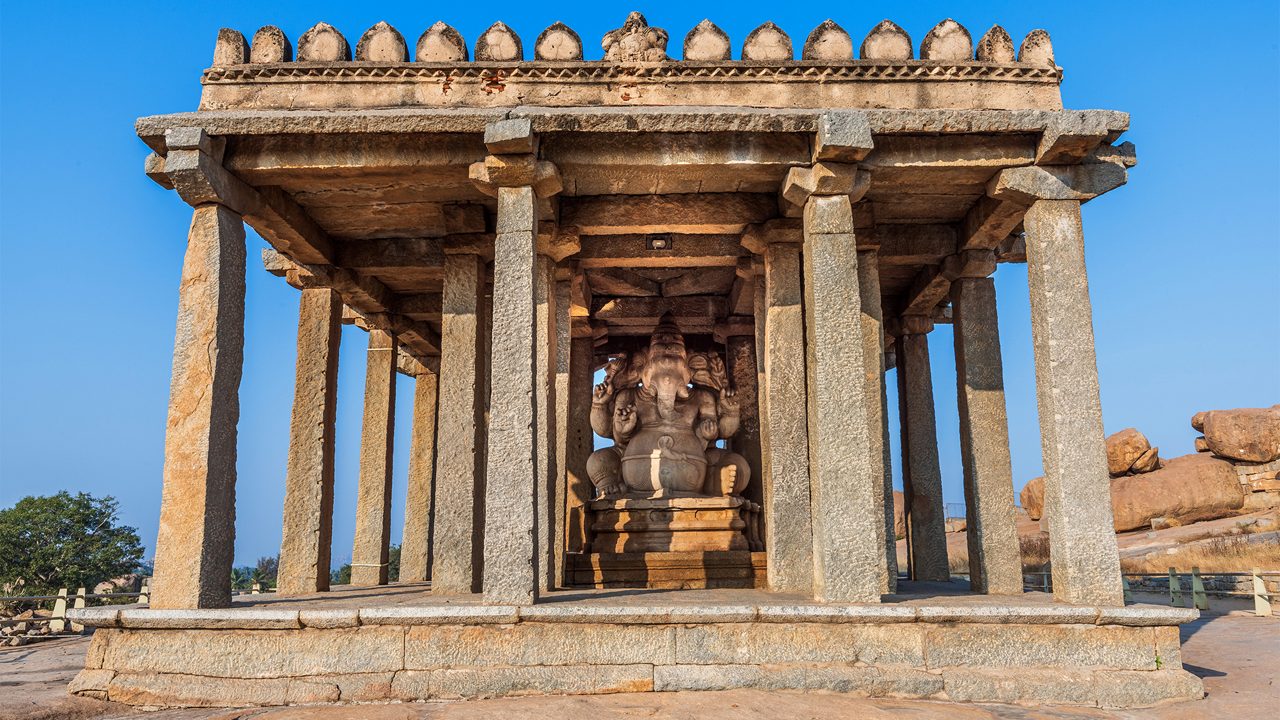
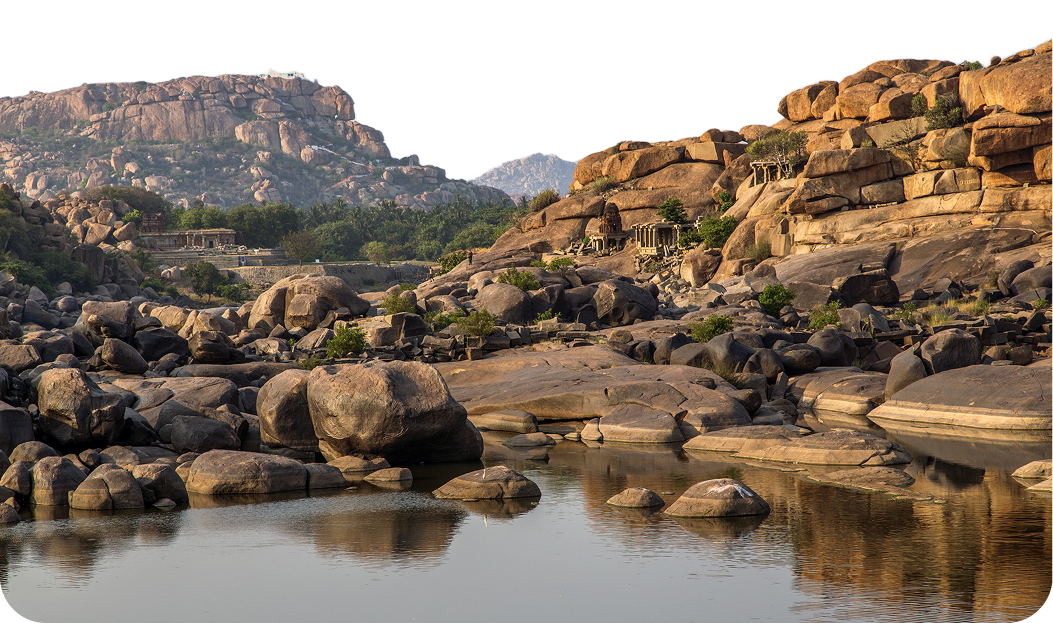
Hampi, the majestic capital of the Vijayanagara Empire, is also celebrated in sacred lore as Pampa Kshetra.
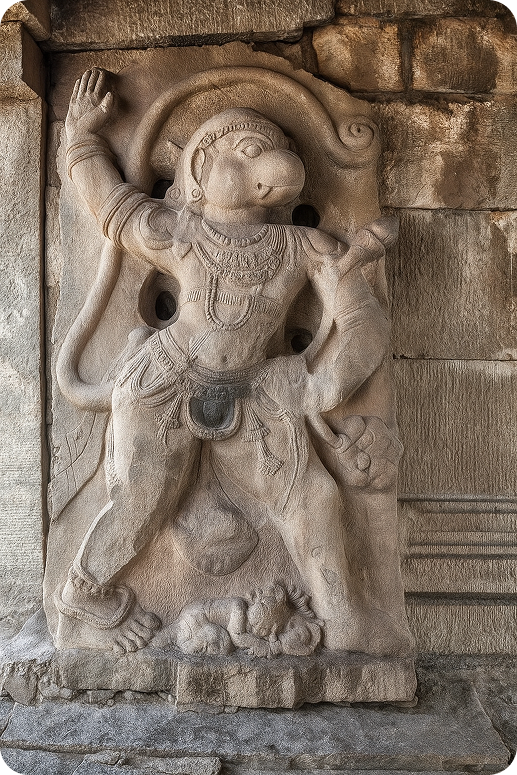
According to the Sthala Purana, this land is none other than Kishkindha, the monkey kingdom of the Ramayana. It was here that Lord Rama met Hanuman and Sugriva, forging the alliance that led to the battle against Ravana.
The hills and rivers of Hampi carry echoes of these legends Anjanadri Hill is revered as Hanuman’s birthplace, Rishimukha Hill marks Sugriva’s meeting with Rama, and Matanga Hill is sanctified by sage Matanga’s penance. As Apampa Kshetra, Hampi is also regarded as a sacred space where divine presence lingers, making it not only a UNESCO World Heritage Site but also a timeless spiritual landscape where mythology, history, and devotion converge.
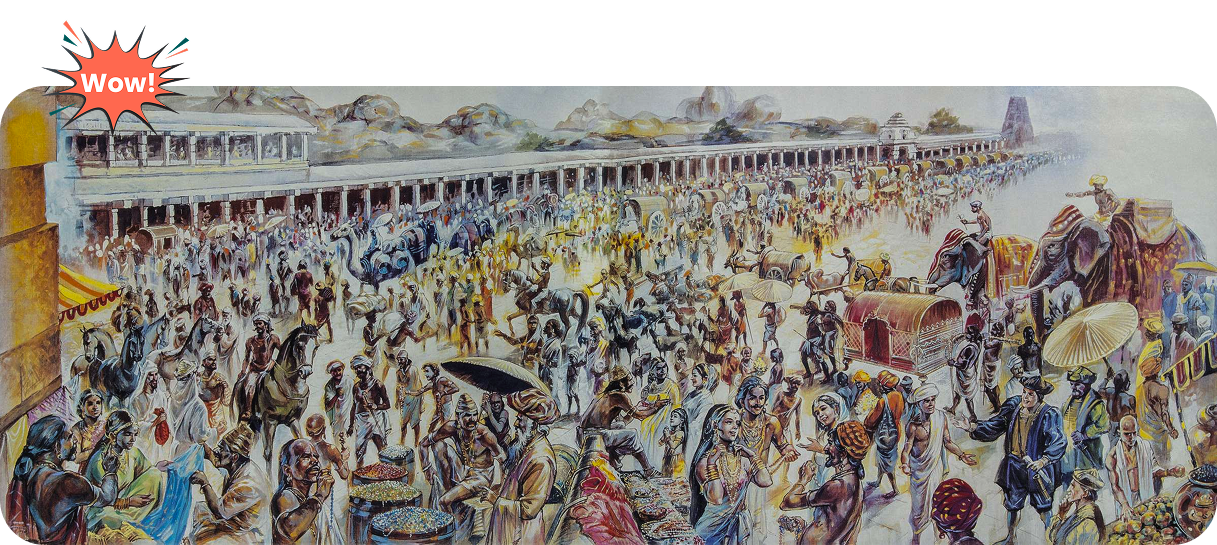
He also undertook massive public works, including the construction of irrigation tanks and temples. Under his rule, the city of Vijayanagara (Hampi) flourished as a center of trade, attracting merchants from Portugal, Persia, and beyond.
Plan & Layout
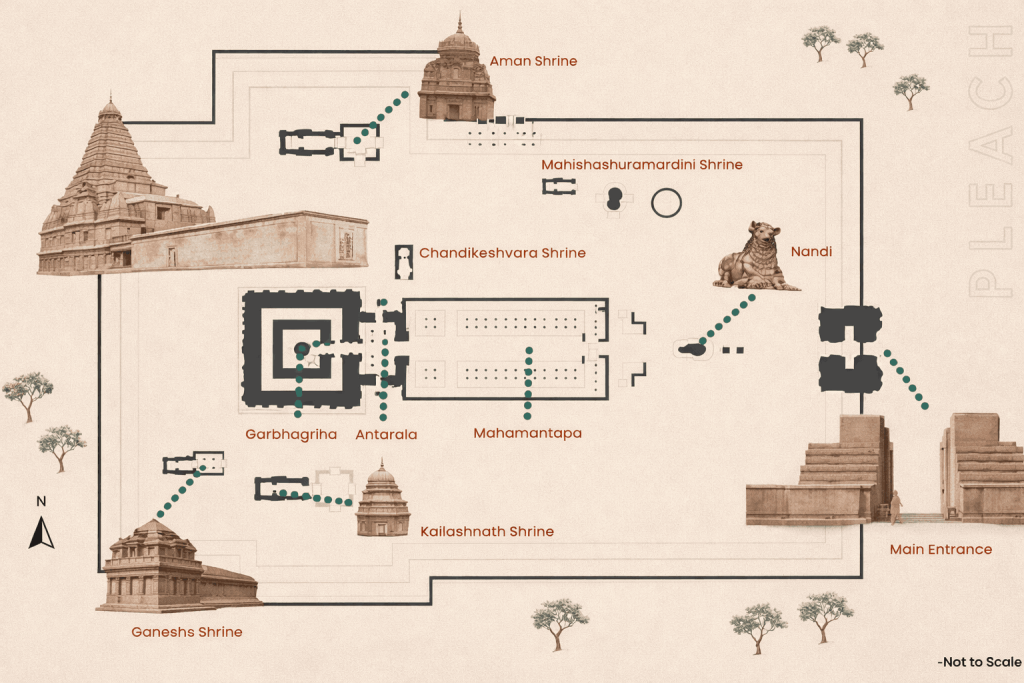
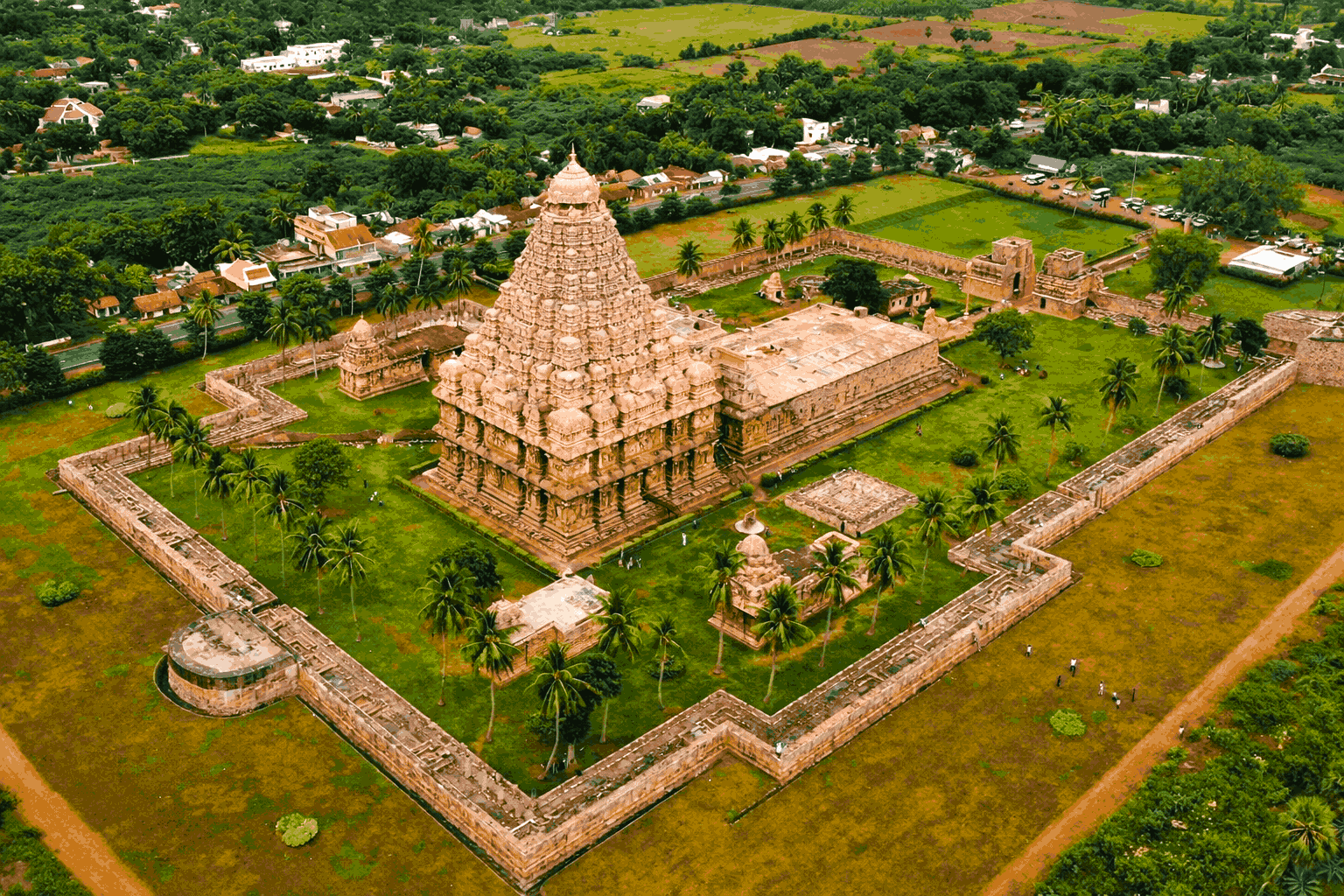
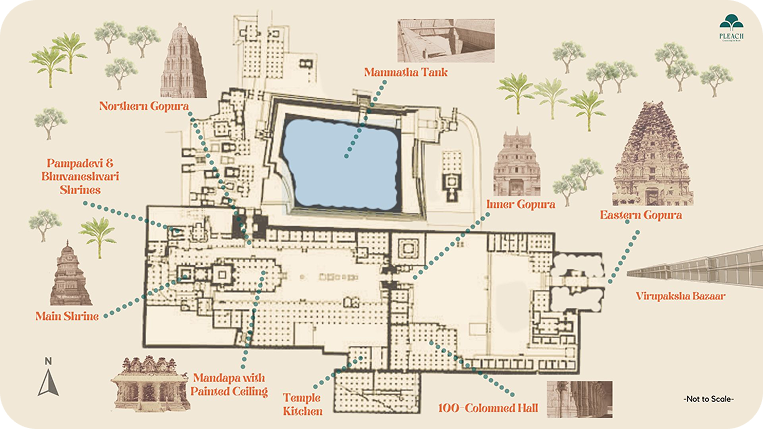
The temple follows a well-defined axial plan typical of Dravidian temples:
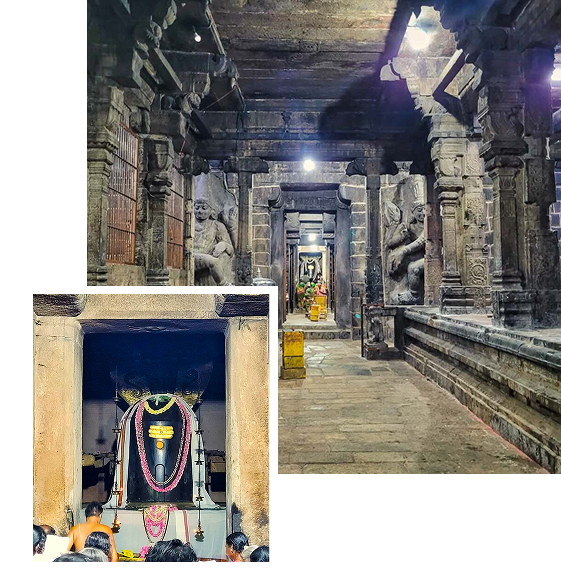
The sanctum (garbhagriha) houses a massive Shiva Linga, one of the largest in India.
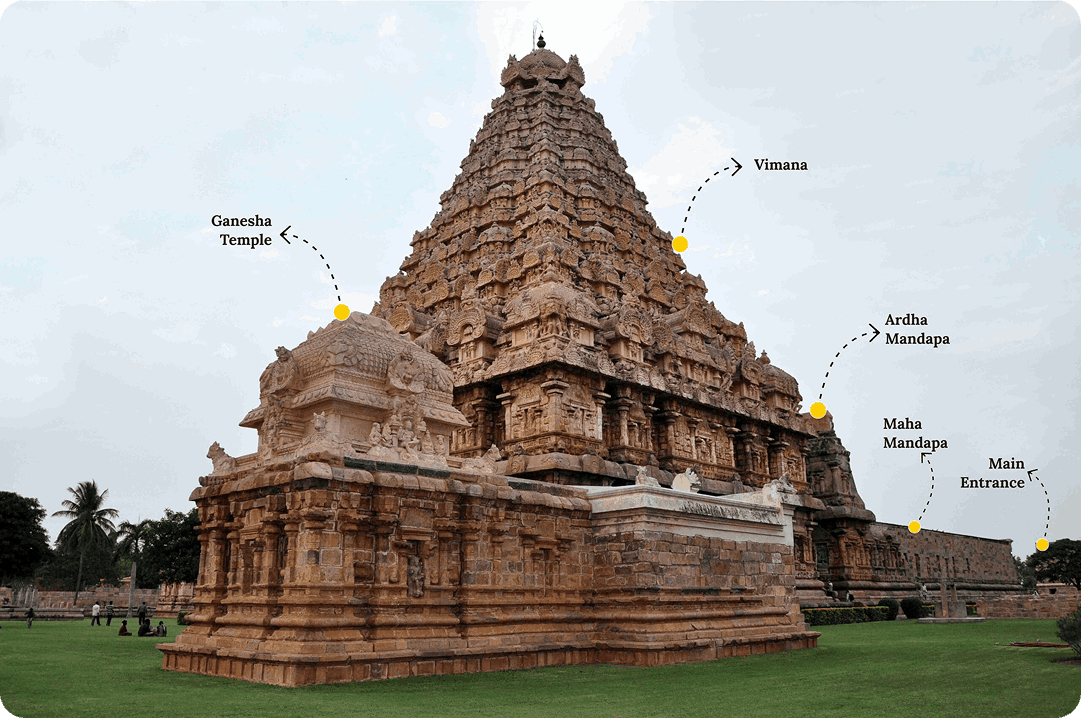
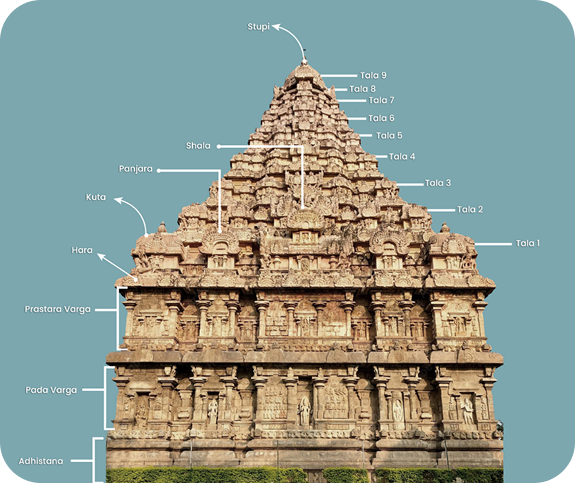
The vimana (tower) stands at approximately 55 meters, slightly shorter than the one at Thanjavur but more elaborately sculpted.
Lorem Ipsum is simply dummy text of the printing and typesetting industry. Lorem Ipsum has been the industry’s standard dummy text ever since the 1500s, when an unknown printer took a galley of type and scrambled it to make a type specimen book.
A mandapa (hall) with intricately carved pillars leads to the sanctum.
The Nandi Mandapa features a large Nandi (sacred bull) facing the sanctum.
The prakaras (enclosures) house various subsidiary shrines and open courtyards.
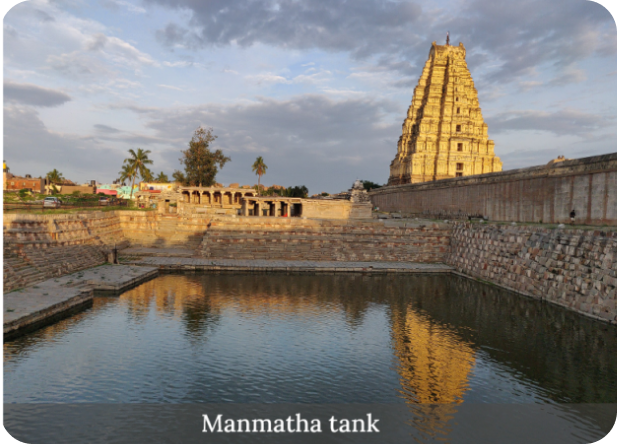
A massive temple tank (Chola-era pushkarini) is located nearby, consecrated with water from the Ganga.
Lorem Ipsum is simply dummy text of the printing and typesetting industry. Lorem Ipsum has been the industry’s standard dummy text ever since the 1500s, when an unknown printer took a galley of type and scrambled it to make a type specimen book.
Exterior Features
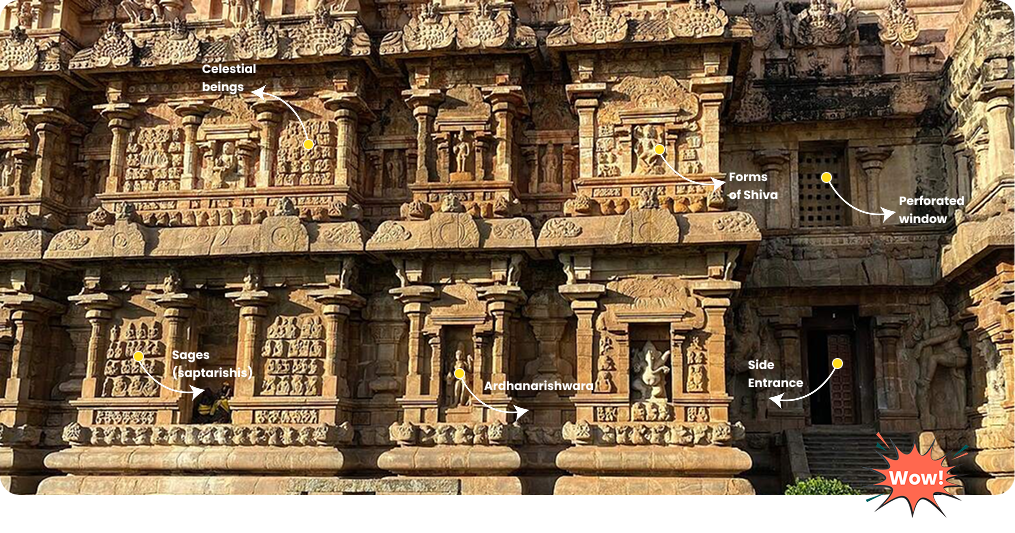
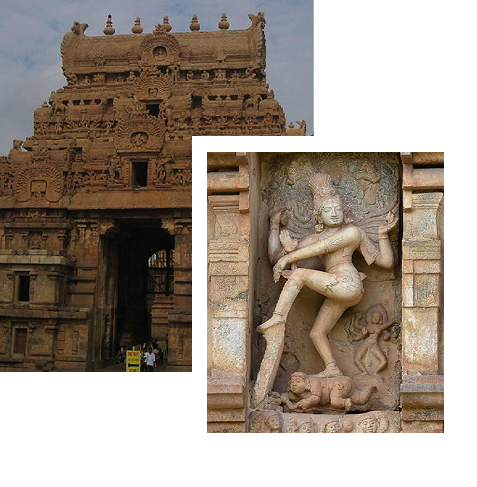
The vimana is adorned with miniature shrine motifs, niches, and pilasters, creating a sense of depth and grandeur.
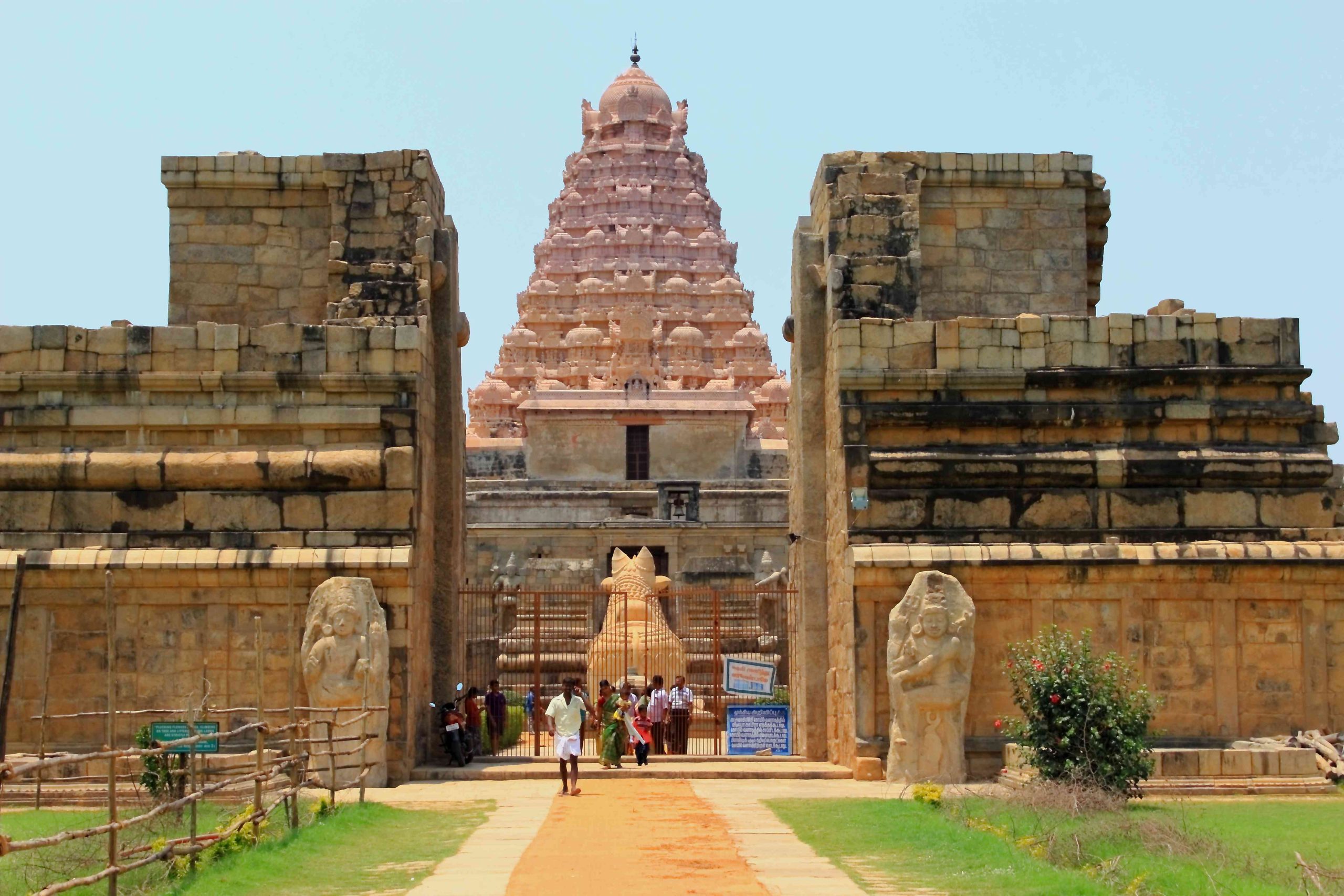
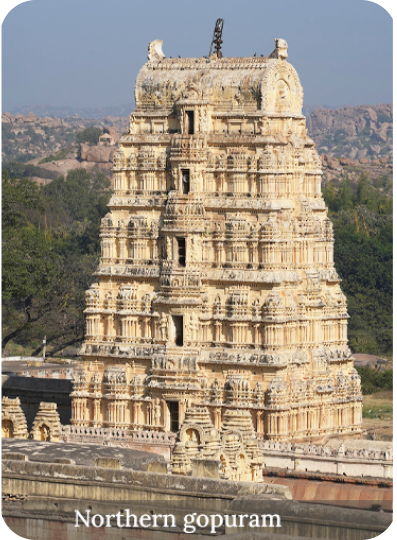
Large gopurams (gateway towers) at the entrance serve as an imposing gateway to the temple complex.
Exquisite friezes and cornices depict mythological themes, including Shiva in various divine forms.
Lorem Ipsum is simply dummy text of the printing and typesetting industry. Lorem Ipsum has been the industry’s standard dummy text ever since the 1500s, when an unknown printer took a galley of type and scrambled it to make a type specimen book. It has survived not only five centuries, but also the leap into electronic typesetting, remaining essentially unchanged. It was popularised in the 1960s with the release of Letraset sheets containing Lorem Ipsum passages, and more recently with desktop publishing software like Aldus PageMaker including versions of Lorem Ipsum.
Interior Features
The sanctum contains a monolithic Shiva Linga, over 4 meters in height, symbolizing the cosmic power of Lord Shiva.
The pillared halls display intricate floral and geometric designs, reflecting the finesse of Chola craftsmanship.
A series of niches and alcoves house deities, contributing to the temple’s spiritual ambiance.
Lorem Ipsum is simply dummy text of the printing and typesetting industry. Lorem Ipsum has been the industry’s standard dummy text ever since the 1500s, when an unknown printer took a galley of type and scrambled it to make a type specimen book.
Lorem Ipsum is simply dummy text of the printing and typesetting industry. Lorem Ipsum has been the industry’s standard dummy text ever since the 1500s, when an unknown printer took a galley of type and scrambled it to make a type specimen book.
Lorem Ipsum is simply dummy text of the printing and typesetting industry. Lorem Ipsum has been the industry’s standard dummy text ever since the 1500s, when an unknown printer took a galley of type and scrambled it to make a type specimen book.
The temple complex includes numerous smaller shrines dedicated to deities associated with Shaivism, including:
Ganesha Shrine – Dedicated to Lord Ganesha, symbolizing wisdom and prosperity.
Parvati Shrine – Housing an idol of Goddess Parvati, consort of Shiva.
Chandikeswara Shrine – A common feature in Chola temples, dedicated to Lord Chandikeswara, the guardian of temple wealth.
Lorem Ipsum is simply dummy text of the printing and typesetting industry. Lorem Ipsum has been the industry’s standard dummy text ever since the 1500s, when an unknown printer took a galley of type and scrambled it to make a type specimen book. It has survived not only five centuries, but also the leap into electronic typesetting, remaining essentially unchanged.
Subsidiary Shrines
Lorem Ipsum is simply dummy text of the printing and typesetting industry. Lorem Ipsum has been the industry’s standard dummy text ever since the 1500s, when an unknown printer took a galley of type and scrambled it to make a type specimen book. It has survived not only five centuries, but also the leap into electronic typesetting, remaining essentially unchanged.
Lorem Ipsum is simply dummy text of the printing and typesetting industry. Lorem Ipsum has been the industry’s standard dummy text ever since the 1500s, when an unknown printer took a galley of type and scrambled it to make a type specimen book. It has survived not only five centuries, but also the leap into electronic typesetting, remaining essentially unchanged.
Lorem Ipsum is simply dummy text of the printing and typesetting industry. Lorem Ipsum has been the industry’s standard dummy text ever since the 1500s, when an unknown printer took a galley of type and scrambled it to make a type specimen book. It has survived not only five centuries, but also the leap into electronic typesetting, remaining essentially unchanged.
Lorem Ipsum is simply dummy text of the printing and typesetting industry. Lorem Ipsum has been the industry’s standard dummy text ever since the 1500s, when an unknown printer took a galley of type and scrambled it to make a type specimen book. It has survived not only five centuries, but also the leap into electronic typesetting, remaining essentially unchanged.
Lorem Ipsum is simply dummy text of the printing and typesetting industry. Lorem Ipsum has been the industry’s standard dummy text ever since the 1500s, when an unknown printer took a galley of type.
Lorem Ipsum is simply dummy text of the printing and typesetting industry. Lorem Ipsum has been the industry’s standard dummy text ever since the 1500s, when an unknown printer took a galley of type and scrambled it to make a type specimen book. It has survived not only five centuries, but also the leap into electronic typesetting, remaining essentially unchanged.
Lorem Ipsum is simply dummy text of the printing and typesetting industry. Lorem Ipsum has been the industry’s standard dummy text ever since the 1500s, when an unknown printer took a galley of type and scrambled it to make a type specimen book. It has survived not only five centuries, but also the leap into electronic typesetting, remaining essentially unchanged.
Material Used
Lorem Ipsum is simply dummy text of the printing and typesetting industry. Lorem Ipsum has been the industry’s standard dummy text ever since the 1500s, when an unknown printer took a galley of type and scrambled it to make a type specimen book. It has survived not only five centuries, but also the leap into electronic typesetting, remaining essentially unchanged.
Lorem Ipsum is simply dummy text of the printing and typesetting industry. Lorem Ipsum has been the industry’s standard dummy text ever since the 1500s, when an unknown printer took a galley of type and scrambled it to make a type specimen book. It has survived not only five centuries, but also the leap into electronic typesetting, remaining essentially unchanged.
Lorem Ipsum is simply dummy text of the printing and typesetting industry.
Academic Legacy
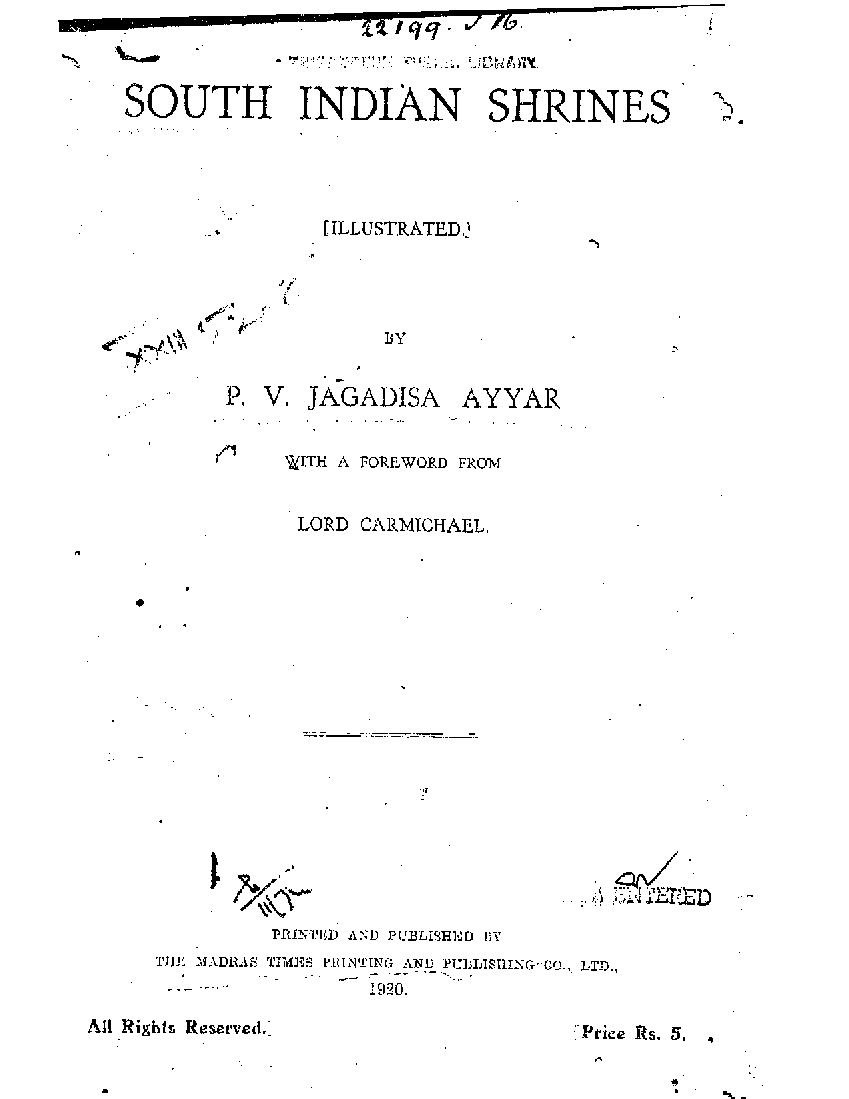
P.V. Jagadisa Ayyar (1865-1944), an Indian historian and scholar, penned the seminal work “South Indian Shrines” in 1920. This book holds immense significance for our understanding of South Indian temple architecture, especially the magnificent Brihadisvara Temple in Gangaikonda Cholapuram. Early Documentation: Published amidst rising archaeological interest in India, “South Indian Shrines” offers one of the earliest detailed accounts of the Brihadisvara Temple.
While archaeological excavations provided more data later, Ayyar’s work laid the groundwork for understanding its grandeur. Ayyar meticulously describes the temple’s architectural features, sculptures, inscriptions, and history.
He delves into its mythological associations and religious significance, providing a holistic perspective. Unlike many academic texts of the time, Ayyar employs clear and engaging language, making the temple’s intricacies accessible to a wider audience. The Brihadisvara Temple, commissioned by Chola king Rajendra I, receives particular attention in the book. Ayyar highlights its Monumental Scale, Exquisite Sculptures and Historical Significance.
Lorem Ipsum is simply dummy text of the printing and typesetting industry. Lorem Ipsum has been the industry’s standard dummy text ever since the 1500s, when an unknown printer took a galley of type and scrambled it to make a type specimen book. It has survived not only five centuries, but also the leap into electronic typesetting, remaining essentially unchanged. It was popularised in the 1960s with the release of Letraset sheets containing Lorem Ipsum passages, and more recently with desktop publishing software like Aldus PageMaker including versions of Lorem Ipsum.
For the Serious Reader
Lorem Ipsum is simply dummy text of the printing and typesetting industry. Lorem Ipsum has been the industry’s standard dummy text ever since the 1500s, when an unknown printer took a galley of type and scrambled it to make a type specimen book. It has survived not only five centuries, but also the leap into electronic typesetting, remaining essentially unchanged. It was popularised in the 1960s with the release of Letraset sheets containing Lorem Ipsum passages, and more recently with desktop publishing software like Aldus PageMaker including versions of Lorem Ipsum
Lorem Ipsum is simply dummy text of the printing and typesetting industry. Lorem Ipsum has been the industry’s standard dummy text ever since the 1500s, when an unknown printer took a galley of type and scrambled it to make a type specimen book. It has survived not only five centuries, but also the leap into electronic typesetting, remaining essentially unchanged.
Lorem Ipsum is simply dummy text of the printing and typesetting industry. Lorem Ipsum has been the industry’s standard dummy text ever since the 1500s, when an unknown printer took a galley of type and scrambled it to make a type specimen book. It has survived not only five centuries, but also the leap into electronic typesetting, remaining essentially unchanged. It was popularised in the 1960s with the release of Letraset sheets containing Lorem Ipsum passages, and more recently with desktop publishing software like Aldus PageMaker including versions of Lorem Ipsum
Lorem Ipsum is simply dummy text of the printing and typesetting industry. Lorem Ipsum has been the industry’s standard dummy text ever since the 1500s, when an unknown printer took a galley of type and scrambled it to make a type specimen book. It has survived not only five centuries, but also the leap into electronic typesetting, remaining essentially unchanged.
Lorem Ipsum is simply dummy text of the printing and typesetting industry. Lorem Ipsum has been the industry’s standard dummy text ever since the 1500s, when an unknown printer took a galley of type and scrambled it to make a type specimen book. It has survived not only five centuries, but also the leap into electronic typesetting, remaining essentially unchanged. It was popularised in the 1960s with the release of Letraset sheets containing Lorem Ipsum passages, and more recently with desktop publishing software like Aldus PageMaker including versions of Lorem Ipsum
Lorem Ipsum is simply dummy text of the printing and typesetting industry. Lorem Ipsum has been the industry’s standard dummy text ever since the 1500s, when an unknown printer took a galley of type and scrambled it to make a type specimen book. It has survived not only five centuries, but also the leap into electronic typesetting, remaining essentially unchanged. It was popularised in the 1960s with the release of Letraset sheets containing Lorem Ipsum passages, and more recently with desktop publishing software like Aldus PageMaker including versions of Lorem Ipsum
Lorem Ipsum is simply dummy text of the printing and typesetting industry. Lorem Ipsum has been the industry’s standard dummy text ever since the 1500s, when an unknown printer took a galley of type and scrambled it to make a type specimen book. It has survived not only five centuries, but also the leap into electronic typesetting, remaining essentially unchanged.
Lorem Ipsum Dummy Text
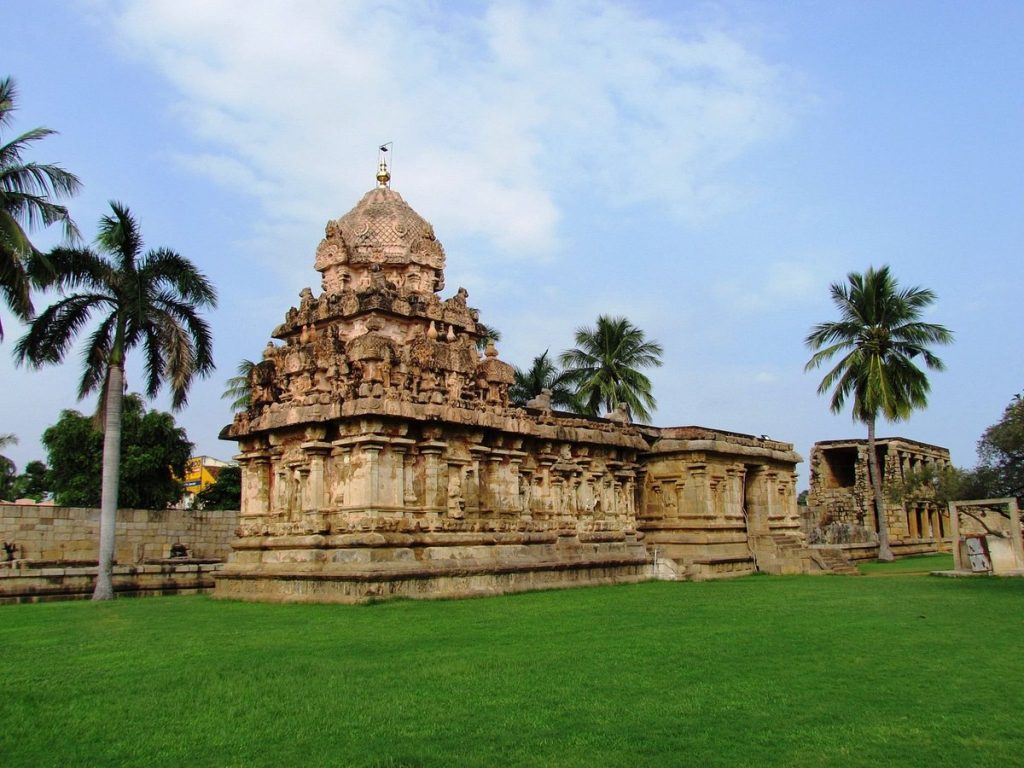
To commemorate his conquest, Rajendra I founded a new capital city – Gangaikonda Cholapuram, named after the Ganges River. This new city symbolized his imperial reach and served as a strategic location for further campaigns. Within this city, the Brihadeshvara Temple was constructed between 1020 and 1035 CE.
The Brihadeshvara Temple, also known as Gangaikondacholisvarar Temple, mirrored the grand Brihadeeswarar Temple built by Raja Raja I in Thanjavur. However, Rajendra I aimed to surpass his father’s legacy.
While slightly smaller in height, the Gangaikonda Cholapuram temple is praised for its intricate sculptures, exquisite bronze statues, and innovative architectural features like the “Nandi,” a monolithic bull sculpted from a single granite boulder.
Lorem Ipsum is simply dummy text of the printing and typesetting industry. Lorem Ipsum has been the industry’s standard dummy text ever since the 1500s, when an unknown printer took a galley of type and scrambled it to make a type specimen book.
The Brihadeshvara Temple wasn’t just a religious monument; it served as a political and cultural hub.
Though Gangaikonda Cholapuram later lost its prominence, the Brihadeshvara Temple stands as a magnificent testament to Chola power, ambition, and artistic
excellence. Along with the Thanjavur temple, it forms part of the UNESCO World Heritage site “Great Living Chola Temples” and continues to attract visitors and scholars interested in India’s rich history and architectural marvels. Lorem Ipsum is simply dummy text of the printing and typesetting industry. Lorem Ipsum has been the industry’s standard dummy text ever since the 1500s, when an unknown printer took a galley of type and scrambled it to make a type specimen book.
Lorem Ipsum Dummy Text
To commemorate his conquest, Rajendra I founded a new capital city – Gangaikonda Cholapuram, named after the Ganges River. This new city symbolized his imperial reach and served as a strategic location for further campaigns.
The Brihadeshvara Temple, also known as Gangaikondacholisvarar Temple, mirrored the grand Brihadeeswarar Temple built by Raja Raja I in Thanjavur. However, Rajendra I aimed to surpass his father’s legacy.
Architectural Marvel – The Brihadishwara Temple
of Gangaikonda Cholapuram: He built this temple as a replica of the Thanjavur Brihadishwara Temple, though it features some architectural refinements such as a shorter but more intricate vimana and a massive Nandi statue. The temple’s bronze sculptures and stone carvings display exceptional craftsmanship, reflecting the height of Chola artistry.
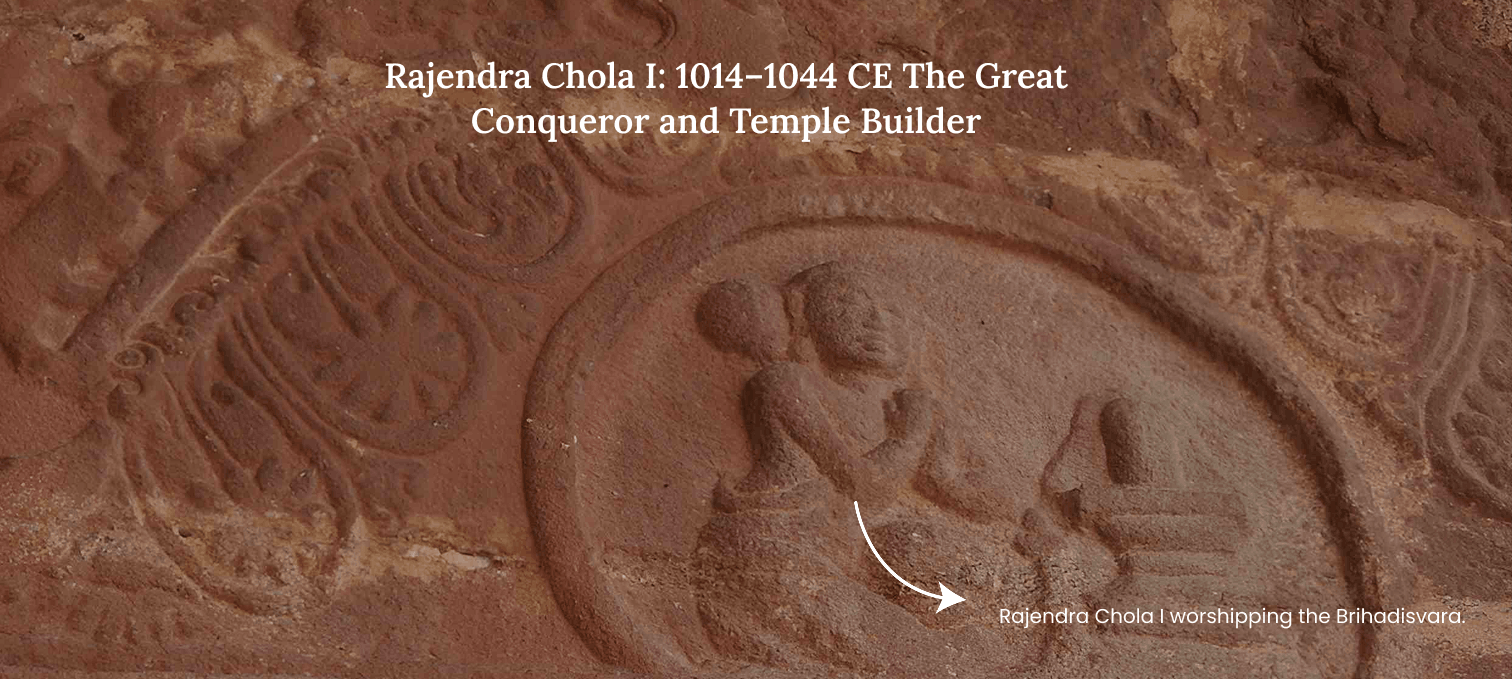
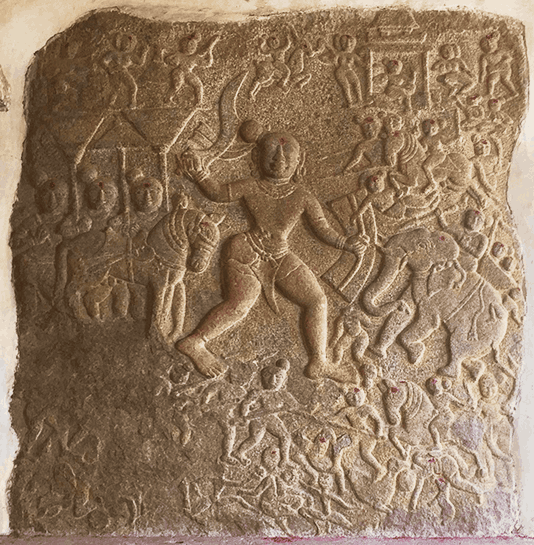
The temple’s story begins with King Rajendra I (1012-1044 CE), son of the famous Raja Raja Chola I. While his father focused on consolidating power in the south, Rajendra embarked on ambitious military campaigns, expanding the Chola Empire northward towards the Ganges River. His victories are celebrated in epic poems like the “Kalingattuparani,” highlighting his prowess and dominance.
Lorem Ipsum is simply dummy text of the printing and typesetting industry. Lorem Ipsum has been the industry’s standard dummy text ever since the 1500s, when an unknown printer took a galley of type and scrambled it to make a type specimen book. It has survived not only five centuries, but also the leap into electronic typesetting, remaining essentially unchanged.
The Cholas were a powerful dynasty that ruled parts of southern India from the 3rd century BCE to the 13th century CE. During their reign, they achieved great prosperity and established a vast empire, leaving behind a rich legacy of art, architecture, and literature. The construction of the Brihadeshvara Temple at Gangaikonda Cholapuram stands as a testament to their ambitions and achievements.
Lorem
Ipsum
Dummy of
Text
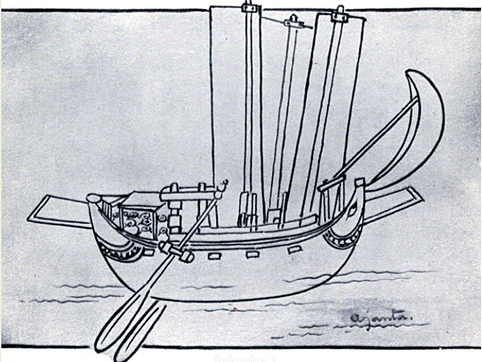
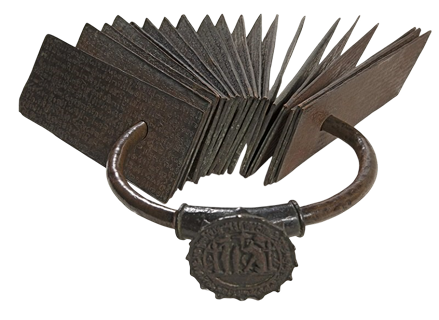
Copper plate of Rajendra I about building a temple in Srivijaya Empire
Lorem Ipsum is simply dummy text of the printing and typesetting industry. Lorem Ipsum has been the industry’s standard dummy text ever since the 1500s, when an unknown printer took a galley of type and scrambled it to make a type specimen book. It has survived not only five centuries, but also the leap into electronic typesetting, remaining essentially unchanged.
Lorem Ipsum is simply dummy text of the printing and typesetting industry. Lorem Ipsum has been the industry’s standard dummy text ever since the 1500s, when an unknown printer took a galley of type and scrambled it to make a type specimen book. It has survived not only five centuries, but also the leap into electronic typesetting, remaining essentially unchanged.
Lorem Ipsum is simply dummy text of the printing and typesetting industry. Lorem Ipsum has been the industry’s standard dummy text ever since the 1500s, when an unknown printer took a galley of type and scrambled it to make a type specimen book. It has survived not only five centuries, but also the leap into electronic typesetting, remaining essentially unchanged.
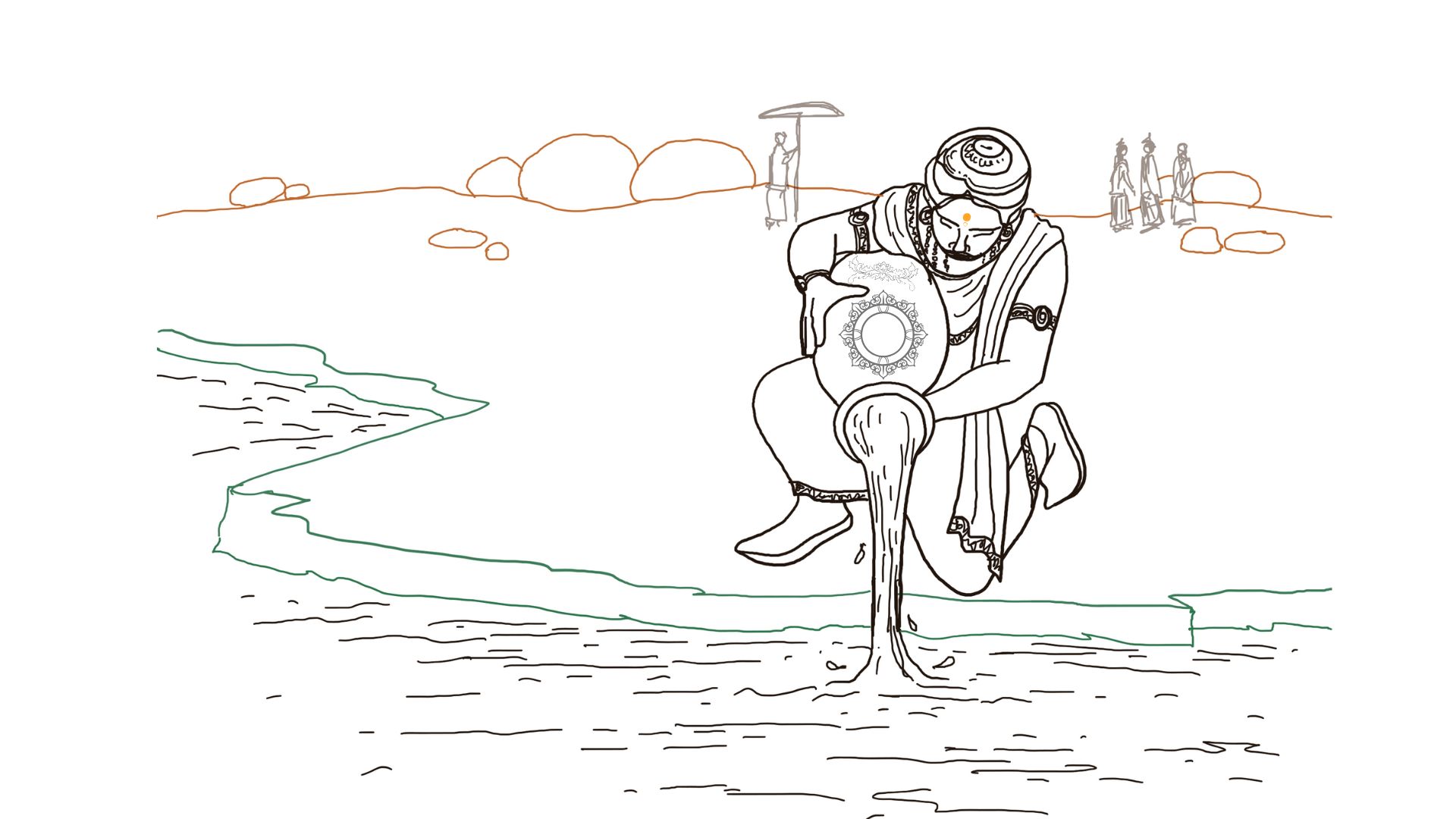
Further, the Brihadishwara temple, built by him in the year 1035 CE and a world heritage site, has a lot of significance for the above event as Ganga water was mixed in its water tank. This act of pouring water into the tank is mentioned as Jalasthambha (in italics) in the inscriptions. (read more) Although none of the temple’s 12 inscriptions mention Emperor Rajendra, the earliest and longest inscription here is by his third son, Virarajendra Chola. It lists the contributions of land from villages in the Empire and states how proceeds go towards the temple’s worship and maintenance activities. One can also see more information about lands and revenue during the reign of Rajadhiraja I.
Gangaikonda Cholan (Rajendra Chola), one who built Gangaikonda Cholapuram, the Chola capital city where the holy water of Ganga was brought, is evidence enough for the commemoration of the conquest of the entire eastern coast of India by the Chola empire.
Lorem
Ipsum
Lorem Ipsum Dummy Text
Lorem Ipsum is simply dummy text of the printing and typesetting industry. Lorem Ipsum has been the industry’s standard dummy text ever since the 1500s, when an unknown printer took a galley of type and scrambled it to make a type specimen book.
Lorem Ipsum is simply dummy text of the printing and typesetting industry. Lorem Ipsum has been the industry’s standard dummy text ever since the 1500s, when an unknown printer took a galley of type and scrambled it to make a type specimen book.
Lorem Ipsum is simply dummy text of the printing and typesetting industry. Lorem Ipsum has been the industry’s standard dummy text ever since the 1500s, when an unknown printer took a galley of type and scrambled it to make a type specimen book.
Lorem Ipsum is simply dummy text of the printing and typesetting industry. Lorem Ipsum has been the industry’s standard dummy text ever since the 1500s, when an unknown printer took a galley of type and scrambled it to make a type specimen book.
Lorem Ipsum is simply dummy text of the printing and typesetting industry. Lorem Ipsum has been.
Lorem Ipsum is simply dummy text of the printing and typesetting industry. Lorem Ipsum has been the industry’s standard dummy text ever since the 1500s, when an unknown printer took a galley of type and scrambled it to make a type specimen book. Lorem Ipsum is simply dummy text
The Shrine of Mahishasu-
ramardinī
The shrine of Mahishasuramardini in the left wing of the cave
Lorem Ipsum is simply dummy text of the printing and typesetting industry. Lorem Ipsum has been the industry’s standard dummy text ever since the 1500s, when an unknown printer took a galley of type and scrambled it to make a type specimen book.
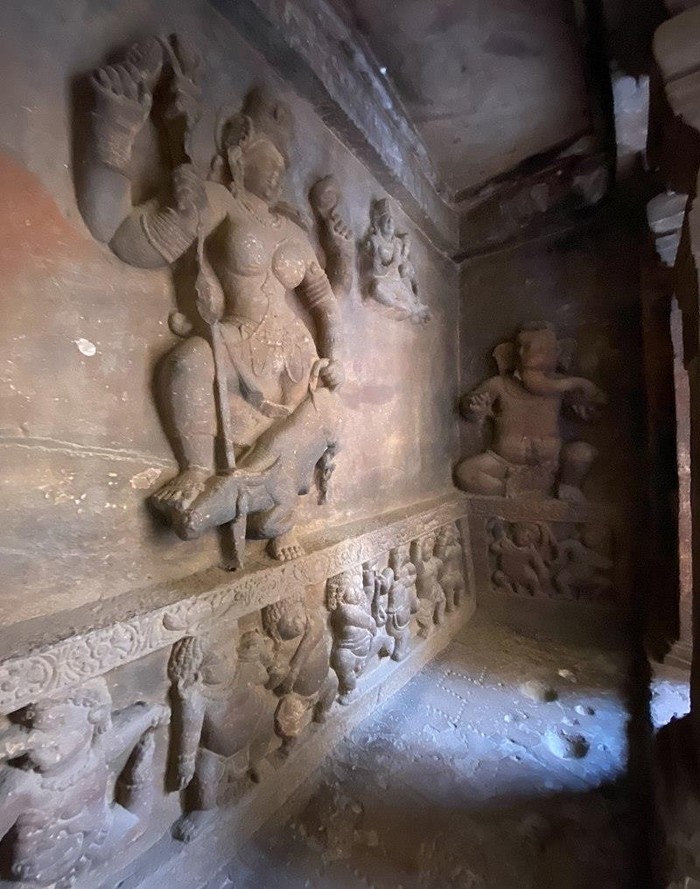
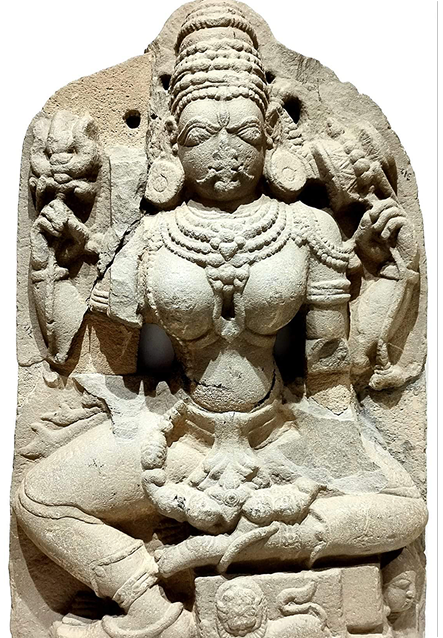
The shorter limb of the Left is dedicated to a small yet potent shrine of Durgā as Mahishasuramardinī. Supported by two pillars and two pilasters, this shrine houses the fierce goddess standing victoriously over the buffalo demon. Her four hands wield a wheel, a trident, a conch, and the buffalo’s tail, symbolising her divine power and triumph over evil. Flanking this dramatic scene are Gandharva couples, enhancing the shrine’s celestial aura.
Lorem Ipsum is simply dummy text of the printing and typesetting industry. Lorem Ipsum has been the industry’s standard dummy text ever since the 1500s, when an unknown printer took a galley of type.
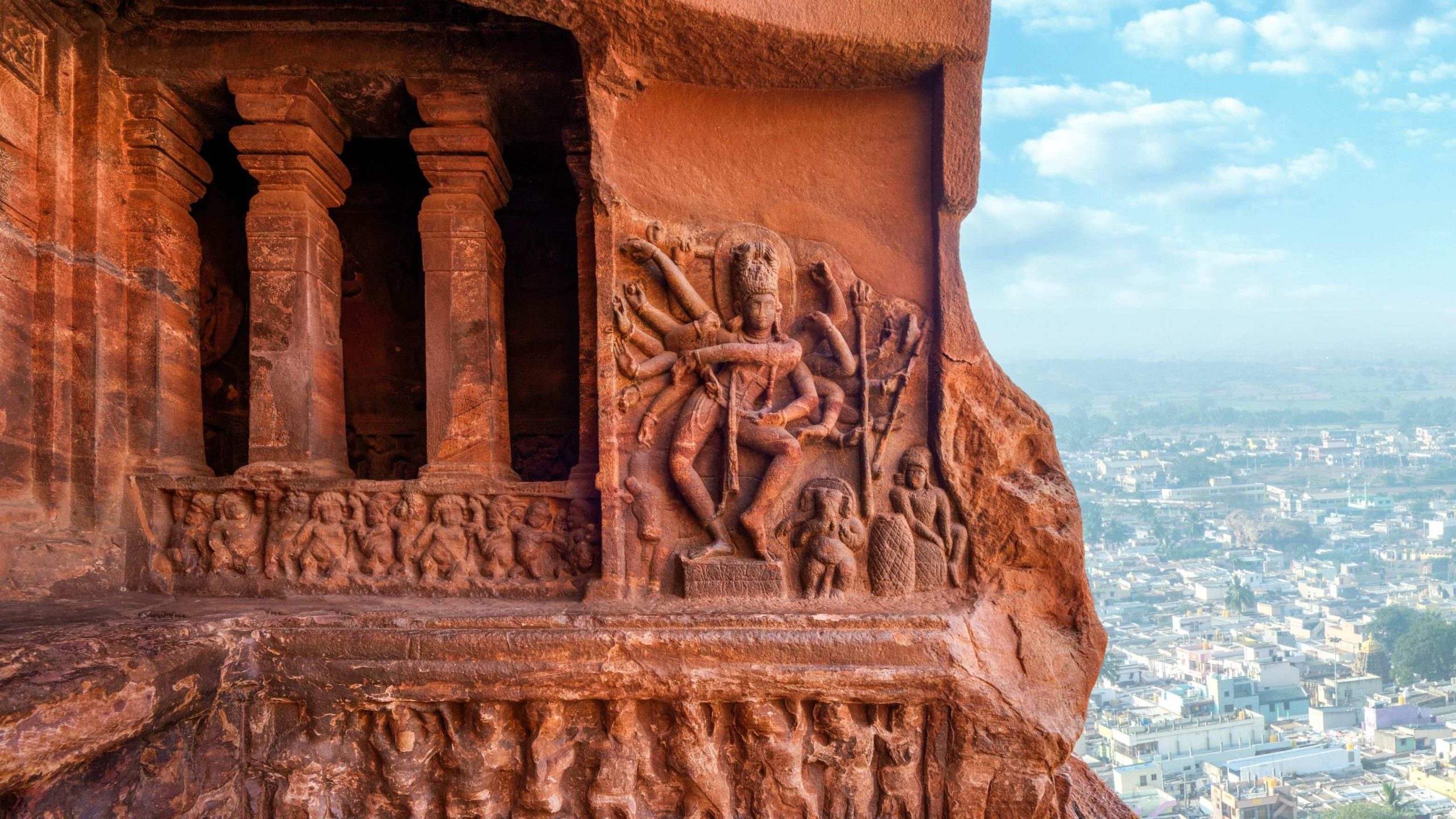
Adjacent to Durgā’s shrine, a smaller sanctuary venerates Śiva in his Natarāja form, capturing the dynamic essence of his cosmic dance, the Tāṇḍava. With eighteen hands, Śiva holds various objects, each symbolising different aspects of his divine nature. From an elephant’s skin to a drum (ḍamaru), and a rosary (akṣasūtra) to a trident (triśūla), his form is both awe-inspiring and intricate. Behind him stands the loyal bull, Nandin, while Gaṇeśa, depicted with two hands, and a male figure playing drums, complete this divine scene.
Lorem Ipsum is simply dummy text of the printing and typesetting industry. Lorem Ipsum has been the industry’s standard dummy text ever since the 1500s, when an unknown printer took a galley of type and scrambled it to make a type specimen book.
Celestial Narratives in Stone
Within the shrine of Mahishasuramardinī, a long, narrow pedestal lined with ten dwarfs in various postures supports the goddess’s image. Each figure tells a story, contributing to the rich tapestry of myth and legend that Cave 1 encapsulates. On the southern wall, Kārttikeya, mounted on a peacock, graces the shrine, while the northern wall features Gaṇeśa, holding a cup of sweets (modaka), further enriching this divine assembly.
Verandah
of
Legends
The cave’s verandah, supported by four front pillars and flanked by pilasters, is adorned with bas-reliefs depicting scenes of divine interplay. The east wall presents a vibrant tableau of eight dwarfs engaged in dance, song, and music, beneath the majestic figure of Harihara, a fusion of Śiva and Viṣṇu. This divine duality is illustrated through
attributes like a battle-axe and conch, and the figures of Nandin and Garuḍa.
Lorem Ipsum is simply dummy text of the printing and typesetting industry.
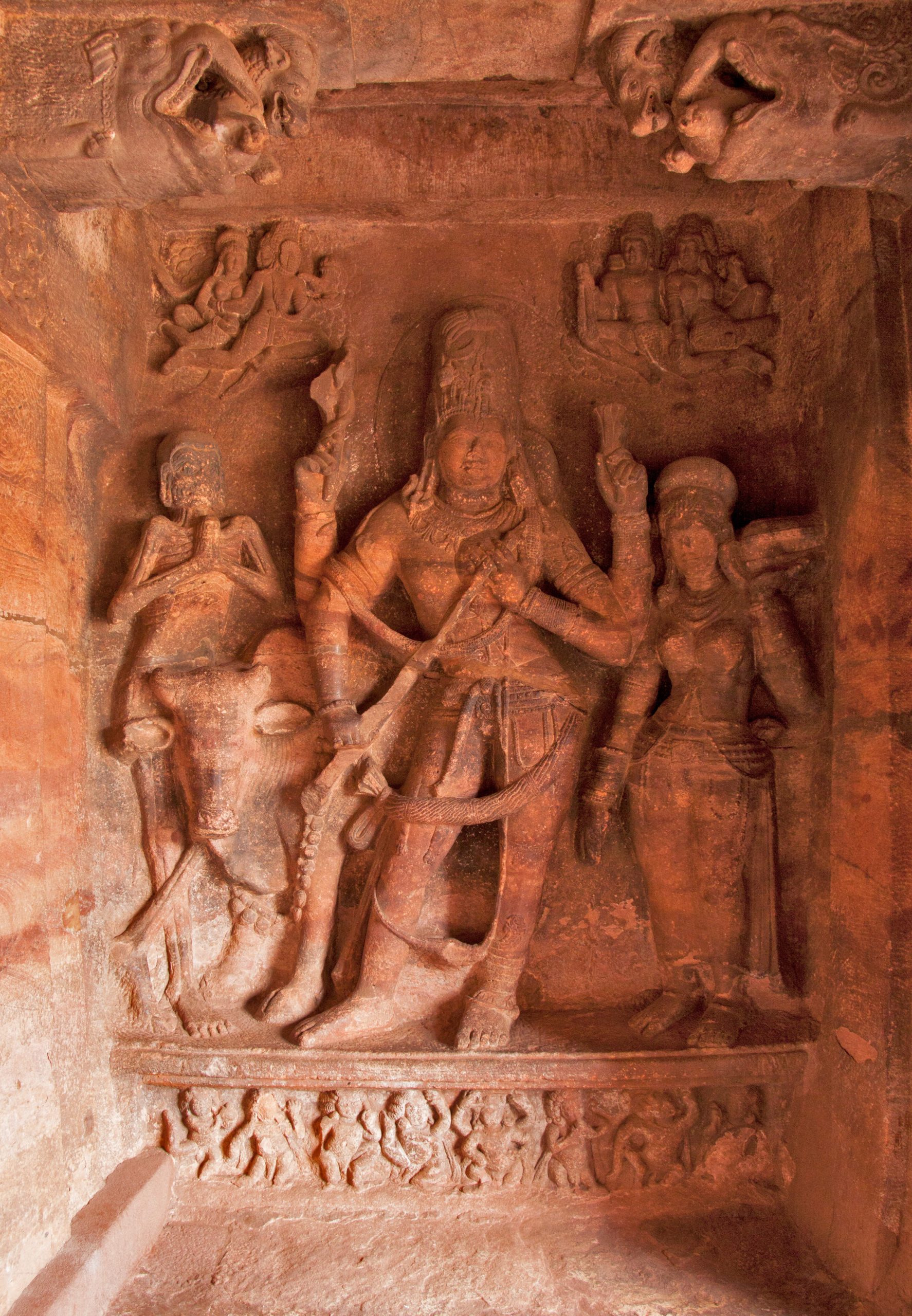
On the west wall, the enigmatic Arddhanārīśvara, half Śiva and half Pārvatī, stands as a symbol of unity and balance. The intricate details of this figure, from the bull and Rishi Bhringi on Śiva’s side to the female attendant on Pārvatī’s side, reflect the harmonious fusion of masculine and feminine energies.
Slide 1 Heading
Lorem ipsum dolor sit amet consectetur adipiscing elit dolor
Click Here
Slide 2 Heading
Lorem ipsum dolor sit amet consectetur adipiscing elit dolor
Click Here
Slide 3 Heading
Lorem ipsum dolor sit amet consectetur adipiscing elit dolor
Click Here
Pillars of Artistic Mastery
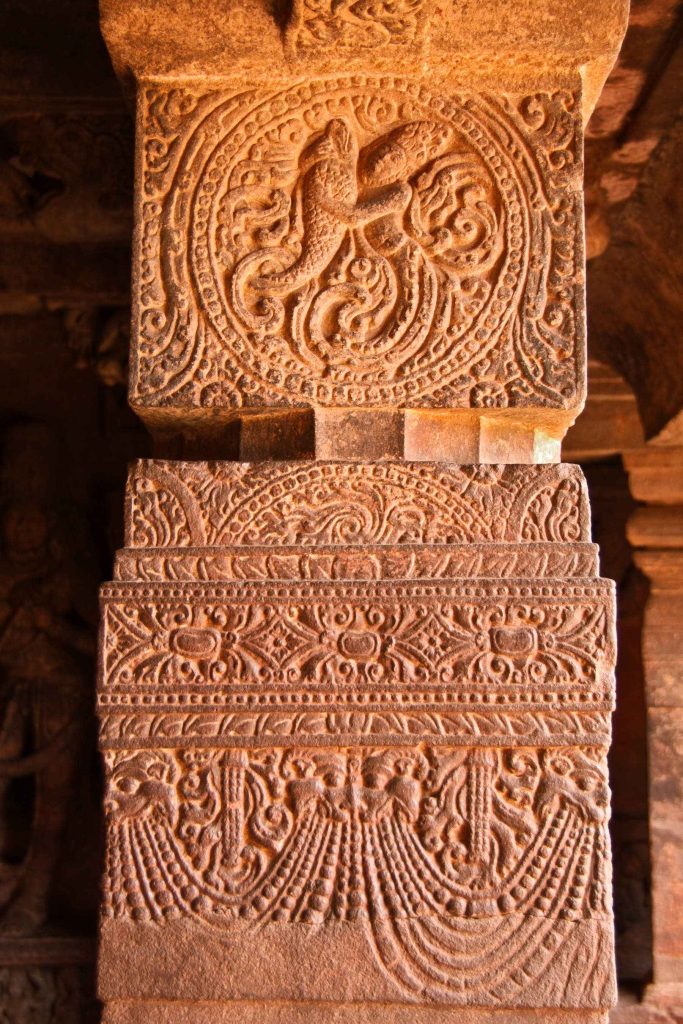
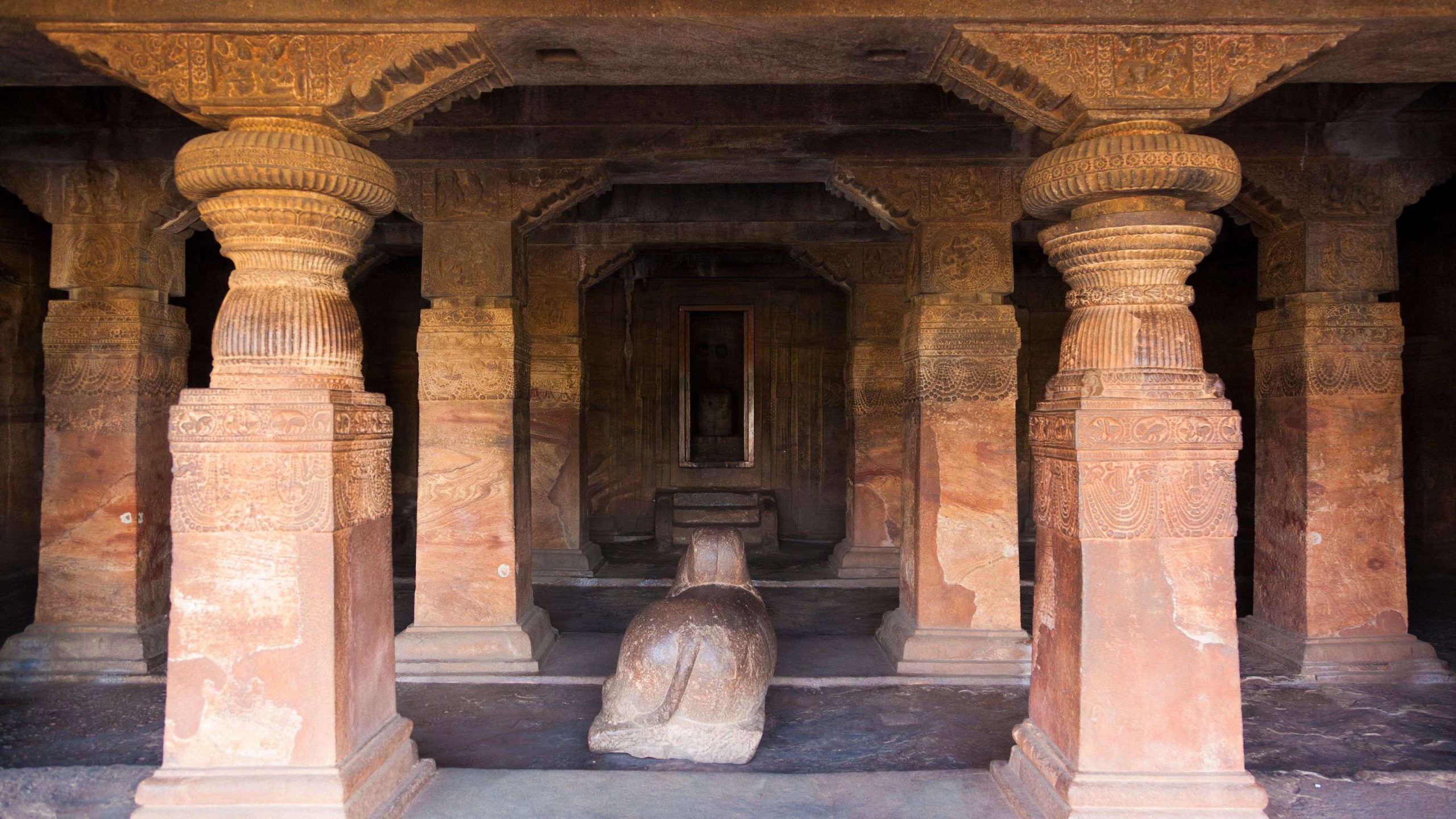
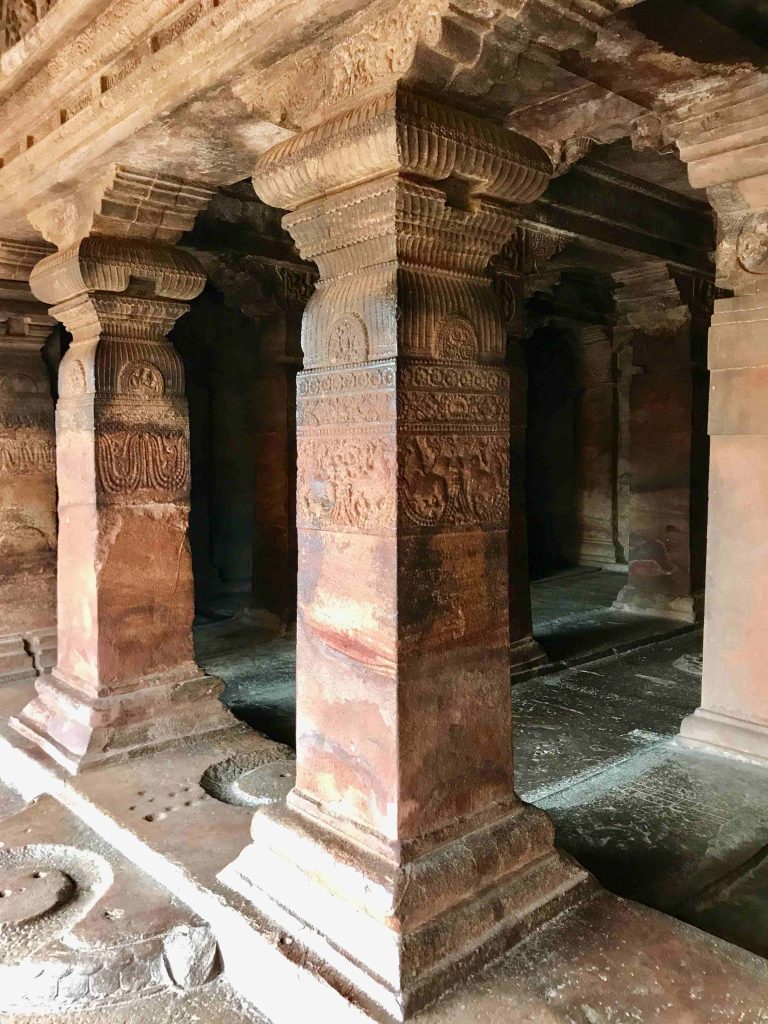
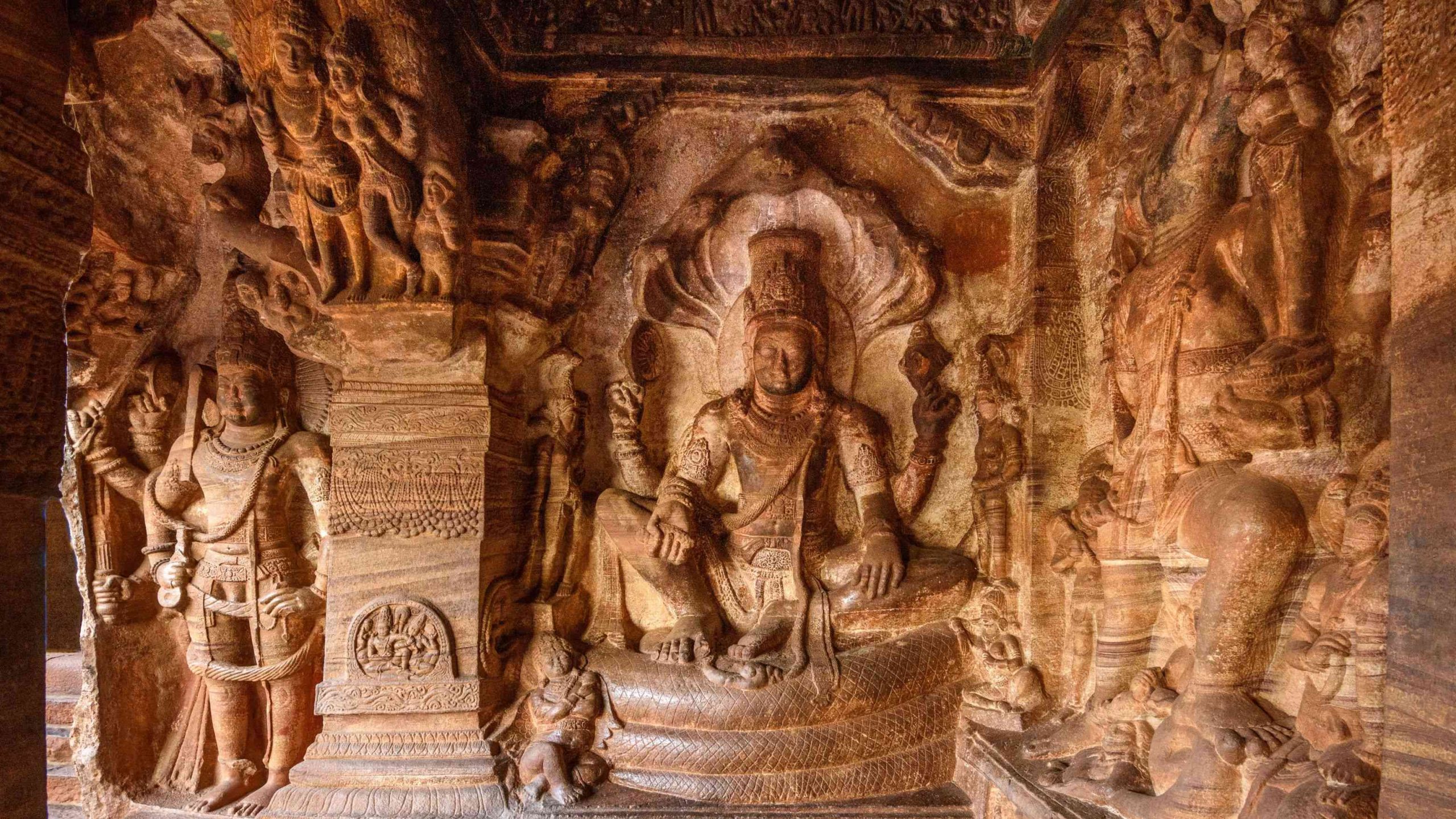
The pillars of Cave 1 are masterpieces in themselves. Square at the base and sixteen-sided near the top, they feature sunken panels with bas-reliefs of geese, makaras, and playful ganas. The capitals are adorned with scenes from divine realms, including Viṣṇu seated on Ananta in the sea of milk, and Śiva on Kailasa. Each panel tells a story, inviting visitors to pause and immerse themselves in the ancient narratives carved into stone.
The pillars of Cave 1 are masterpieces in themselves. Square at the base and sixteen-sided near the top, they feature sunken panels with bas-reliefs of geese, makaras, and playful ganas. The capitals are adorned with scenes from divine realms, including Viṣṇu seated on Ananta in the sea of milk, and Śiva on Kailasa. Each panel tells a story, inviting visitors to pause and immerse themselves in the ancient narratives carved into stone.
Lorem Ipsum is simply dummy text of the printing and typesetting industry. Lorem Ipsum is simply dummy text of the printing and typesetting industry. Lorem Ipsum is simply dummy text of.
The interior view of Cave 1
The
dvarapalas
of Cave 2
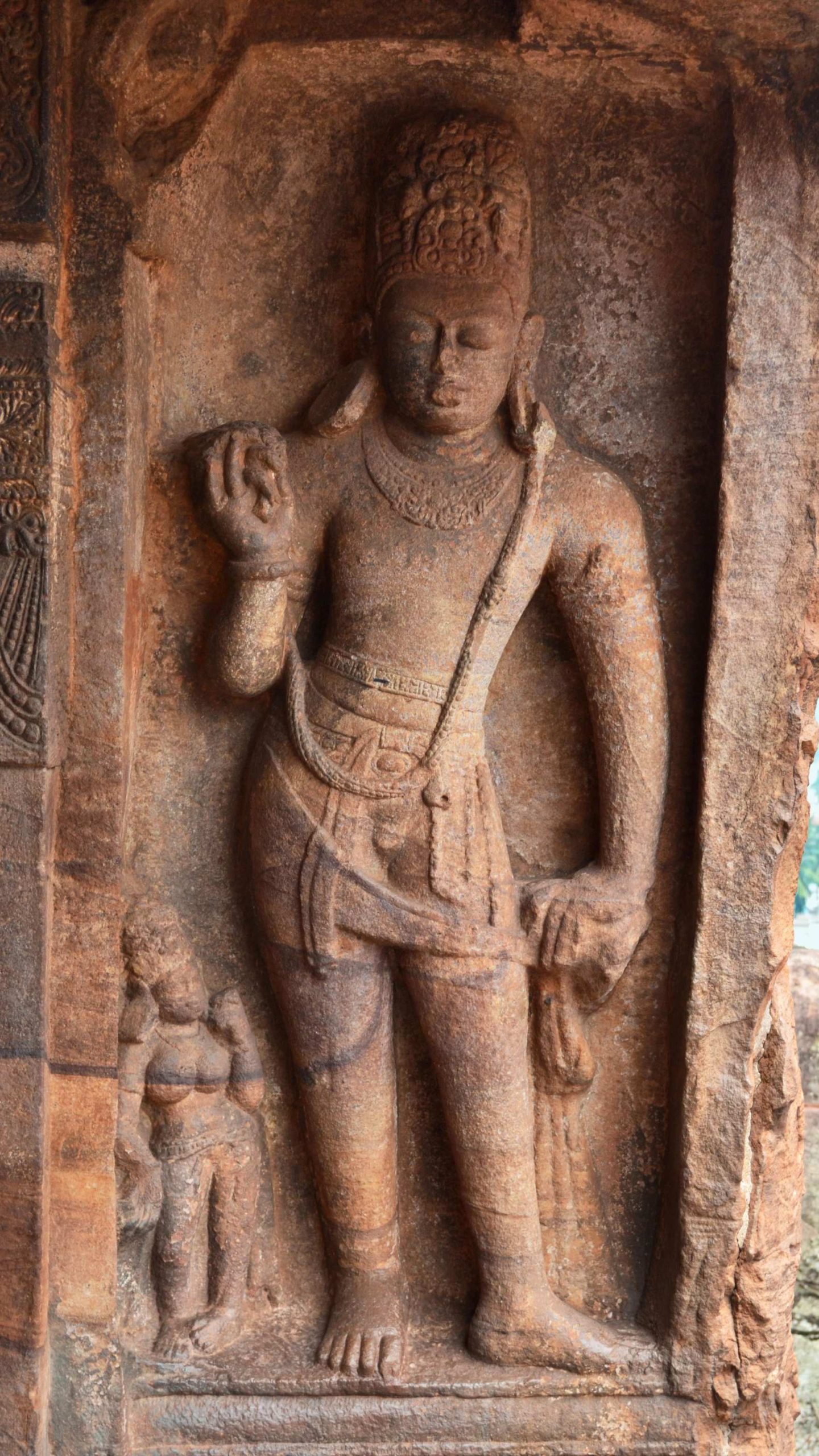
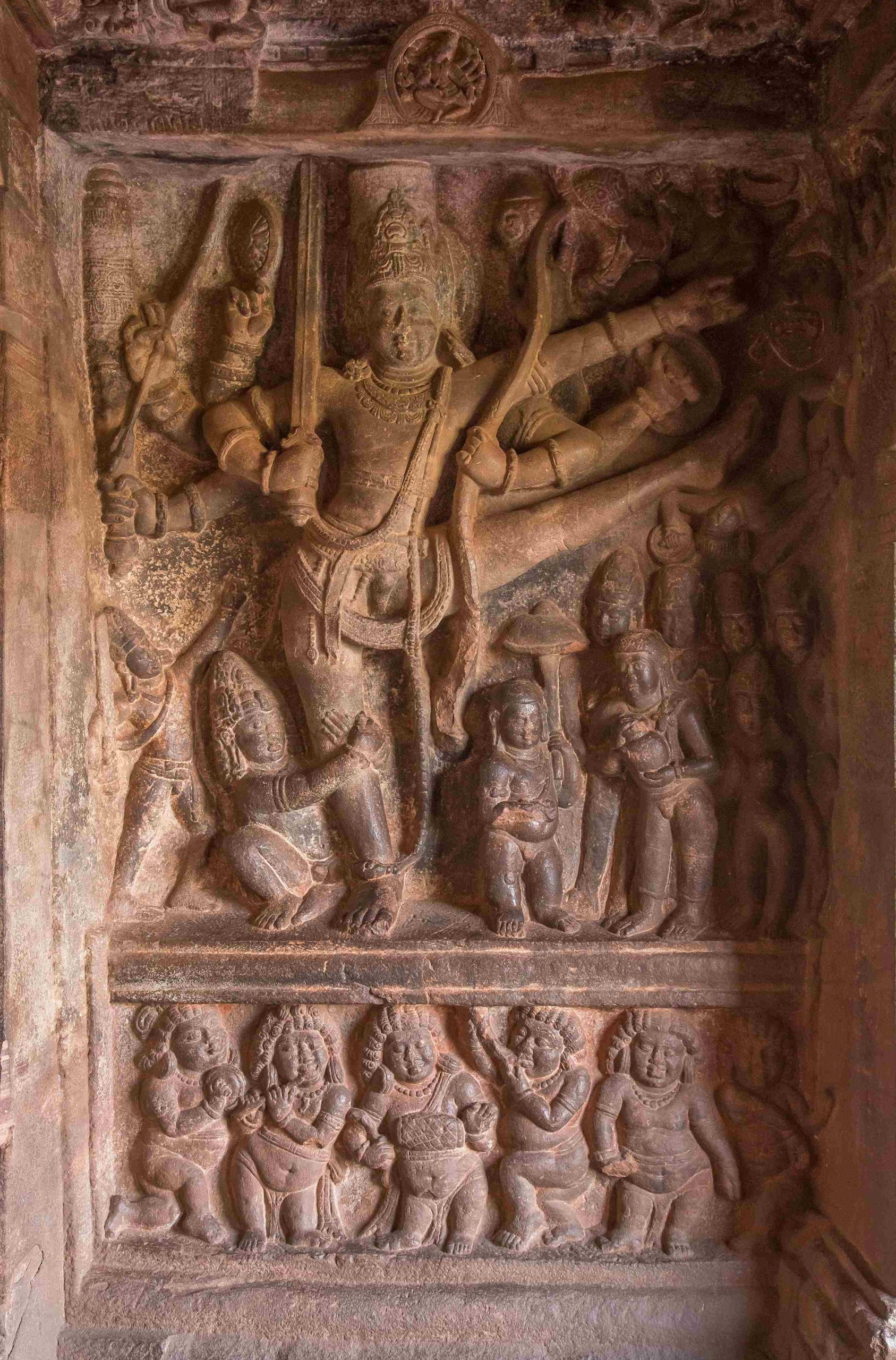
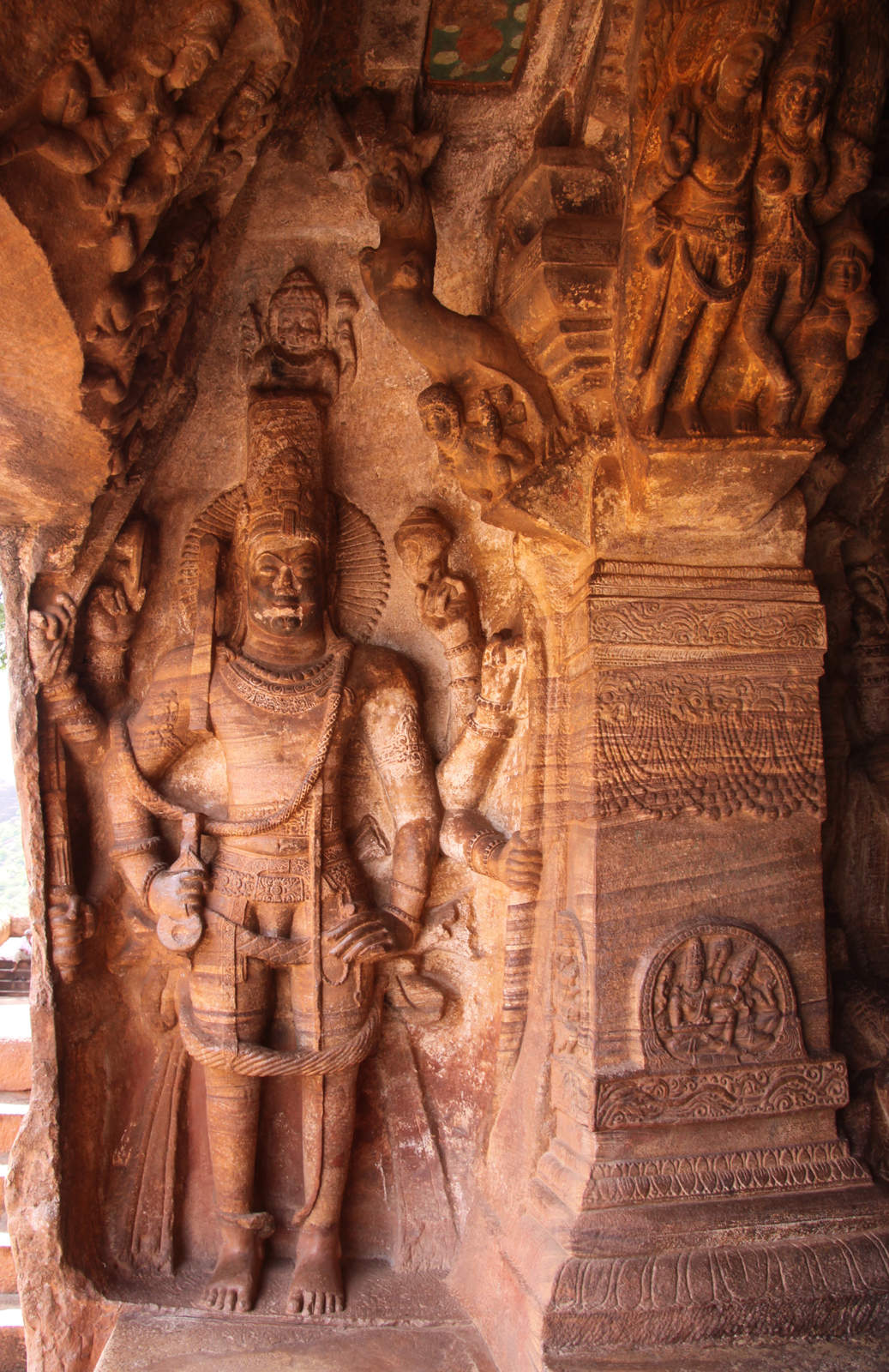
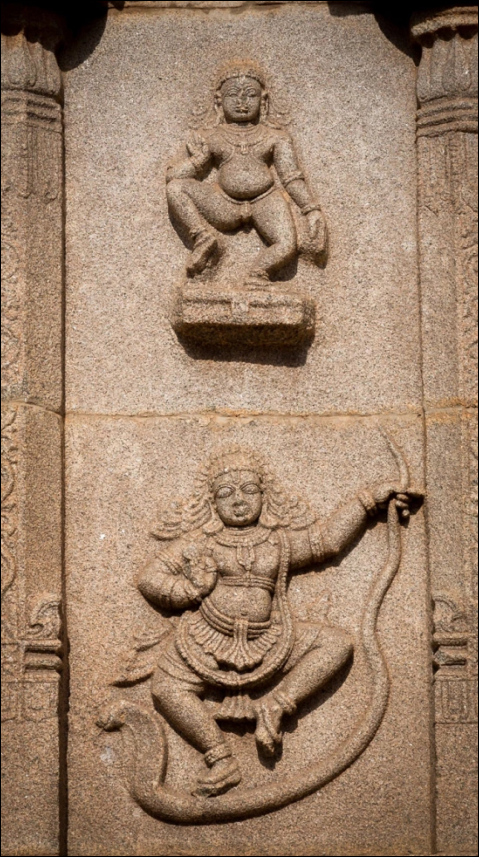
At the eastern end of the verandah, a dvarapala (guardian figure) stands on a pedestal with four ganas—three dancing and one turning a somersault. The dvarapala holds a small round object in his left hand, while his right hand rests on a knot in his garment. A female attendant holding a flower stands beside him. A similar scene is mirrored at the western end, where another dvarapala stands with a snake seated on the pedestal.
Lorem Ipsum is simply dummy text of the printing and typesetting industry. Lorem Ipsum is simply dummy text of the printing and typesetting industry.
Lorem Ipsum is a Dummy Text of Arddhanārīśvara, half Śiva and half Pārvatī, stands as a symbol of unity and balance. The intricate details of this figure, from the bull and Rishi Bhringi on Śiva’s side Lorem Ipsum is simply dummy text of the printing and typesetting industry. Lorem Ipsum has been the industry’s standard dummy text ever since the 1500s.
Pillars and Pilasters
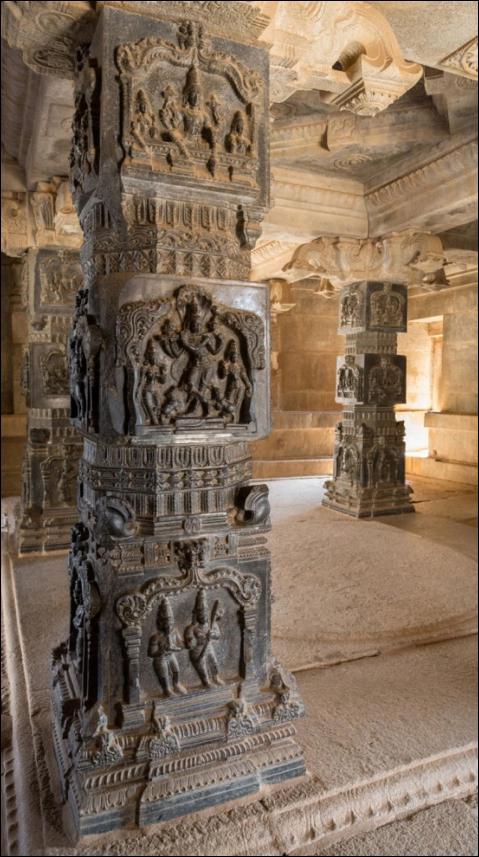
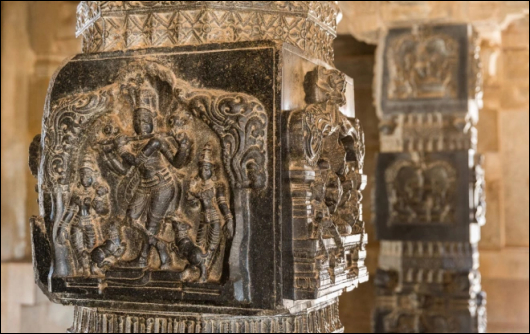
The verandah is supported by four pillars and two pilasters. The lower parts of these pillars are plain and square in section, but further up, they are adorned with detailed carvings. Near the base, garlands emerge from the mouths of kirtimukhas (face motifs). The pillars feature square panels filled with arabesque work, and the pilasters have medallions with various designs, including parrots and beautiful arabesques.
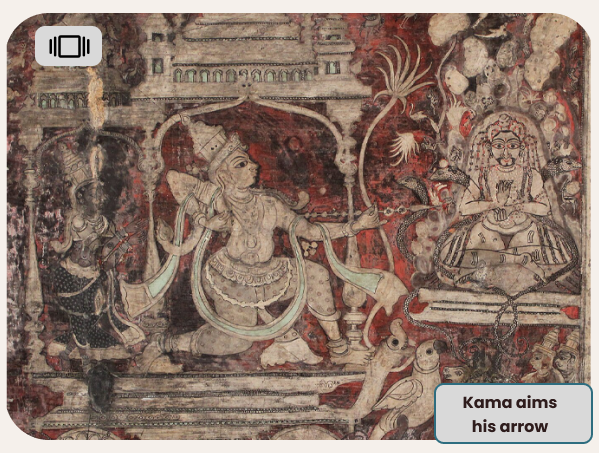
The capitals of the pillars and pilasters in the verandah are richly decorated. Each capital features rectangular panels with scenes of divine figures. The eastern pilaster shows a female with a flower, while the first pillar from the east depicts a pair seated on a bedstead, possibly representing Vishnu and Lakshmi with Sarasvati. The second pillar shows Shiva and Parvati on Mount Kailasa, and the third pillar likely represents Kama, the god of love. The fourth pillar features Sri, the goddess of fortune, with two elephants pouring water over her head.
Mandapa and Divine Carvings
The interior view of Cave 1
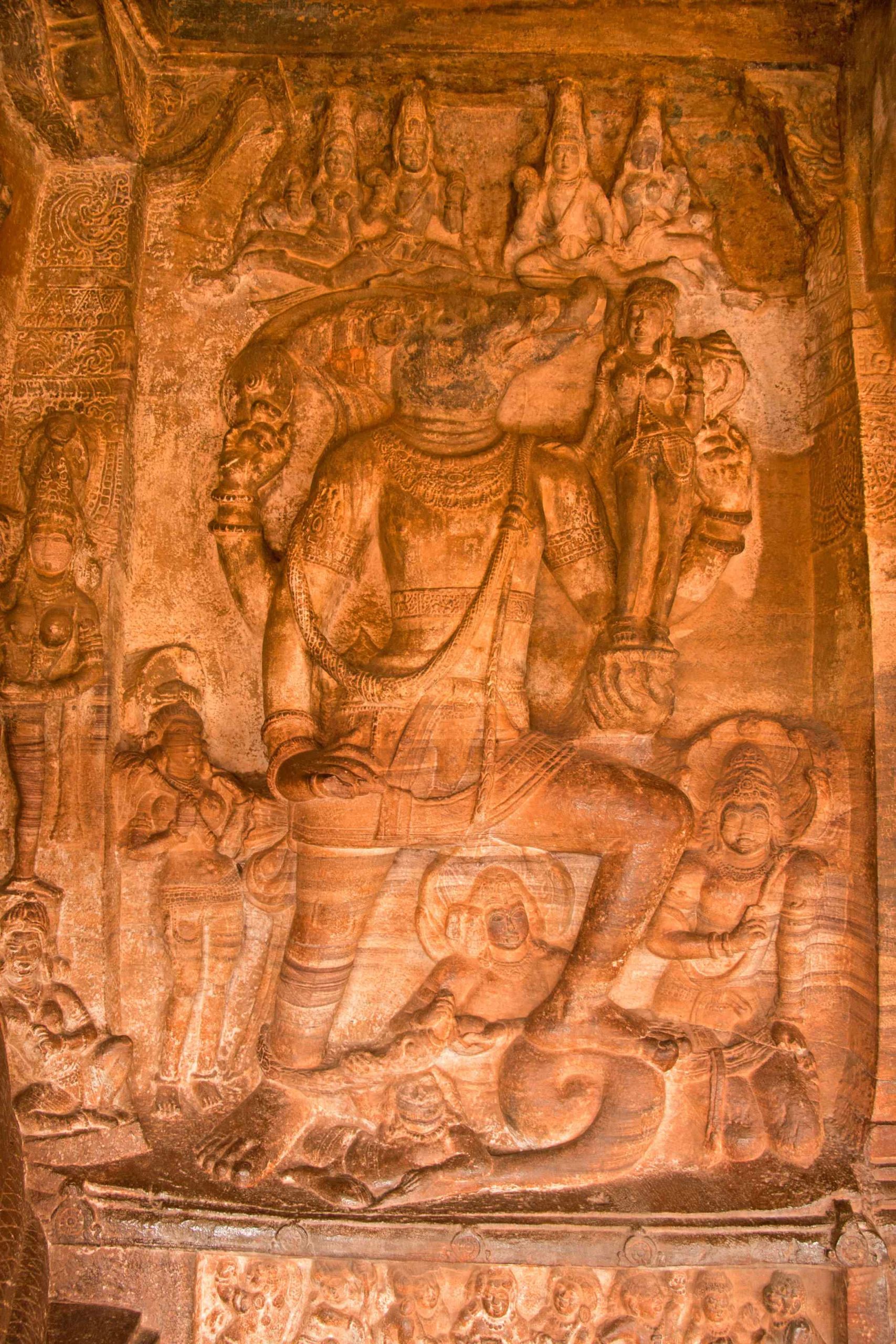
The mandapa inside the cave is supported by eight pillars, each with sunken panels on their capitals. These panels generally depict a male and a female seated in various poses, with one notable exception showing two figures in combat. The verandah’s side walls house two large bas-reliefs. The western wall features the Boar incarnation (Varaha) of Vishnu, holding the Earth Goddess on his snout. The eastern wall depicts the Vamana incarnation of Vishnu.
Lorem Ipsum is simply dummy text of the printing and typesetting industry. Lorem Ipsum has been the industry’s standard dummy text ever since the 1500s, when an unknown printer took a galley of type and scrambled it to make a type specimen book. It has survived not only five centuries, but also the leap into electronic typesetting, remaining essentially unchanged.
The interior view of Cave 1
The mandapa inside the cave is supported by eight pillars, each with sunken panels on their capitals. These panels generally depict a male and a female seated in various poses, with one notable exception showing two figures in combat. The verandah’s side walls house two large bas-reliefs. The western wall features the Boar incarnation (Varaha) of Vishnu, holding the Earth Goddess on his snout. The eastern wall depicts the Vamana incarnation of Vishnu.
Lorem Ipsum is simply dummy text of the printing and typesetting industry. Lorem Ipsum has been the industry’s standard dummy text ever since the 1500s, when an unknown printer took a galley of type and scrambled it to make a type specimen book. It has survived not only five centuries, but also the leap into electronic typesetting, remaining essentially unchanged.
Lintels and Mythological Scenes
Within the shrine of Mahishasuramardinī, a long, narrow pedestal lined with ten dwarfs in various postures supports the goddess’s image. Each figure tells a story, contributing to the rich tapestry of myth and legend that Cave 1 encapsulates. On the southern wall, Kārttikeya, mounted on a peacock, graces the shrine, while the northern wall features Gaṇeśa, holding a cup of sweets (modaka), further enriching this divine assembly.
Lorem Ipsum is simply dummy text of the printing and typesetting industry. Lorem Ipsum has been the industry’s standard dummy text ever since the 1500s, when an unknown printer took a galley of type and scrambled it to make a type specimen book. It has survived not only five centuries, but also the leap into electronic typesetting, remaining essentially unchanged.
Lorem Ipsum is simply dummy text of the printing and typesetting industry. Lorem Ipsum has been the industry’s standard dummy text ever since the 1500s, when an unknown printer took a galley of type and scrambled it to make a type specimen book.
The shrine of Mahishasuramardini in the left wing of the cave
The reliefs
of
Ashtabhuja Swami
Lorem Ipsum is simply dummy text of the printing and typesetting industry. Lorem Ipsum has been the industry’s standard dummy text ever since the 1500s, when an unknown printer took a galley of type and scrambled it to make a type specimen book. It has survived not only five centuries, but also the leap into electronic typesetting, remaining essentially unchanged.
Lorem Ipsum is simply dummy text of the printing and typesetting industry.
The shrine of Mahishasuramardini in the left wing of the cave
The reliefs
of
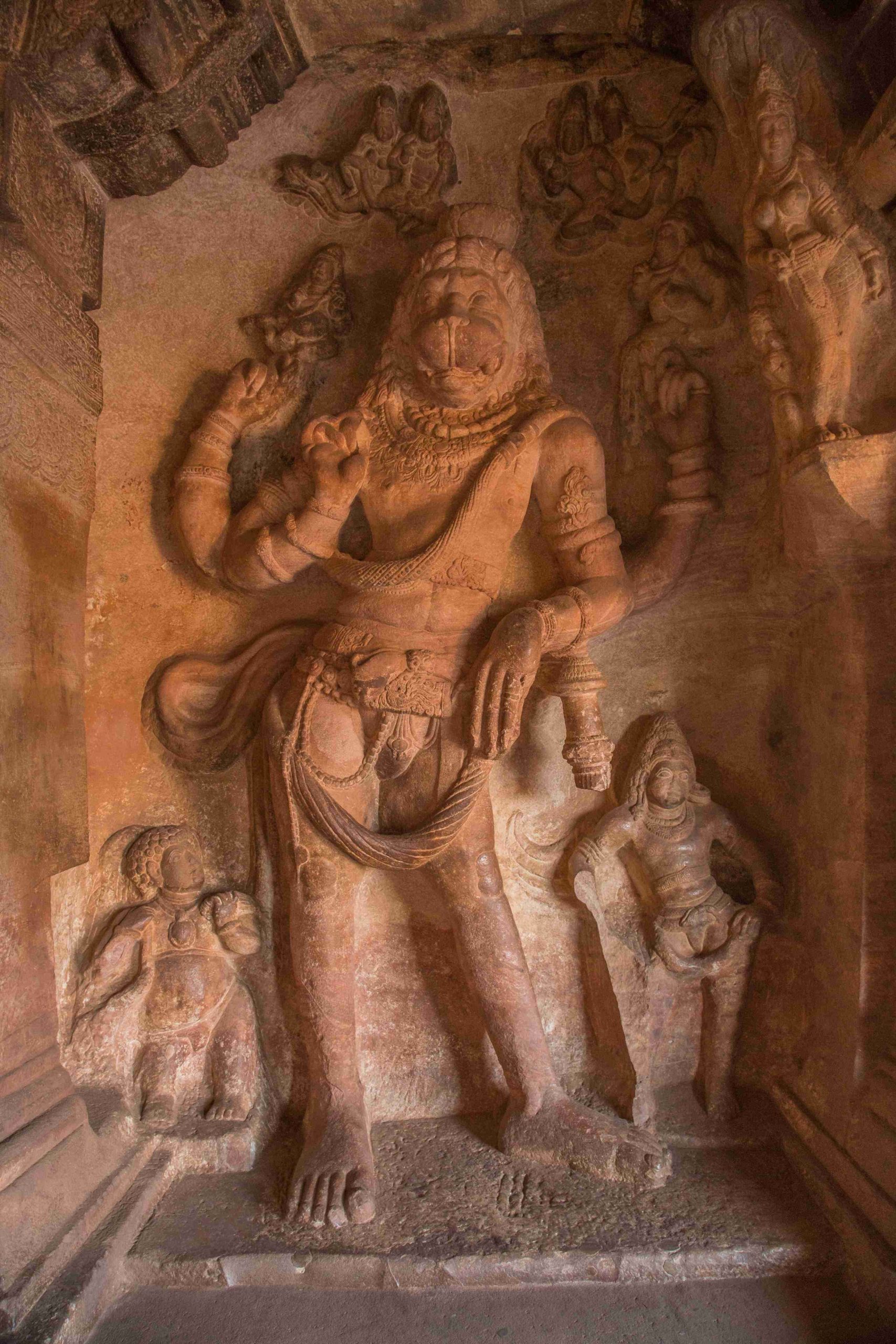
Narasimha
Lorem Ipsum is simply dummy text of the printing and typesetting industry. Lorem Ipsum has been the industry’s standard dummy text ever since the 1500s, when an unknown printer took a galley of type and scrambled it to make a type specimen book. It has survived not only five centuries, but also the leap into electronic typesetting, remaining essentially unchanged.
Lorem Ipsum is simply dummy text of the printing and typesetting industry. Lorem Ipsum is simply dummy text of the printing and typesetting industry.
The shrine of Mahishasuramardini in the left wing of the cave
Detailed Carvings and Iconography
On the west wall, the enigmatic Arddhanārīśvara, half Śiva and half Pārvatī, stands as a symbol of unity and balance. The intricate details of this figure, from the bull and Rishi Bhringi on Śiva’s side to the female attendant on Pārvatī’s side, reflect the harmonious fusion of masculine and feminine energies.
Sprawling majestically over 41 square kilometers, Hampi is an open-air museum teeming with the architectural wonders of the Vijayanagara Empire. The Vijayanagara rulers displayed innovation in town planning, evident in the well-laid-out city of Hampi with its royal enclosures, sacred complexes, and public spaces.
The Portuguese traveler Domingo Paes, who visited his court, wrote:
The shrine of Mahishasuramardini in the left wing of the cave
The cave features detailed carvings and a variety of motifs, typical of the Jain artistic tradition. The entrance has a five-bayed façade with four square columns, each adorned with brackets and capitals. The verandah, measuring 31 feet long by 6.5 feet wide, extends to a depth of 16 feet. From the hall, steps lead to the sanctum sanctorum, which measures 25.5 feet wide and 6 feet deep. Lorem Ipsum is simply dummy text of the printing formatting.
The shrine of Mahishasuramardini in the left wing of the cave
Bahubali: Revered by Kin and Kingdom
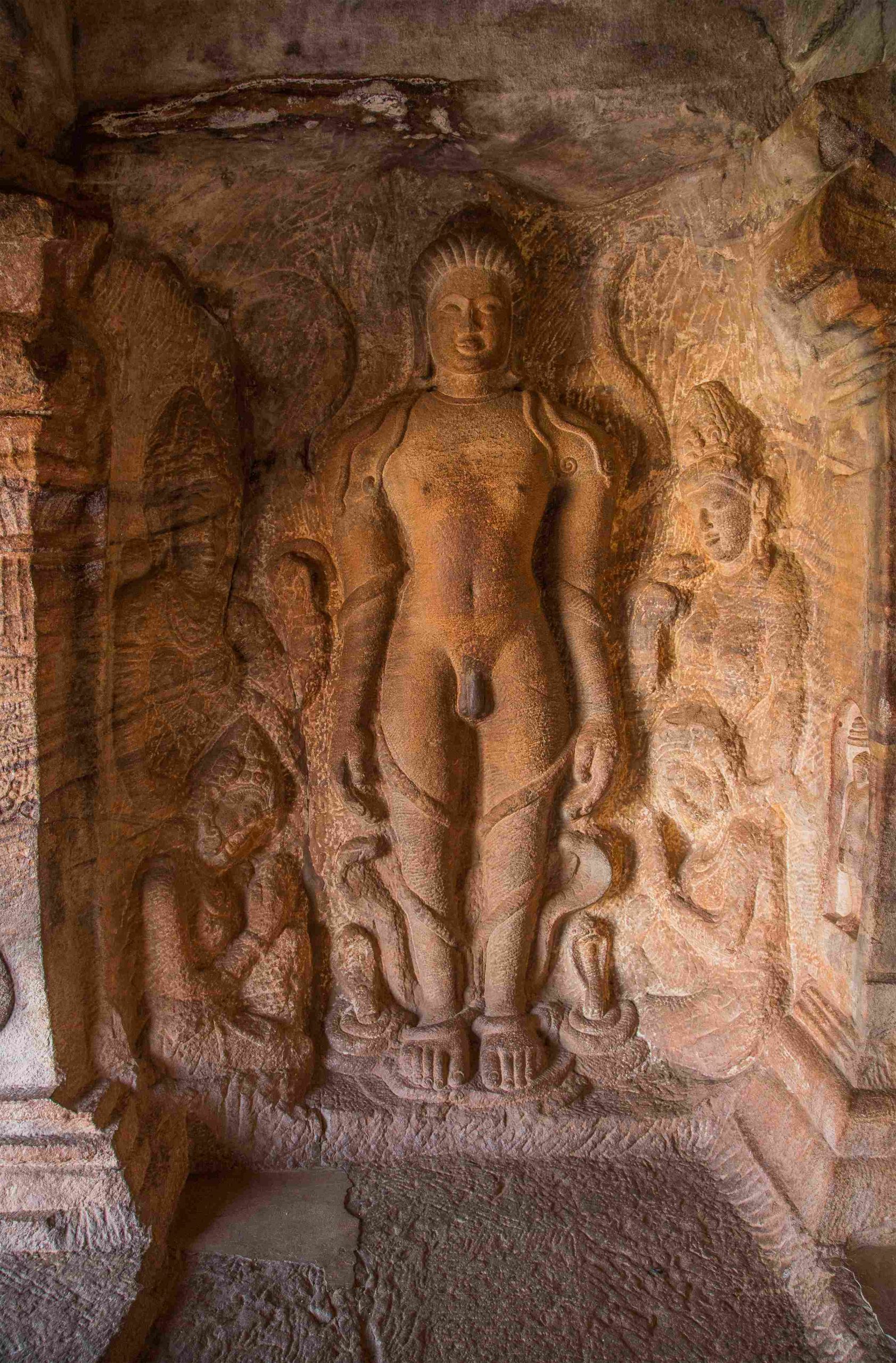
Standing in the kayotsarga (meditative) posture with vines wrapped around his legs, a classic iconography. Lorem Ipsum is simply dummy text of the printing and typesetting industry. Lorem Ipsum has been the industry’s standard dummy text ever since the 1500s, when an unknown printer took a galley of type and scrambled it to make a type specimen book. Lorem Ipsum is simply dummy text.
Lorem Ipsum is simply dummy text of the printing and typesetting industry.
Bahubali, the obedient son and a venerable brother, being worshipped by Bharata and his queens; along with sisters Sundari and Brahmi
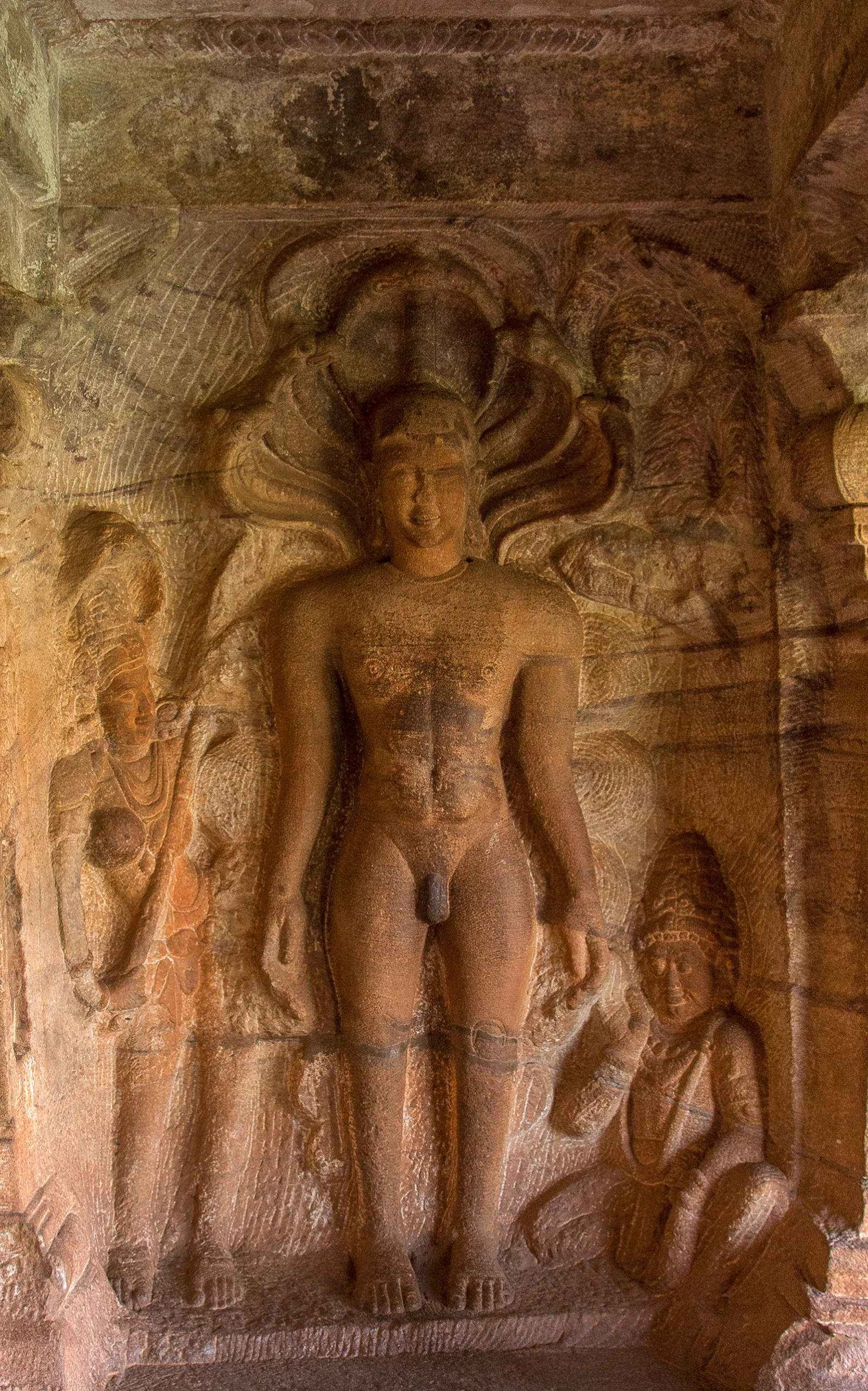
Pārśvanātha with Dharaṇendra and Padmāvatī
Lorem Ipsum is simply dummy text of the printing and typesetting industry. Lorem Ipsum has been the industry’s standard dummy text ever since the 1500s, when an unknown printer took a galley of type and scrambled it to make a type specimen book.
Lorem Ipsum is simply dummy text of the printing and typesetting industry. Lorem Ipsum is simply dummy text of the printing and typesetting industry.
Pārśvanātha: Depicted with a five-headed cobra hood and flanked by Dharanaendra and Padmavati, while Meghamali attempts to assault him
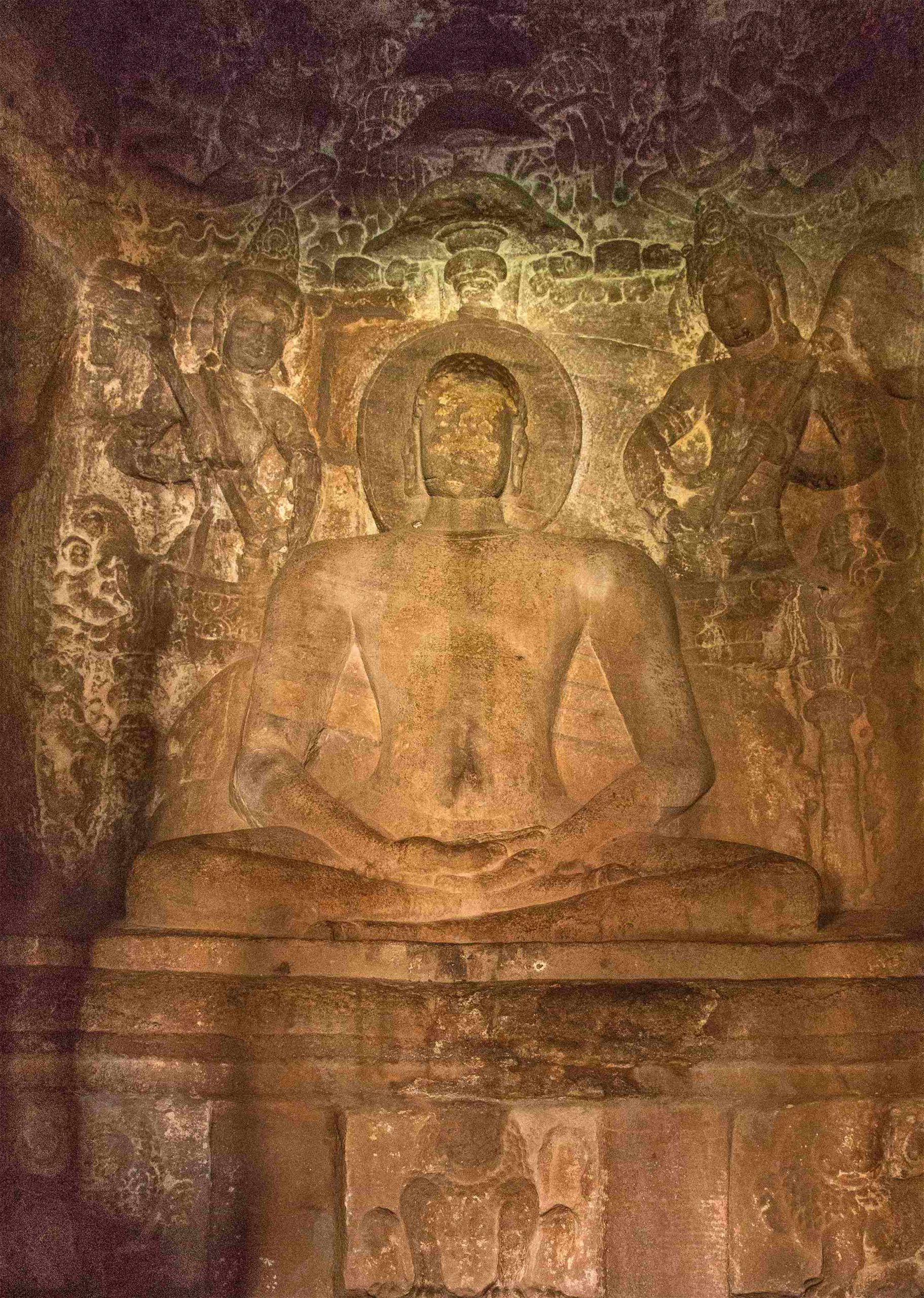
Mahāvīra Enshrined within the Sacred Cave
Standing in the kayotsarga (meditative) posture with vines wrapped around his legs, a classic iconography. Lorem Ipsum is simply dummy text of the printing and typesetting industry. Lorem Ipsum is simply dummy text.
Lorem Ipsum is simply dummy text of the printing and typesetting industry.
Mahavira seated inside the Shine of the Cave
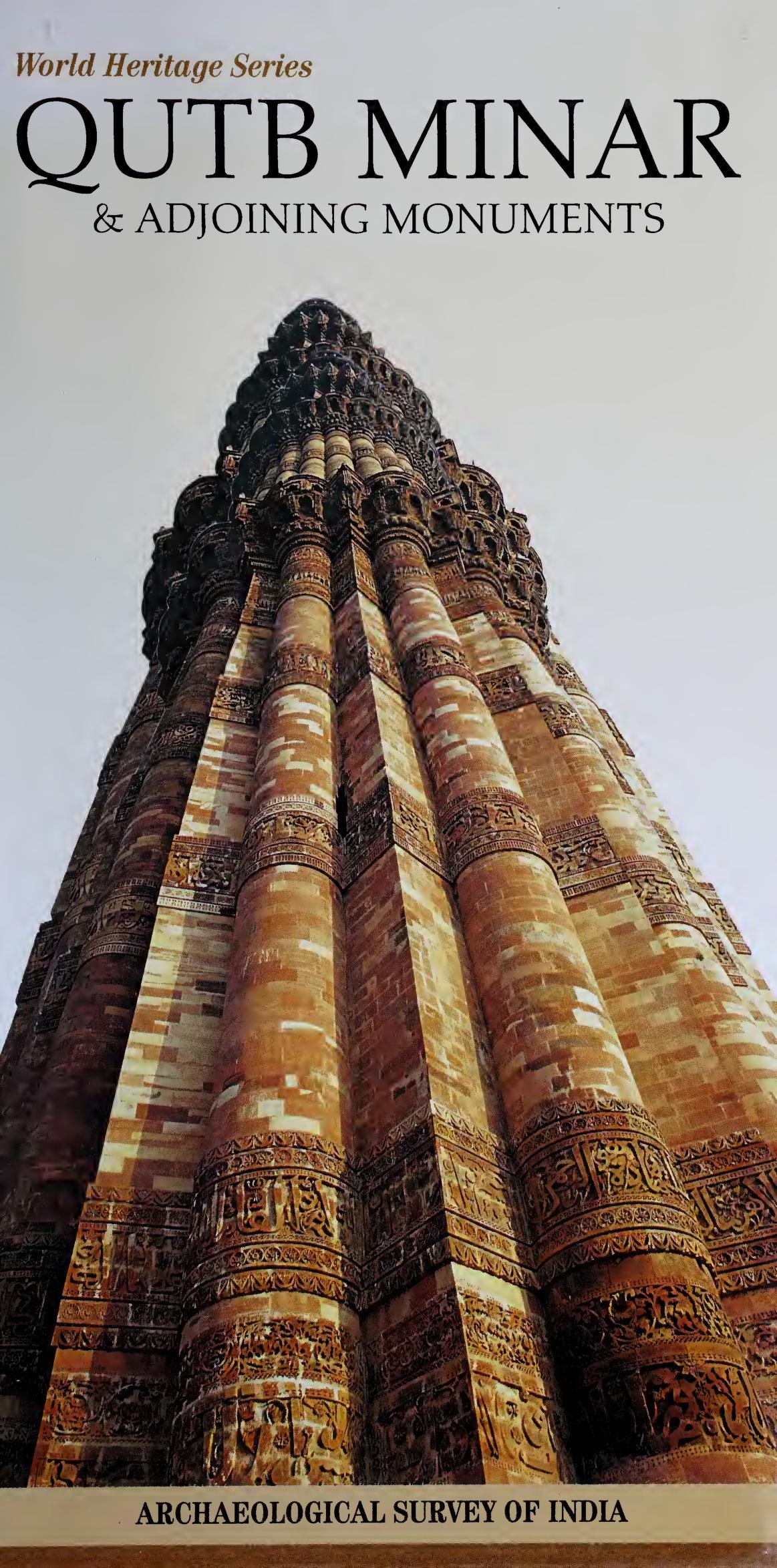
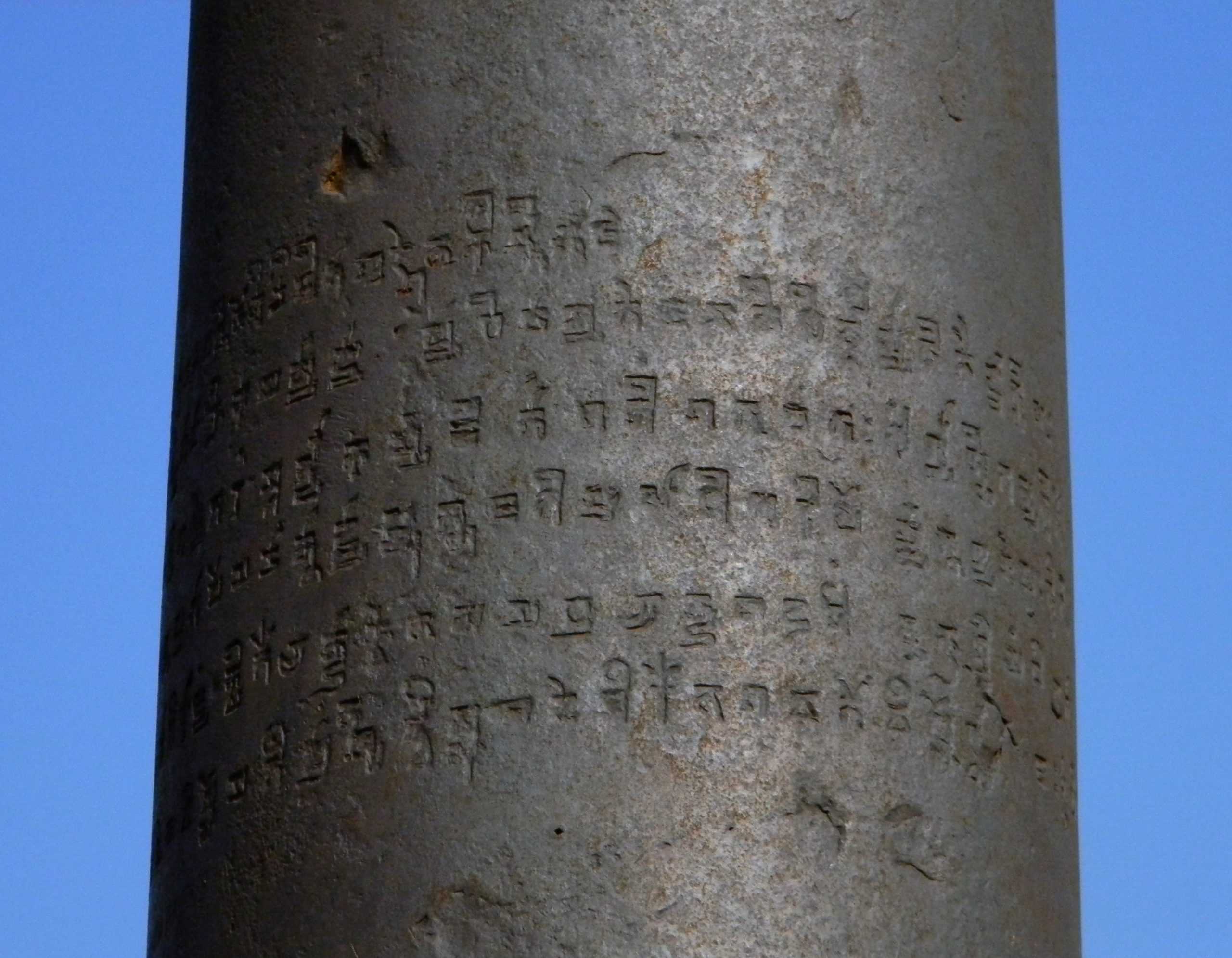
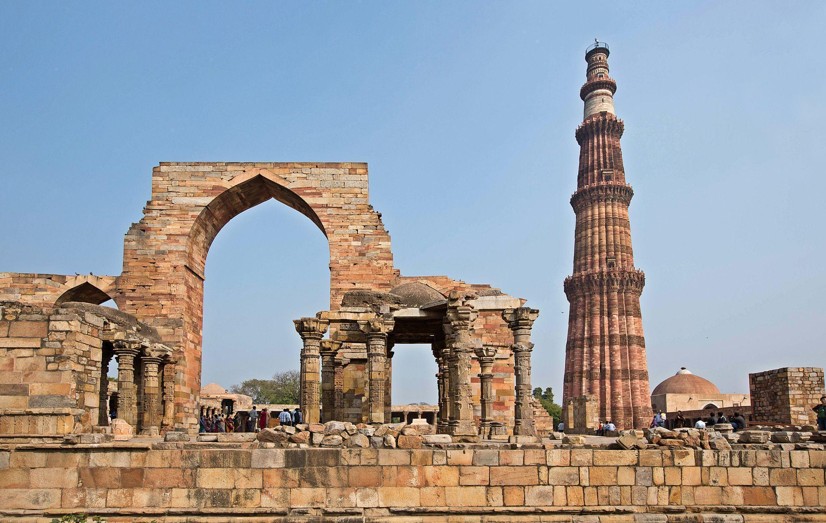
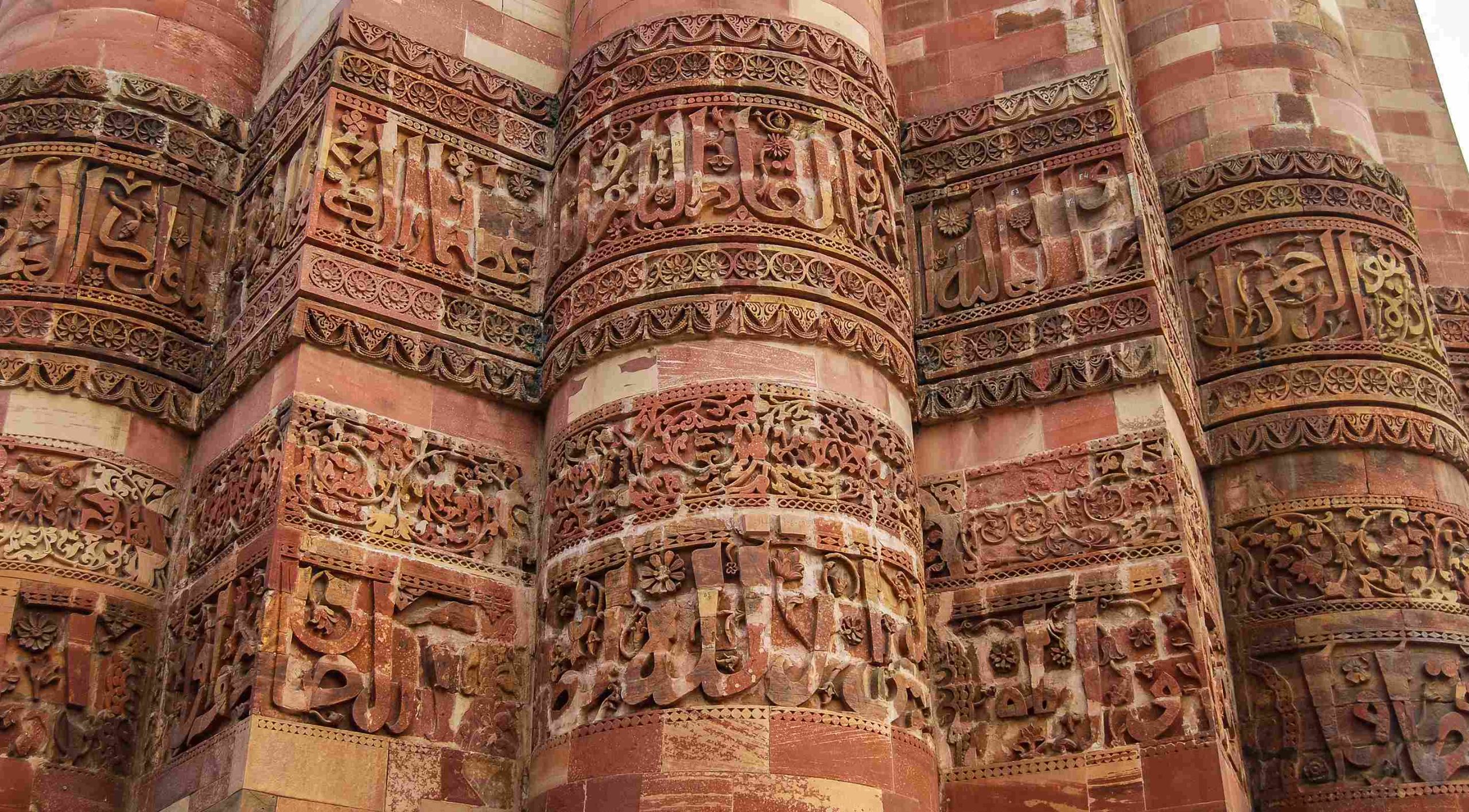
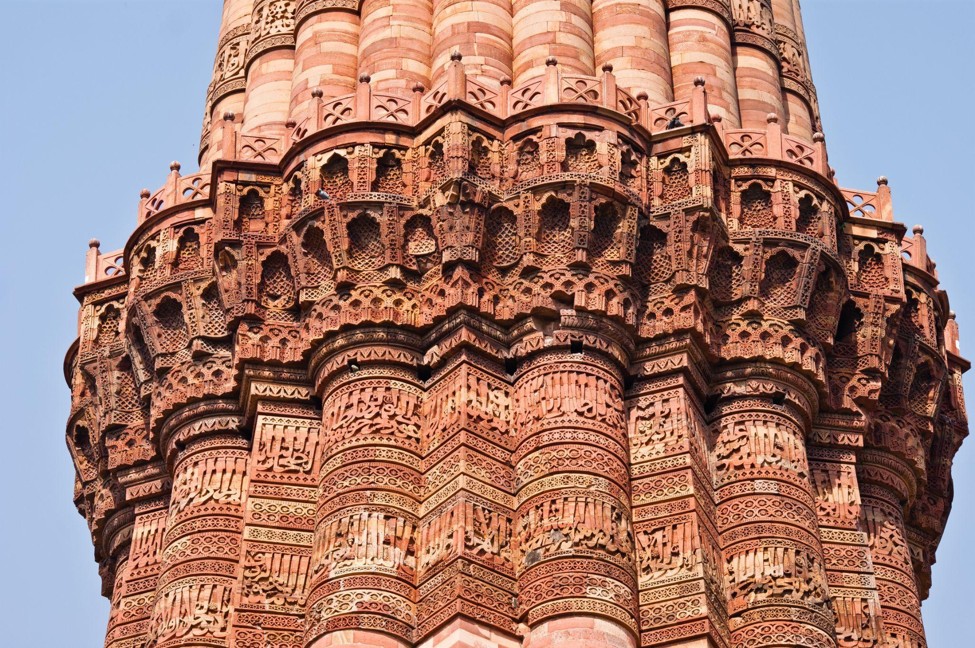
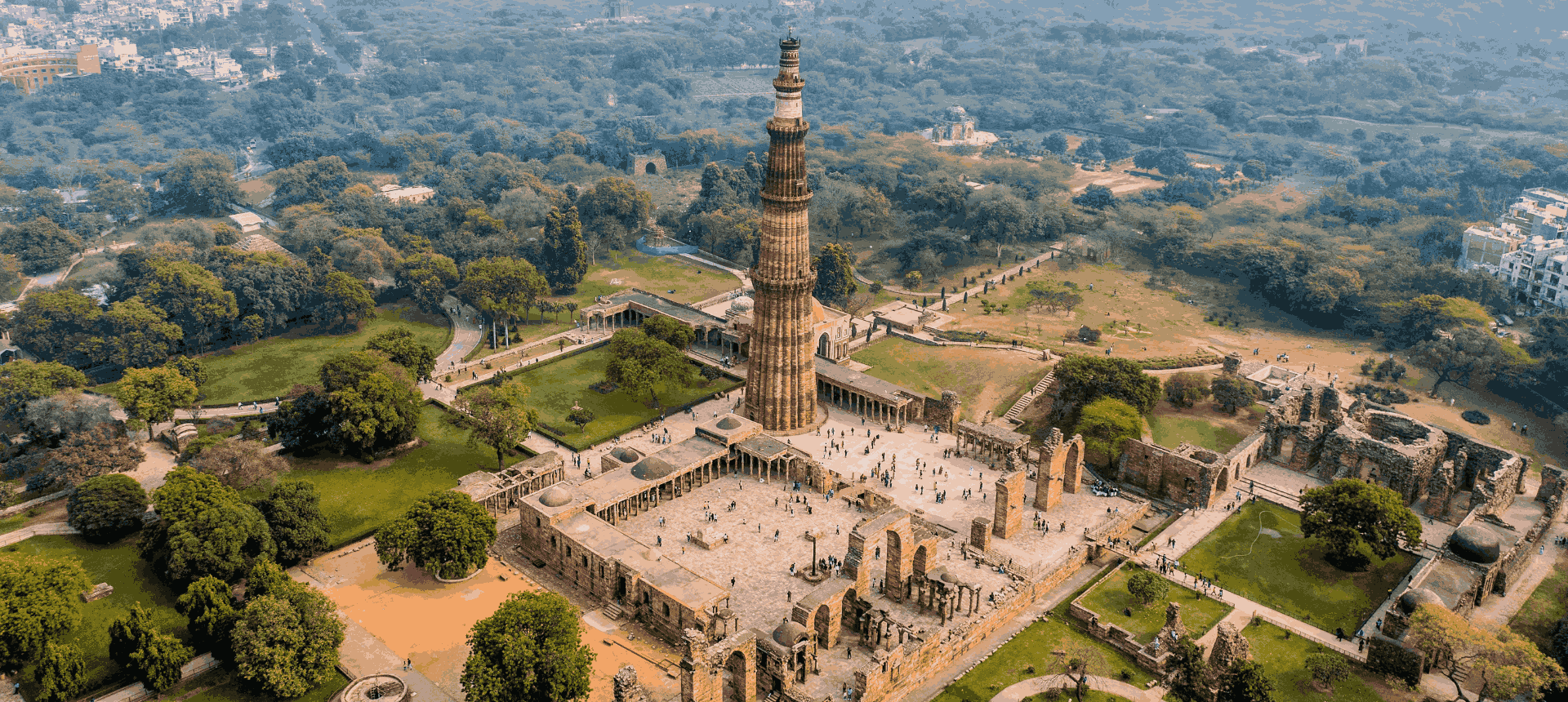
The upper storeys, however, introduce marble, specifically in the fourth and fifth storeys. This creates a captivating contrast between the two materials and adds a touch of elegance.
The upper storeys, however, introduce marble, specifically in the fourth and fifth storeys. This creates a captivating contrast between the two materials and adds a touch of elegance.
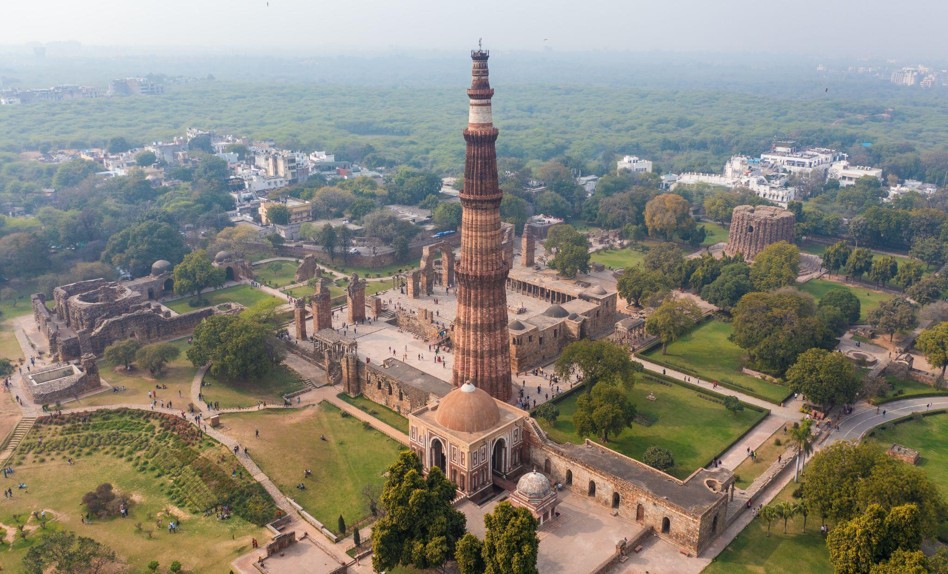
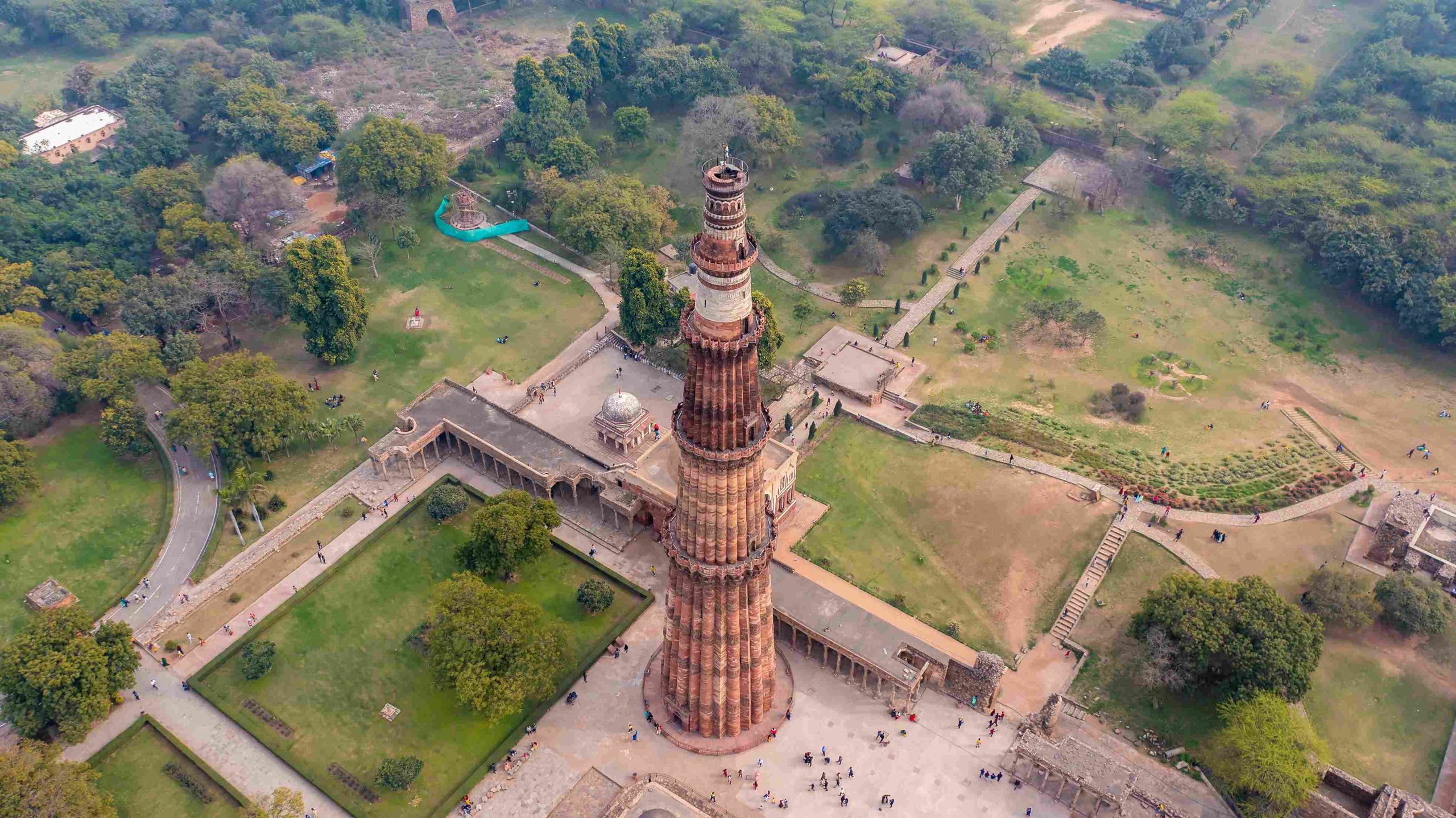
Red sandstone serves as the primary construction material for the Qutub Minar. The first three storeys are built entirely of red sandstone, showcasing its inherent strength and rich color.
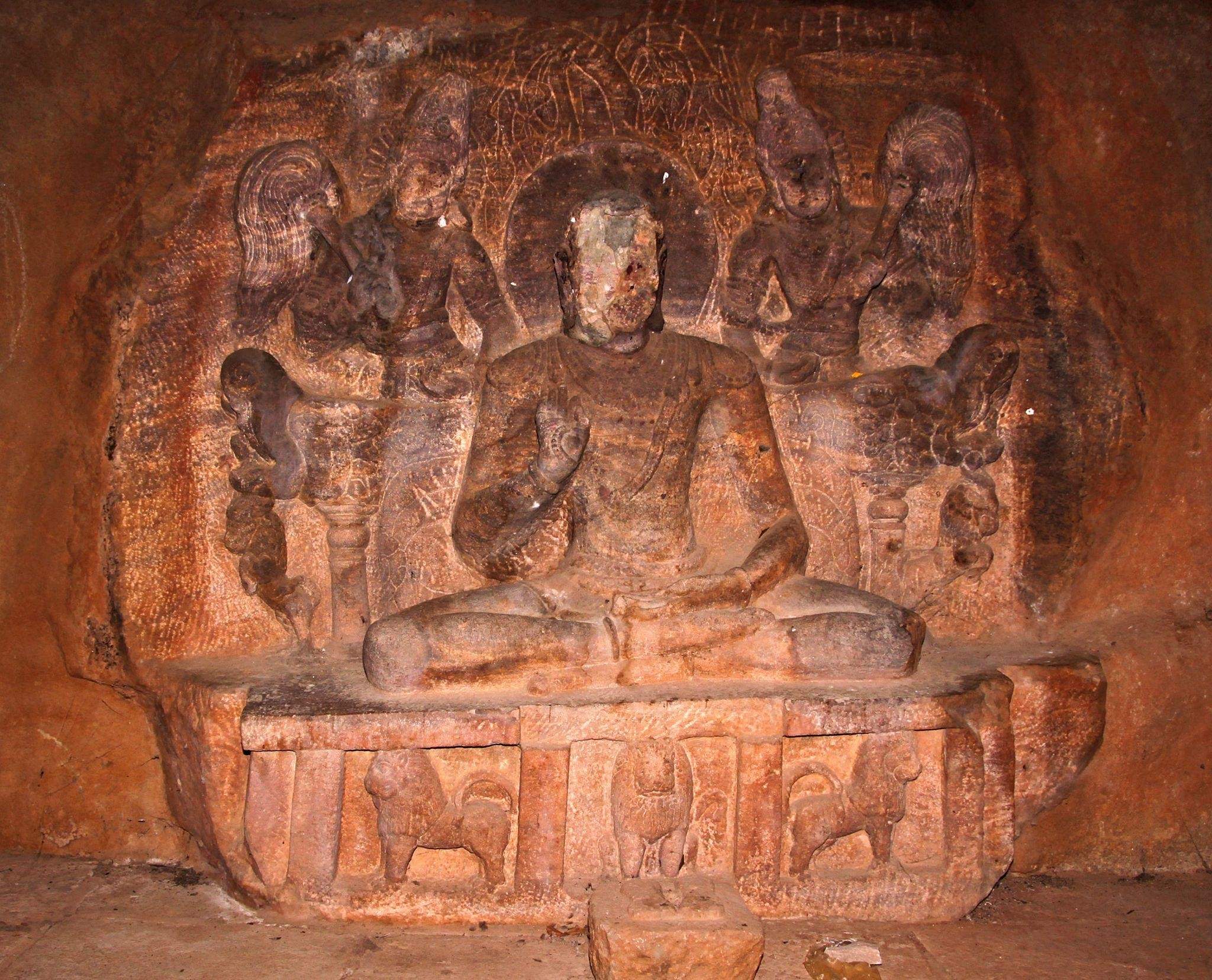
The Enigmatic Cave
Internal Ascendancy
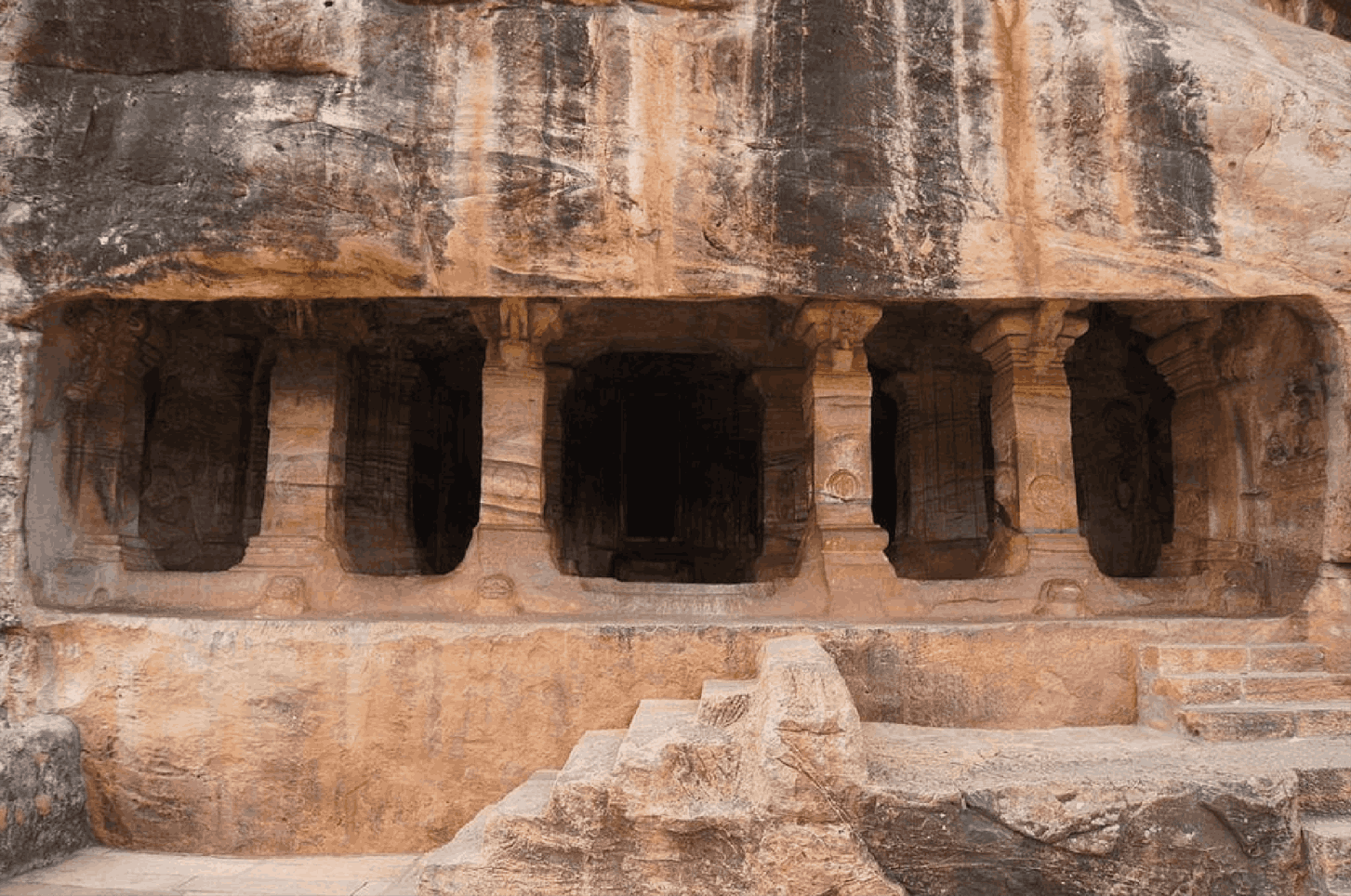
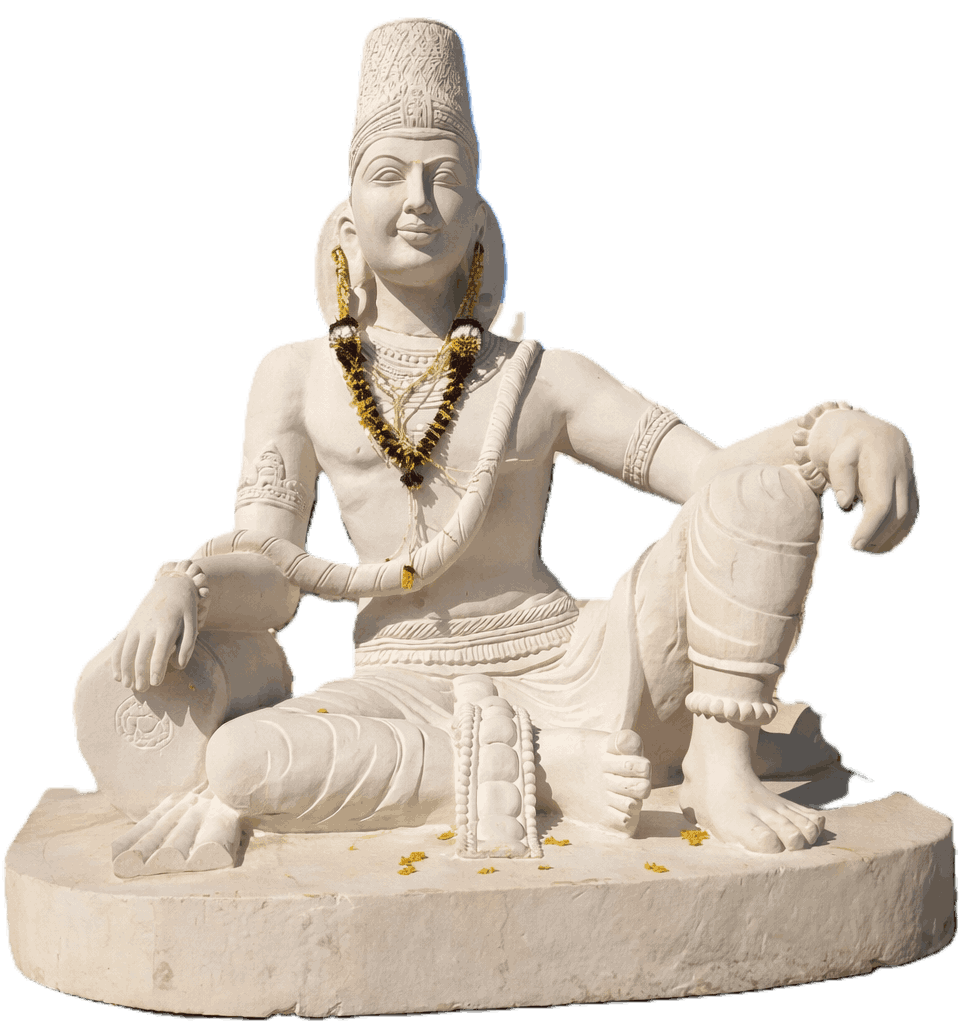
On the opposite side of the lake near the Bhutanatha temple lies a small 7th-8th century Chalukya period cave. Inside, a carved statue sits on a sculpted throne, flanked by reliefs of chauri bearers, a Pipal tree, elephants, and lions. The statue, adorned with jewellery and a sacred thread, holds a chakra and a conch shell but is missing its face.
The seated venerable figure in the cave, whose identity remains mysterious
Celestial Narratives in Stone
Within the shrine of Mahishasuramardinī, a long, narrow pedestal lined with ten dwarfs in various postures supports the goddess’s image. Each figure tells a story, contributing to the rich tapestry of myth and legend that Cave 1 encapsulates. On the southern wall, Kārttikeya, mounted on a peacock, graces the shrine, while the northern wall features Gaṇeśa, holding a cup of sweets (modaka), further enriching this divine assembly.
The pillars of Cave 1 are masterpieces in themselves. Square at the base and sixteen-sided near the top, they feature sunken panels with bas-reliefs of geese, makaras, and playful ganas.
The capitals are adorned with scenes from divine realms, including Viṣṇu seated on Ananta in the sea of milk, and Śiva on Kailasa. Each panel tells a story, inviting visitors to pause and immerse themselves in the ancient narratives carved into stone.
The pillars of Cave 1 are masterpieces in themselves. Square at the base and sixteen-sided near the top, they feature sunken panels with bas-reliefs of geese, makaras, and playful ganas. The capitals are adorned with scenes from divine realms, including Viṣṇu seated on Ananta in the sea of milk, and Śiva on Kailasa. Each panel tells a story, inviting visitors to pause and immerse themselves in the ancient narratives carved into stone.
Lorem Ipsum is simply dummy text of the printing and typesetting industry. Lorem Ipsum is simply dummy text of the printing and typesetting industry. Lorem Ipsum is simply dummy text of.
The interior view of Cave 1
Lorem Ipsum is simply dummy text of the printing and typesetting industry. Lorem Ipsum has been the industry’s standard dummy text ever since the 1500s, when an unknown printer took a galley of type and scrambled it to make a type specimen book.
Lorem Ipsum is simply dummy text of the printing and typesetting industry. Lorem Ipsum has been the industry’s standard dummy text ever since the 1500s, when an unknown printer took a galley of type and scrambled it to make a type specimen book.
Lorem Ipsum is simply dummy text of the printing and typesetting industry. Lorem Ipsum has been.
Lorem Ipsum is simply dummy text of the printing and typesetting industry. Lorem Ipsum has been the industry’s standard dummy text ever since the 1500s, when an unknown printer took a galley of type and scrambled it to make a type specimen book. Lorem Ipsum is simply dummy text
The Shrine of Mahishasu-
ramardinī
The shrine of Mahishasuramardini in the left wing of the cave
Lorem Ipsum is simply dummy text of the printing and typesetting industry. Lorem Ipsum has been the industry’s standard dummy text ever since the 1500s, when an unknown printer took a galley of type and scrambled it to make a type specimen book.
The shorter limb of the Left is dedicated to a small yet potent shrine of Durgā as Mahishasuramardinī. Supported by two pillars and two pilasters, this shrine houses the fierce goddess standing victoriously over the buffalo demon. Her four hands wield a wheel, a trident, a conch, and the buffalo’s tail, symbolising her divine power and triumph over evil. Flanking this dramatic scene are Gandharva couples, enhancing the shrine’s celestial aura.
Lorem Ipsum is simply dummy text of the printing and typesetting industry. Lorem Ipsum has been the industry’s standard dummy text ever since the 1500s, when an unknown printer took a galley of type.
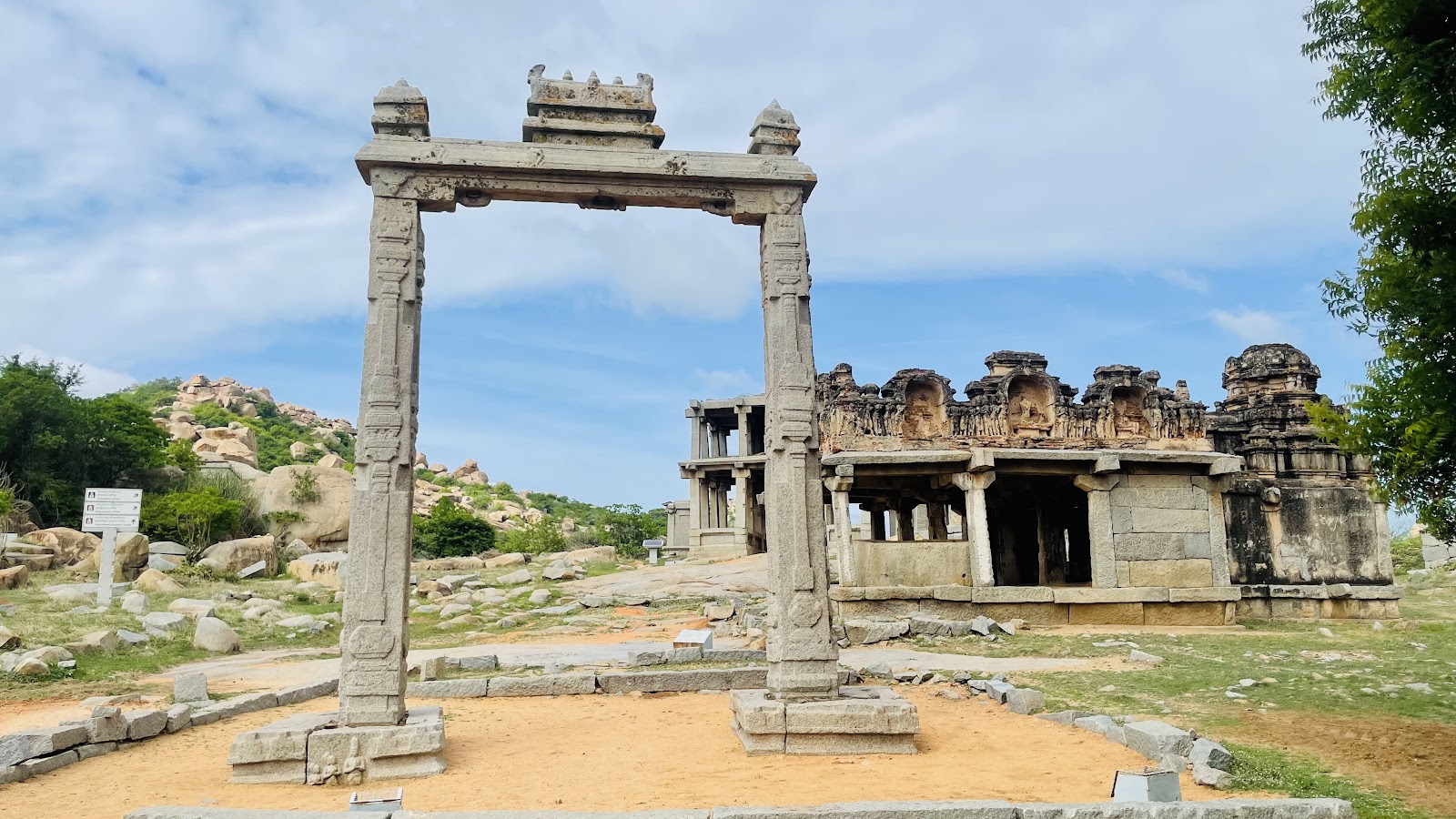
Explore how time, restoration, and heritage conservation have transformed Hampi from an ancient site into a must-visit cultural treasure.
Today, these majestic ruins have been beautifully preserved and brought to life for visitors. Temples, monuments, and open courtyards welcome travellers from across the world, offering a glimpse into the grandeur of the Vijayanagara Empire.
Hampi’s ruins once stood silent, covered in history and nature’s embrace. Crumbling stone structures and overgrown pathways told tales of a forgotten empire.
The
Jain Cave
of
Badami
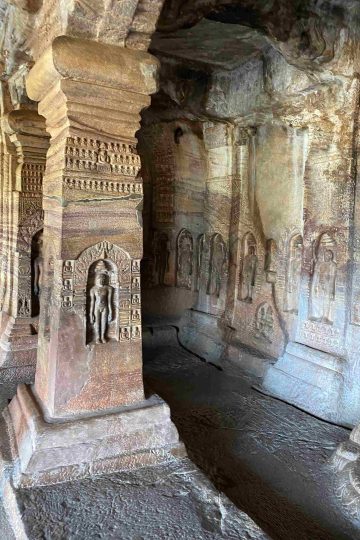
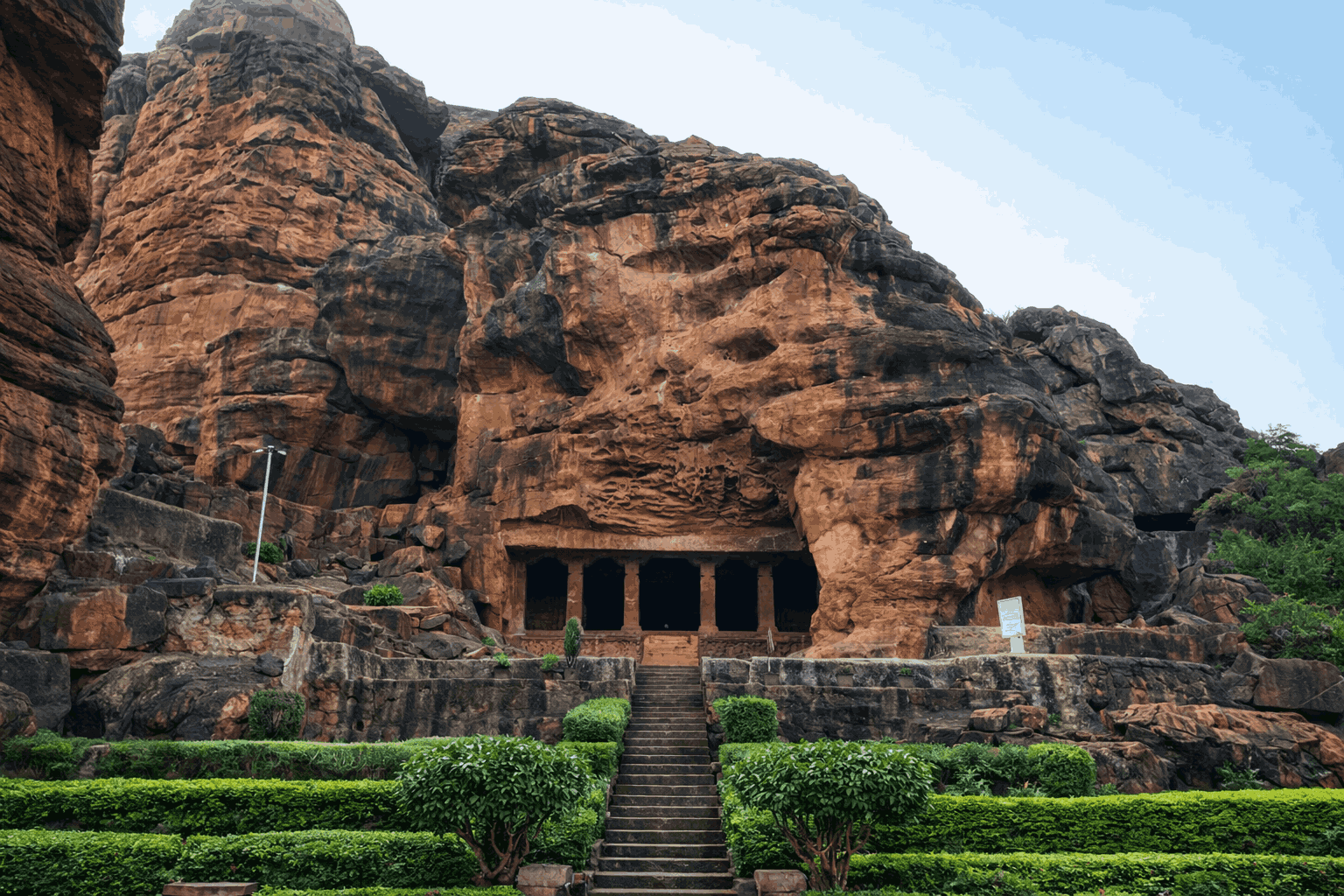
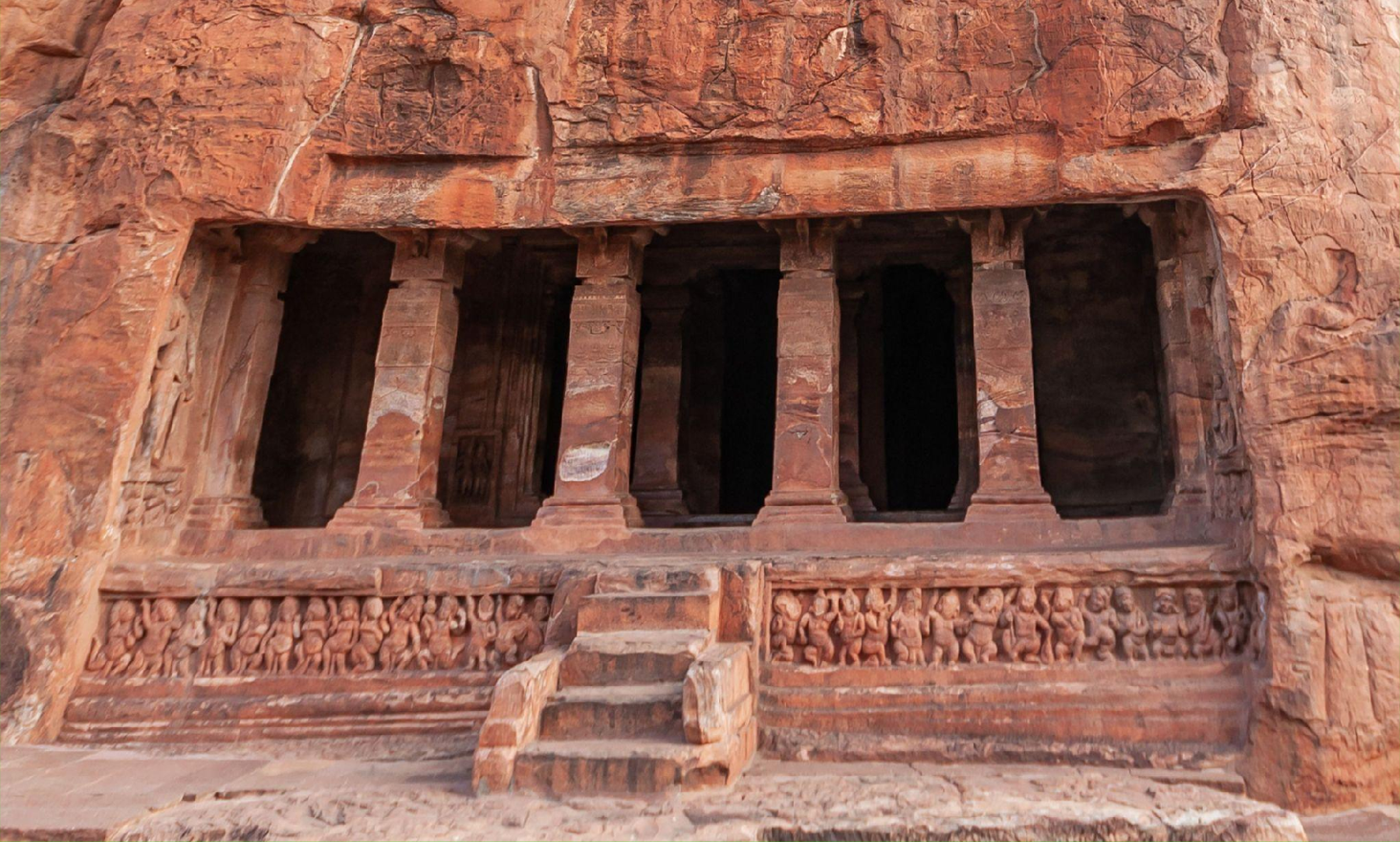
Cave No. 4, located slightly east of the largest Brahmanical cave-temple at Badami, is a Jain cave-temple believed to have been excavated around 650 CE, making it somewhat more modern than its neighbouring caves. While the initial construction of Cave No. 4 likely occurred in the later part of the 7th century, some scholars suggest that it may have been created in the 8th century.
Additional embellishments were likely added over the following centuries, continuing until around the 11th or 12th century. The cave’s verandah measures 31 feet long by 6 feet wide, and the entire depth of the cave is only about 16 feet. The cave’s front features four square pillars with bracket capitals, resembling the Elephanta type, while the back of the verandah has two freestanding and two attached pillars.
Lorem Ipsum is simply dummy text of the printing and typesetting industry. Lorem Ipsum has been the industry’s standard dummy text ever since the 1500s, when an unknown printer took a galley of type and scrambled it to make a type specimen book.
Lorem Ipsum dummy Text is real
Upper Shivalaya
The Upper Shivalaya, originally a Vaishnava Temple
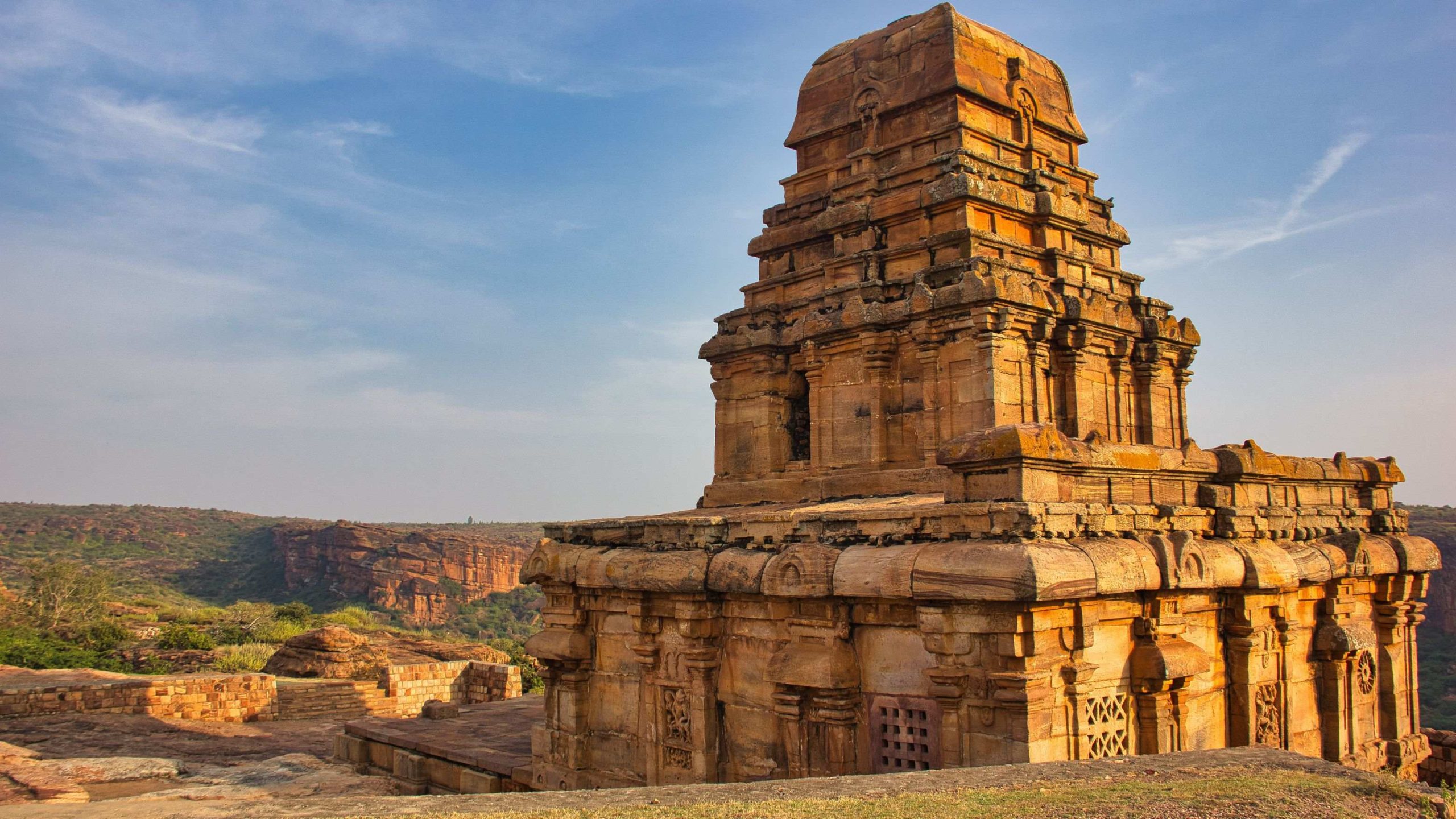
Situated on the highest section of the northern hill, northeast of the Lower Shivalaya, the temple (circa 600–625 CE), commonly referred to as the “Upper Shivalaya,” is actually a Vaiṣṇava temple despite its misleading name.
The temple’s exterior is a testament to Early Chalukya architecture, exhibiting both grandeur and intricate detailing. The outer
walls of the temple form a rectangle that encloses a square sanctum (garbhagṛha) and a symmetric pradakṣiṇāpātha (circumambulatory path). The sanctum opens into a columned mandapa (hall) on the eastern side, which, though partly ruined, showcases the structural elegance that once stood proudly.
The temple’s plinth is partly hewn from the rock and rises above a foundation course. This upāna is adorned with panels featuring foliate ornaments and narrative reliefs. Particularly notable are the south face’s reliefs depicting episodes from the Rāmāyaṇa, including the awakening of Kumbhakarṇa and various scenes from Rāma’s legends, described by scholars Meister and Dhaky as “elegant narratives in discrete and expressive figures.
Lower Shivalaya
The elevation of the Lower Shivayala
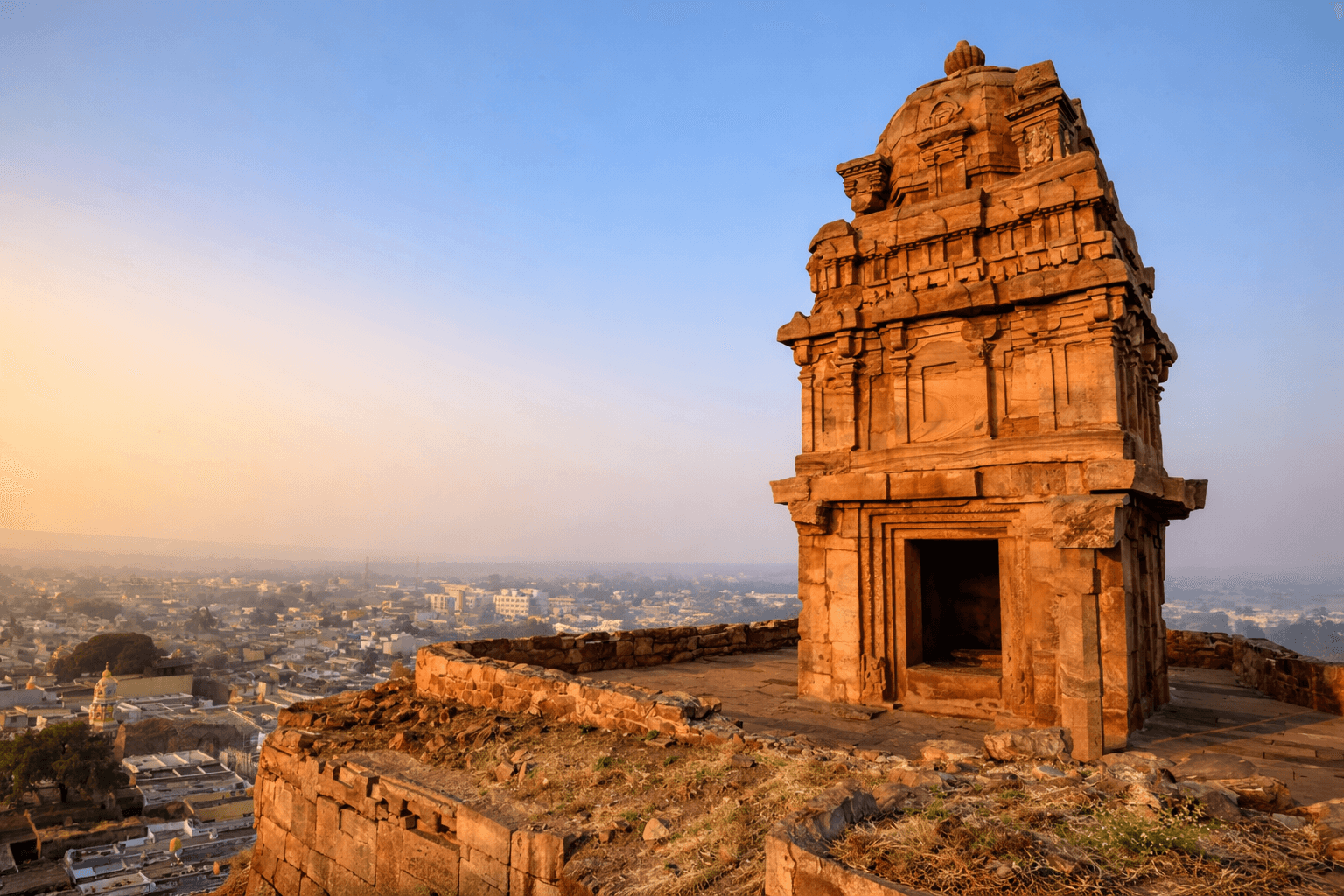
The Lower Shivalaya temple, nestled on the northern hill and a stone’s throw from its upper counterpart, stands as a solemn relic of Early Chalukya architecture.
Though time has ravaged much of its structure, the preserved garbhagṛha (sanctum) and the superstructure above continue to narrate the temple’s enigmatic past. From the evidence of broken roof slabs embedded in the four walls and several shattered beams, it is plausible that this temple once boasted an enclosed pradakṣiṇāpātha (circumambulatory path).
However, the external walls have vanished, leaving only the skeletal frame to hint at its former glory. The site’s eastern limitations would have posed spatial challenges, adding another layer to the temple’s complex history. The remaining square garbhagṛha, with its outer walls segmented by pilasters, still showcases niches on the north, west, and south sides, possibly designed to house sculptural panels.
The superstructure’s lowest storey features three projections framing two recesses, divided by six pilasters. These shallow recesses, devoid of sculptural intent, add a rhythmic visual to the temple’s silhouette. The brackets of the pilasters support an eave adorned with uncut kūḍus, above which blocks are placed, likely correlating with the ends of the roof slabs. A vertical course, segmented by flat pilasters, upholds a parapet comprising a central sāla flanked by two kūṭas, all connected by a low curved moulding, with kūḍus accentuating each element and the intermediate spaces.
Malegitti Shivalaya
Malegitti Shivalaya as viewed from the fort base of Badami, Karnataka
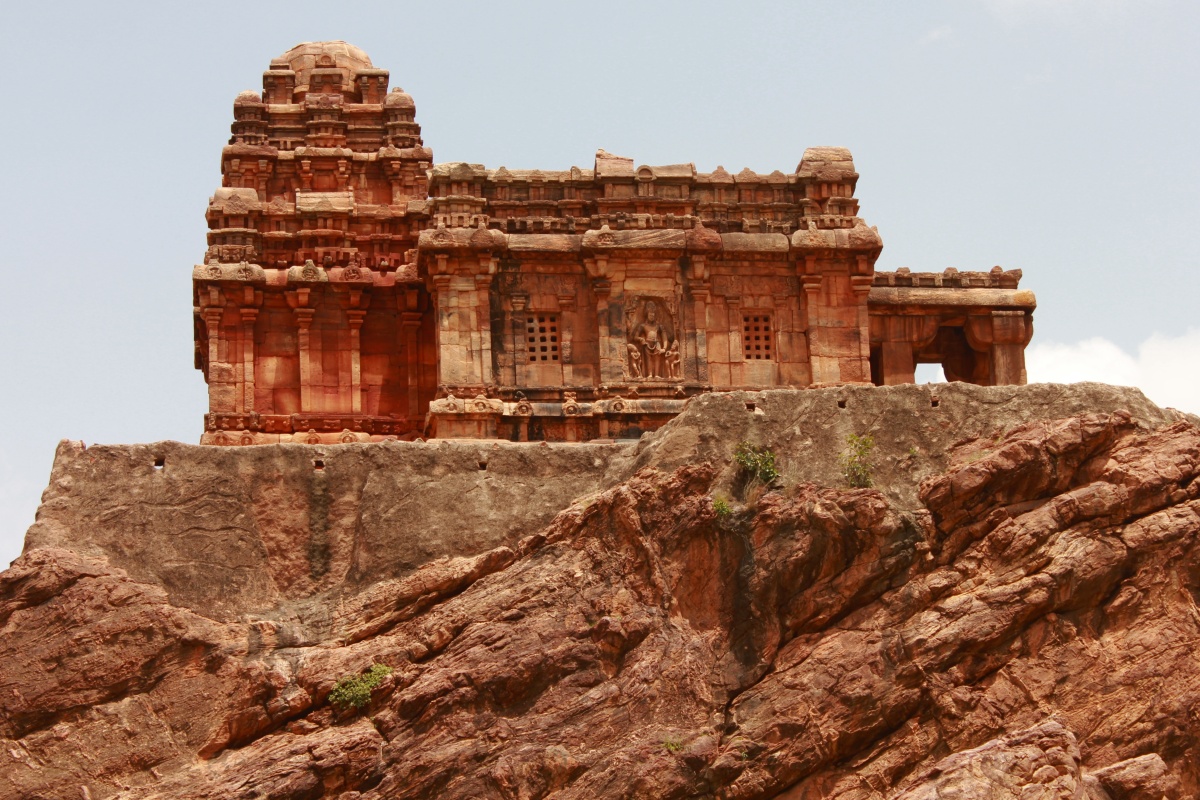
Perched atop a formidable boulder to the north of Badami town, the Malegitti Shivalaya temple stands as a testament to Early Chalukya architecture, dating from approximately 625–675 CE.
This venerable edifice is not only the earliest surviving example of Drāviḍa style in the region but also one of the best-preserved, embodying the architectural prowess and cultural syncretism of its time.
An inscription on the east wall of the temple, though yielding no historical information, suggests the name of the temple’s builder. While
undated, the Malegitti Śivalaya is generally attributed to the 7th century CE. Its Southern or Pallava architectural character contrasts with the Gupta style evident in its sculptural elements, reflecting a blend of influences and the artistic innovation of the Early Chalukya period. The temple’s foundation is carved from the rock upon which it is built, featuring an upāna, a curved kumuda with a vertical face, and a vertical course divided into panels adorned with gaṇas.
The temple’s parapet includes corner kūṭas and central śālas over the maṇḍapa walls, with the superstructure rising above the garbhagṛha, showcasing two storeys of Drāviḍa architecture. The vimāna, divided into bhadra and karṇas with recesses, is crowned by miniature shrines, though the original finial (stūpi) has been lost to history. The maṇḍapa walls feature three projections on the north and south, with panels portraying Śiva on the south and Viṣṇu on the north, each accompanied by attendants. The walls are divided by pilasters, with pierced stone jali windows allowing light to filter in. The base of the temple rests on a northern style kapotabandha, while the temple itself adheres to a square floor plan typical of Drāviḍa architecture.
Bhutanatha Temple
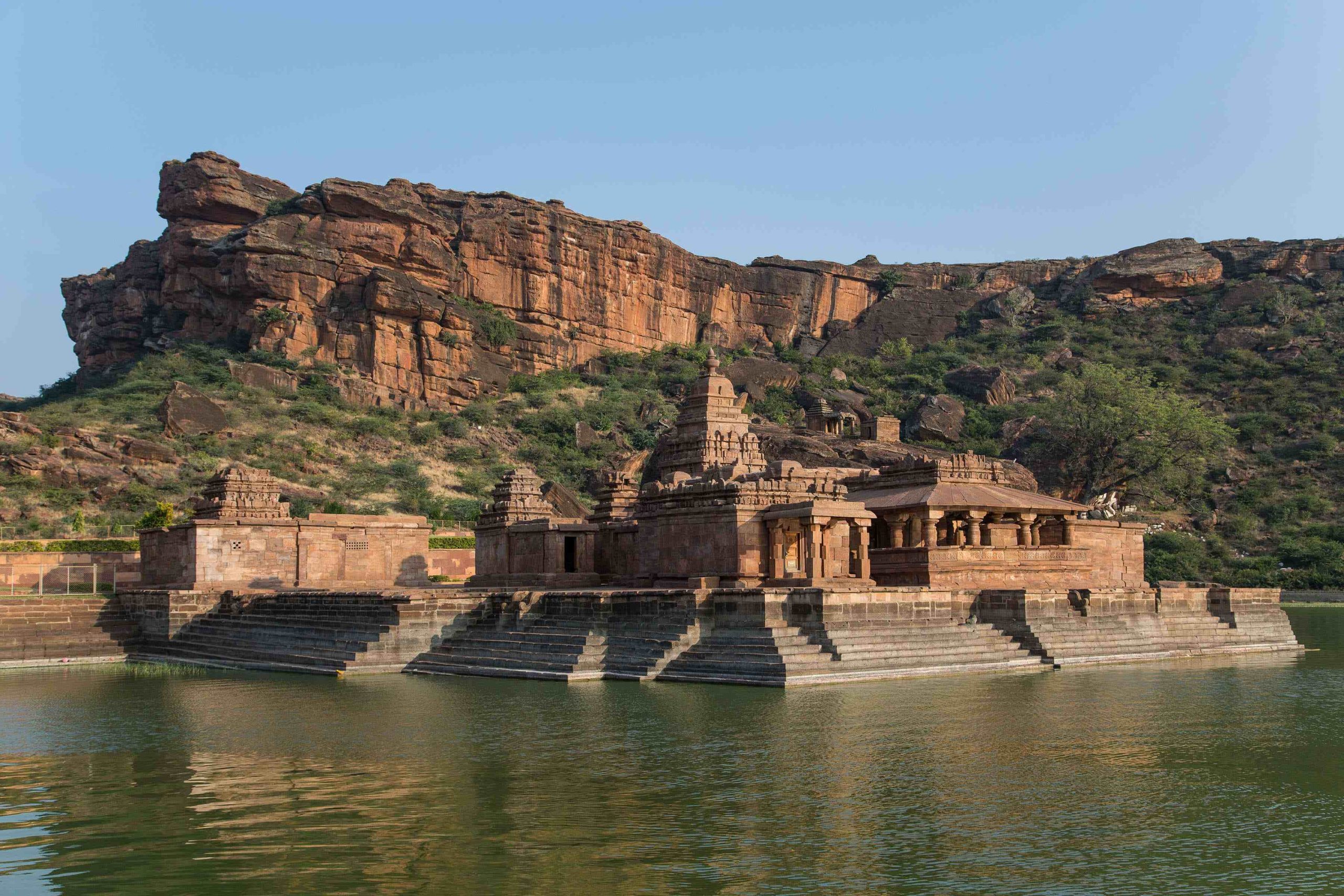
The Mallikarjuna and the Bhutanatha group of temples situated inside the Agasti lake
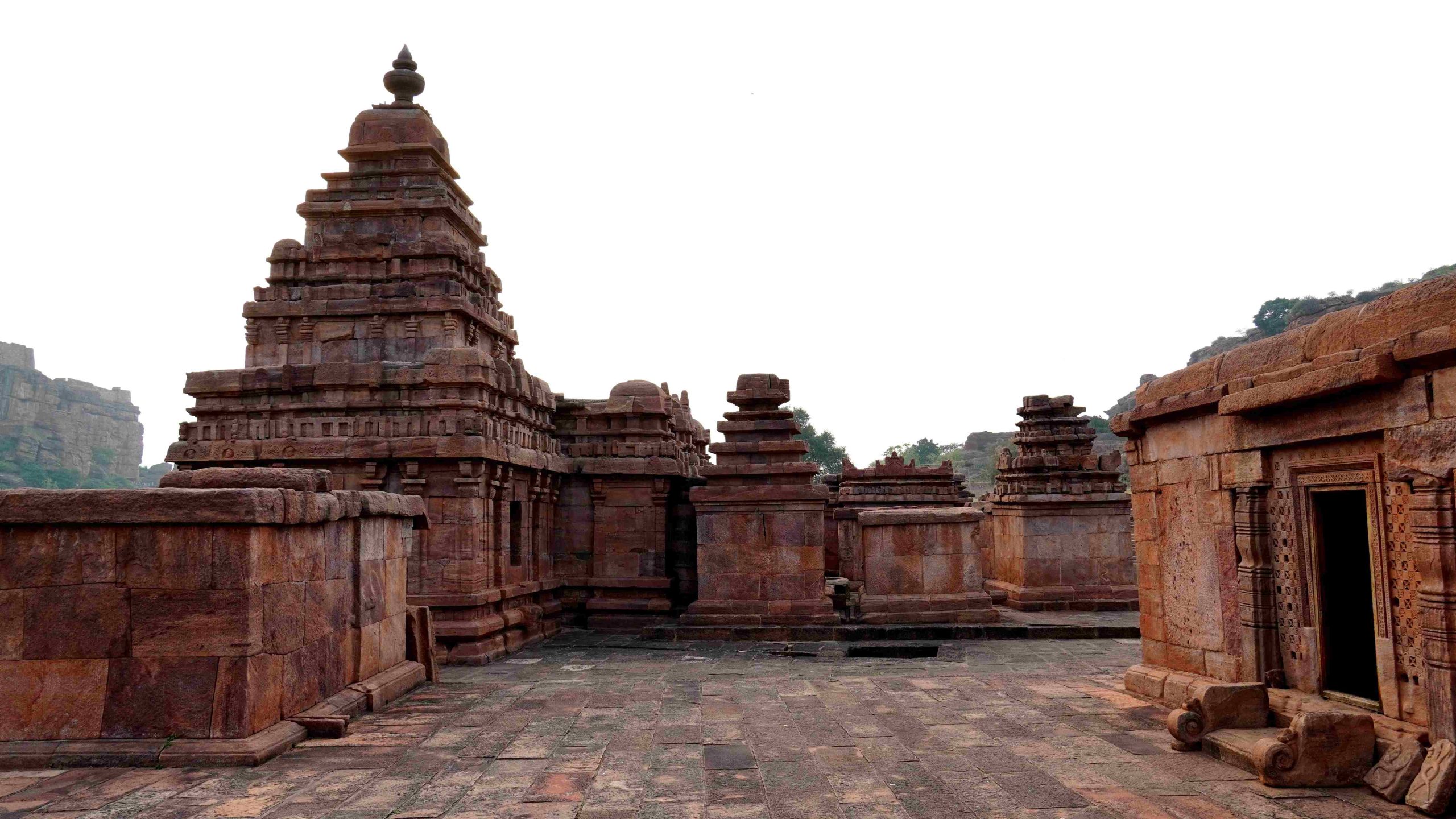
The Bhutanatha Temple Complex, located to the east of Agastya Lake in Badami, Karnataka, is a remarkable assembly of Hindu temples dating from the 7th to the 12th centuries CE.
This complex is divided into two main subgroups: the East Bhutanatha group, primarily reflecting the Dravida architectural style from the 7th to the 8th centuries, and the North Bhutanatha group, also known as the Mallikarjuna group, showcasing the Nagara architectural style from the 11th to the 12th centuries. These temples provide a
fascinating insight into the architectural evolution and religious practices of the Chalukyan period. An inscription on the outer wall of the main temple, dated to the late 9th century, records a gift from a Paingara family to the deity Sridharbuteswara. This suggests that the temple was actively used and possibly renovated during this period. The main temple was initially a Shaiva shrine, as indicated by four Shaiva reliefs on a nearby boulder, depicting various architectural styles of Shiva sanctums.
The Bhutanatha main group, dating from approximately 700 to 725 CE, is the oldest set of temples in the complex. The primary temple in this group features a gudha-mandapa (enclosed hall) supported by four massive pillars with a mix of octagonal, cubical, and lathe-turned round sections. This mandapa leads to a smaller, square sanctum housing a Shiva linga.Above the sanctum rises a tritala (three-storeyed) Dravida-style vimana (superstructure), with each storey progressively smaller and intricately detailed.
Lorem Ipsum dummy Text is real
His military campaigns expanded Vijayanagara’s boundaries from the Krishna River in the north to the deep south of Tamil Nadu, making it one of the most powerful empires in India at the time. The Portuguese traveler Domingo Paes, who visited his court, wrote: Lorem Ipsum is simply dummy text of the printing and typesetting industry. Lorem Ipsum has been the industry’s standard dummy text ever since the 1500s, when an unknown printer took a galley of type and scrambled it to make a type specimen book.
Badami’s Pride
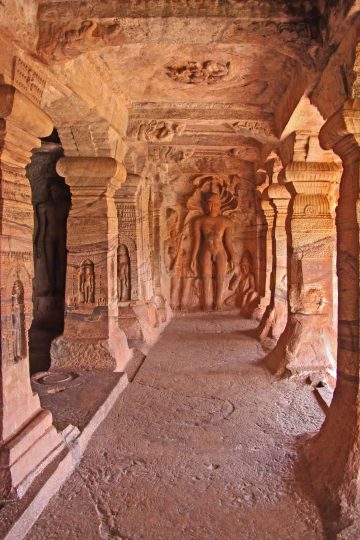
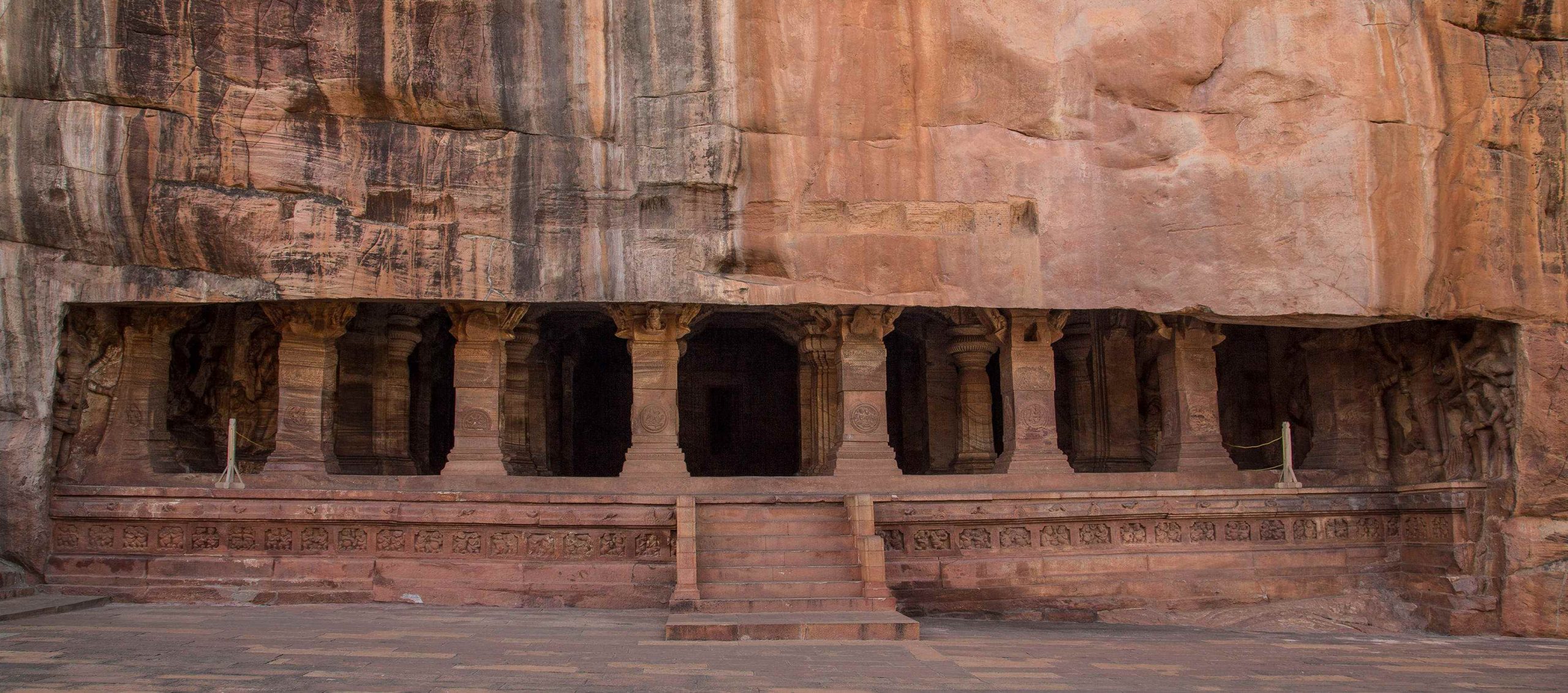
Cave No. 3, excavated during the reign of the Early Chalukya ruler Pulakeśin I, is a testament to the grandeur of rock-cut architecture in the Deccan. This cave temple, while following the basic scheme of Caves 1 and 2, stands out due to its large scale and elaborate sculptural ornamentation. The deep-red sandstone carvings are exceptional, featuring a variety of multi-faceted and fluted designs on the columns. Medallions on the shafts contain amorous couples and intricately incised lotus ornaments. The brackets, especially those of the outer row, are fashioned as embracing couples or maidens beneath trees, with rearing beasts supporting the overhang of the eave.
Lorem Ipsum dummy Text is real
Lorem Ipsum is simply dummy text of the printing and typesetting industry. Lorem Ipsum has been the industry’s standard dummy text ever since the 1500s, when an unknown printer took a galley of type and scrambled it to make a type specimen book. It has survived not only five centuries, but also the leap into electronic typesetting, remaining essentially unchanged.
The
Jain Cave
of
Badami
Cave No. 4, located slightly east of the largest Brahmanical cave-temple at Badami, is a Jain cave-temple believed to have been excavated around 650 CE, making it somewhat more modern than its neighbouring caves. While the initial construction of Cave No. 4 likely occurred in the later part of the 7th century, some scholars suggest that it may have been created in the 8th century.
Additional embellishments were likely added over the following centuries, continuing until around the 11th or 12th century. The cave’s verandah measures 31 feet long by 6 feet wide, and the entire depth of the cave is only about 16 feet. The cave’s front features four square pillars with bracket capitals, resembling the Elephanta type, while the back of the verandah has two freestanding and two attached pillars.
Lorem Ipsum is simply dummy text of the printing and typesetting industry. Lorem Ipsum has been the industry’s standard dummy text ever since the 1500s, when an unknown printer took a galley of type and scrambled it to make a type specimen book.
Lorem Ipsum dummy Text is real
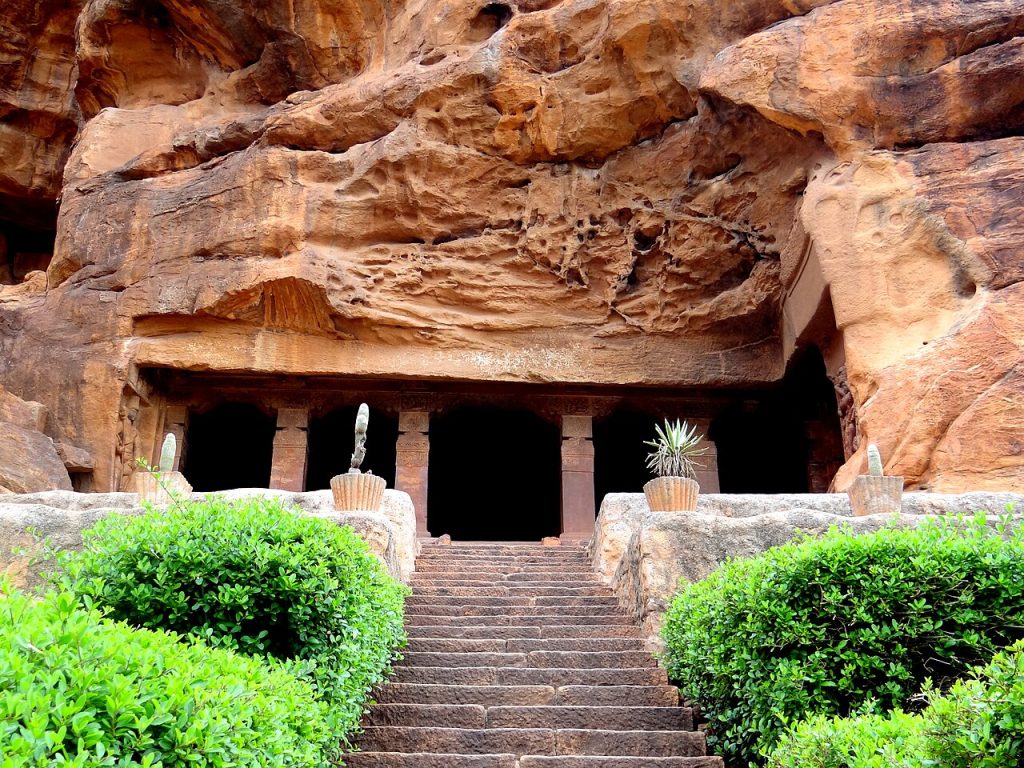
Carved into the rugged cliffs of Badami, Cave 1 is a testament to ancient India’s artistry and devotion. This Shaivite cave, with its intricate carvings and vivid depictions of mythological tales, invites visitors to explore its divine narratives and celestial forms.
“Lorem Ipsum is simply dummy text of the printing and typesetting industry. Lorem Ipsum has been the industry’s standard dummy text ever since the 1500s Dummy Text book since 1950 till now.”
Lorem Ipsum is simply dummy text of the printing and typesetting industry. Lorem Ipsum has been the industry’s standard dummy text ever since the 1500s, when an unknown printer took a galley of type and scrambled it to make a type specimen book. It has survived not only five centuries, but also the leap into electronic typesetting, remaining essentially unchanged.
The Enigmatic Entrance
Lorem Ipsum dummy Text is real
At the eastern end of this platform stands a vigilant dvarapala, holding a trident (triśūla) in his left hand, his right
resting confidently on his hip.
To the left of the steps, fourteen figures, including
musicians, singers, and dancers, create a scene of divine celebration. To the right, thirteen more dwarfs mirror this exuberance, while nine additional figures reside under the small cave in the shorter limb of the L.
As you approach Cave 1, a narrow, L-shaped platform greets you. Despite part of its right limb being lost to time, the grandeur remains. At the entrance, the rock-cut platform features two panels on either side of the stairway, showing joyous dwarfs, or ganas, in various lively poses.
He stands on a pedestal, where a captivating bas-relief depicts an elephant locked in combat with a bull. Above this guardian figure, a sunken panel showcases Śiva and Pārvatī seated majestically
on Nandin, their serene presence a prelude to the wonders within.
The
Entrance
&
Platform
Cave 2 at Badami, a Vaishnavite sanctuary, is an exquisite example of ancient Indian rock-cut architecture. Four modern steps lead to a straight, narrow platform in front of the cave. Underneath this platform, a long, sunken panel features a frieze of lively dwarfs, or ganas, running from the east to the west. The plain, curved roof above the platform is supported by stone brackets shaped like rampant lions and more ganas, showcasing the intricate craftsmanship.
Lorem Ipsum is simply dummy text of the printing and typesetting industry. Lorem Ipsum has been the industry’s standard dummy text ever since the 1500s, when an unknown printer took a galley of type and scrambled it to make a type specimen book. It has survived not only five centuries, but also the leap into electronic typesetting, remaining essentially unchanged.
Lorem Ipsum is simply dummy text of the printing and typesetting industry. Lorem Ipsum has been the industry’s standard dummy text ever since the 1500s, when an unknown printer took a galley of type and scrambled it to make a type specimen book. It has survived not only five centuries, but also the leap into electronic
Lorem Ipsum dummy Text is real
The history of the Vijayanagara Empire is vast and multifaceted, best understood through a careful study of key scholarly works. Below are some of the major books that offer detailed insights into its political history of the region
Robert Sewell, an English civil servant, played a pivotal role in introducing the grandeur of Hampi to the world through his influential book titled “A Forgotten Empire: Vijayanagar.” Published in 1900, Sewell’s work served as a literary window that opened the rich historical tapestry of the Vijayanagara Empire, with Hampi at its core.
His detailed accounts and vivid descriptions brought to life the architectural marvels, cultural richness, and awe-inspiring remnants
Robert Sewell, an English civil servant, played a pivotal role in introducing the grandeur of Hampi to the world through his influential book titled “A Forgotten Empire: Vijayanagar.” Published in 1900, Sewell’s work served as a literary window that opened the rich historical tapestry of the Vijayanagara Empire, with Hampi at its core.
His detailed accounts and vivid descriptions brought to life the architectural marvels, cultural richness, and awe-inspiring remnants
Robert Sewell, an English civil servant, played a pivotal role in introducing the grandeur of Hampi to the world through his influential book titled “A Forgotten Empire: Vijayanagar.” Published in 1900, Sewell’s work served as a literary window that opened the rich historical tapestry of the Vijayanagara Empire, with Hampi at its core.
His detailed accounts and vivid descriptions brought to life the architectural marvels, cultural richness, and awe-inspiring remnants
Robert Sewell, an English civil servant, played a pivotal role in introducing the grandeur of Hampi to the world through his influential book titled “A Forgotten Empire: Vijayanagar.” Published in 1900, Sewell’s work served as a literary window that opened the rich historical tapestry of the Vijayanagara Empire, with Hampi at its core.
His detailed accounts and vivid descriptions brought to life the architectural marvels, cultural richness, and awe-inspiring remnants
Robert Sewell, an English civil servant, played a pivotal role in introducing the grandeur of Hampi to the world through his influential book titled “A Forgotten Empire: Vijayanagar.” Published in 1900, Sewell’s work served as a literary window that opened the rich historical tapestry of the Vijayanagara Empire, with Hampi at its core.
His detailed accounts and vivid descriptions brought to life the architectural marvels, cultural richness, and awe-inspiring remnants
Know the Archaeologist
George Michell
George Michell is a renowned authority on South Asian architecture, particularly distinguished for his scholarly contributions to the study of Chalukyan architecture. As a founder-trustee of the Deccan Heritage Foundation and a prominent architectural scholar from the University of Melbourne, Michell has profoundly impacted.
For the serious reader
Lorem Ipsum is simply dummy text of the printing and typesetting industry. Lorem Ipsum has been the industry’s standard dummy text ever since the 1500s, when an unknown printer took a galley of type and scrambled it to make a type specimen book.
Lorem Ipsum is simply dummy text of the printing and typesetting industry. Lorem Ipsum has been the industry’s standard dummy text ever since the 1500s, when an unknown printer took a galley of type and scrambled it to make a type specimen book. It has survived not only five centuries, but also the leap into electronic typesetting, remaining essentially unchanged. It was popularised in the 1960s with the release of Letraset sheets containing Lorem Ipsum passages, and more recently with desktop publishing software like Aldus PageMaker including versions of Lorem Ipsum.
Lorem Ipsum is simply dummy text of the printing and typesetting industry. Lorem Ipsum has been the industry’s standard dummy text ever since the 1500s, when an unknown printer took a galley of type and scrambled it to make a type specimen book.
Lorem Ipsum is simply dummy text of the printing and typesetting industry. Lorem Ipsum has been the industry’s standard dummy text ever since the 1500s, when an unknown printer took a galley of type and scrambled it to make a type specimen book.
Lorem Ipsum is simply dummy text of the printing and typesetting industry. Lorem Ipsum has been the industry’s standard dummy text ever since the 1500s, when an unknown printer took a galley of type and scrambled it to make a type specimen book. It has survived not only five centuries, but also the leap into electronic typesetting, remaining essentially unchanged. It was popularised in the 1960s with the release of Letraset sheets containing Lorem Ipsum passages, and more recently with desktop publishing software like Aldus PageMaker including versions of Lorem Ipsum.
Lorem Ipsum is simply dummy text of the printing and typesetting industry. Lorem Ipsum has been the industry’s standard dummy text ever since the 1500s, when an unknown printer took a galley of type and scrambled it to make a type specimen book.
Lorem Ipsum is simply dummy text of the printing and typesetting industry. Lorem Ipsum has been the industry’s standard dummy text ever since the 1500s, when an unknown printer took a galley of type and scrambled it to make a type specimen book. It has survived not only five centuries, but also the leap into electronic typesetting, remaining essentially unchanged. It was popularised in the 1960s with the release of Letraset sheets containing Lorem Ipsum passages, and more recently with desktop publishing software like Aldus PageMaker including versions of Lorem Ipsum.
Lorem Ipsum is simply dummy text of the printing and typesetting industry. Lorem Ipsum has been the industry’s standard dummy text ever since the 1500s, when an unknown printer took a galley of type and scrambled it to make a type specimen book.
Lorem Ipsum is simply dummy text of the printing and typesetting industry. Lorem Ipsum has been the industry’s standard dummy text ever since the 1500s, when an unknown printer took a galley of type and scrambled it to make a type specimen book. It has survived not only five centuries, but also the leap into electronic typesetting, remaining essentially unchanged. It was popularised in the 1960s with the release of Letraset sheets containing Lorem Ipsum passages, and more recently with desktop publishing software like Aldus PageMaker including versions of Lorem Ipsum.
Pulikeshi statue badami
Pulikeshi II (c. 608–642 CE) Dakshinapatheshwara — Lord of the Southern Path
Among all Chalukyan rulers, Pulikeshi II stands out as the dynasty’s most formidable and charismatic emperor. Ascending the throne after a dramatic struggle for legitimacy, he quickly proved himself a master strategist and statesman.
Pulikeshi II unified fractious feudatories, crushed internal rivals and embarked on campaigns that extended Chalukyan authority from the western coast to the eastern Deccan. His reign marked the first time a Deccan power decisively halted northern expansion his victory against Harshavardhana on the banks of the Narmada fixed the river as a political boundary between north and south India.
Beyond warfare, Pulikeshi II’s court projected confidence on the world stage. Diplomatic exchanges reached as far as Iran, and foreign
travellers described his realm as prosperous, well governed and culturally vibrant. Though his later conflict with the Pallavas ended in defeat and the temporary loss of Badami, his reign remains the high watermark of Early Chalukyan power.
Lorem Ipsum is simply dummy text of the printing and typesetting industry. Lorem Ipsum has been the industry’s standard dummy text ever since the 1500s, when an unknown printer took a galley of type and scrambled it to make a type specimen book. It has survived not only five centuries, but also the leap into electronic typesetting, remaining essentially unchanged.
Rising from the dramatic red sandstone cliffs of the Malaprabha valley, the Chalukyas of Badami transformed a naturally fortified landscape into the nerve centre of an empire. Long before royal banners fluttered over Vatapi (modern Badami), the region had already witnessed millennia of human presence prehistoric shelters, rock art, and water systems testify to its deep antiquity.
When the Chalukyas chose Badami as their capital in the 6th century CE, they were not merely founding a city; they were anchoring power in a geography that blended defence, water security and sacred associations
From this rocky bowl emerged a dynasty that stitched together large parts of the Deccan and South India, shaping politics, religion, art, and architecture. Their rule (6th–8th centuries CE) marked a transition from regional chiefdoms to a confident imperial culture that spoke in stone, inscriptions, and monumental temples.
Its Major Kings
Mangalesa (c. 597–610 CE) , initially a regent, sought to strengthen royal control and left behind enduring religious monuments. His rule, however, also exposed the dangers of contested succession.
Pulikeshi II (c. 608–642 CE) elevated the Chalukyas to imperial stature, unifying the Deccan, defeating northern and southern rivals, and asserting Chalukyan power on a pan-Indian stage.
Vikramaditya I (c. 655–681 CE) restored Chalukyan prestige after foreign occupation, reasserting authority and reviving temple-building traditions.
Vikramaditya II (c. 733–746 CE) carried Chalukyan power deep into the Tamil region and presided over one of the most artistically confident phases of the dynasty, with Pattadakal emerging as a ceremonial and architectural landmark.
Together these rulers transformed a rocky stronghold into the heart of a culturally radiant kingdom.
There’a this interesting Folklore that mentions a sage named Vyasa who, gazing into the future of Delhi, uttered a cryptic warning to King Anangapal Tomar (of the Tomar dynasty that ruled over Delhi before the Sultanate “Killi to dhilli bhai, Tomar bhaya mat hin” (The pillar weakens, the Tomar reign ends)
Fearing for his kingdom, King Anangapal misinterpreted the prophecy. He believed the iron pillar, a mysterious monument in Mehrauli (several stories float around its existence at the complex), held the key to his dynasty’s fate.
Lorem Ipsum is simply dummy text of the printing and typesetting industry. Lorem Ipsum has been the industry’s standard dummy text ever since the 1500s, when an unknown printer took a galley of type and scrambled it to make a type specimen book. It has survived not only five centuries, but also the leap into electronic typesetting, remaining essentially unchanged.
Lorem Ipsumm
Lorem ipsum dolor sit amet
Lorem Ipsum is simply dummy text of the printing and typesetting industry. Lorem Ipsum has been the industry’s standard dummy text ever since the 1500s, when an unknown printer took a galley of type and scrambled it to make a type specimen book. It has survived not only five centuries, but also the leap into electronic typesetting, remaining essentially unchanged.
Lorem Ipsum is simply dummy text of the printing and typesetting industry. Lorem Ipsum has been the industry’s standard dummy text ever since the 1500s, when an unknown printer took a galley of type and scrambled it to make a type specimen book. It has survived not only five centuries, but also the leap into electronic typesetting, remaining essentially unchanged.
The fortification of Badami, originally known as Vātāpi, was undertaken by Pulakeśin I, who established it as his capital. An inscription on a cliff in the North Fort of Badami mentions King “Calukya Vallabheshvara,” who performed the Aśvamedha and other Śrauta sacrifices and followed the Hiraṇyagarbha rite. Pulakeśin I is credited with constructing the hill fort, or Giridurga, which was considered invincible both from below and above.
The fort wall follows the edge of the flat surface of the high hill, resulting in an irregularly many-sided or polygonal plan. The fort is strategically located along the Kalatgi hill range. Pulakeśin I may have chosen this northern hill for its abundant water resources. He constructed a large tank, now known as Agastya Tīrtha, which collects rainwater flowing down the hill. Agastya Tīrtha remains in use by locals for domestic purposes throughout the year.
Architectural Significance of Badami’s Fort Gateways
The northern hill, also called Bhavan Bande, features a flat summit that is difficult to access due to natural passages between massive boulders. The fort wall is built along the hill’s edge, rising 300 feet above Badami. To reach the summit from the western side, one must pass through five gateways.
First Gateway
This gateway faces west and is located between boulders near the Agastya tank at the foothill. It has a simple design with columns on either side and brackets supporting the parapet above the lintel. Moderately sized Dvārapāla figures, now disfigured, guard
this entrance. Inside the fort are sculpted panels of Kubjagaṇas in dancing postures, holding musical instruments.
Second Gateway
Situated approximately 26.5 metres from the first gateway, this entrance faces east. Located next to the museum, it connects to the northern boulder and opens into a small courtyard. A slanting flight of steps leads to the third entrance.
Third Gateway
This gateway, leading to the citadel or fortress, faces Agastya Tīrtha. It is small and features modifications from a later period, including a loophole cut-out on the upper part. This entrance has two guardrooms on either side, with the portico of the sentry.
room not aligned with the walls. Below the guardrooms are sculpted figures of gaṇas in various forms.
A square sculpted panel is visible on the top right corner. While the Dvārapālas are from an earlier period, the portion above the lintel seems to have been reconstructed in mediaeval times. Outside this gateway, about 50 feet further, two natural passages lead to the lower Śivalaya and the steep edge of the hill.
More decorative than the previous gateways, this entrance features two Śaiva Dvārapālas on either side, although some parts have been disfigured.
Fourth Gateway
Lorem Ipsum is simply dummy text of the printing and typesetting industry. Lorem Ipsum has been the industry’s standard dummy text ever since the 1500s, when an unknown printer took a galley of type of Ipsum Dummy Text.
Fearing for his kingdom, King Anangapal misinterpreted the prophecy. He believed the iron pillar, a mysterious monument in Mehrauli (several stories float around its existence at the complex), held the key to his dynasty’s fate.
Lorem Ipsum is simply dummy text of the printing and typesetting industry. Lorem Ipsum has been the industry’s standard dummy text ever since the 1500s, when an unknown printer took a galley of type and scrambled it to make a type specimen book. It has survived not only five centuries, but also the leap into electronic typesetting, remaining essentially unchanged. It was popularised in the 1960s with the release of Letraset sheets containing Lorem Ipsum passages, and more recently with desktop publishing software like .
There’a this interesting Folklore that mentions a sage named Vyasa who, gazing into the future of Delhi, uttered a cryptic warning to King Anangapal Tomar (of the Tomar dynasty that ruled over Delhi before the Sultanate “Killi to dhilli bhai, Tomar bhaya mat hin” (The pillar weakens, the Tomar reign ends).
Lorem Ipsumm
Lorem Ipsum is simply dummy text of the printing and typesetting industry.
Lorem Ipsum is simply dummy text of the printing and typesetting industry. Lorem Ipsum has been the industry’s standard dummy text ever since the 1500s, when an unknown printer took a galley of type and scrambled it to make a type specimen book. It has survived not only five centuries, but also the leap into electronic typesetting, remaining essentially unchanged.
Lorem Ipsum is simply dummy text of the printing and typesetting industry. Lorem Ipsum has been the industry’s standard dummy text ever since the 1500s, when an unknown printer took a galley of type and scrambled it to make a type specimen book. It has survived not only five centuries, but also the leap into electronic typesetting, remaining essentially unchanged.
Experience the Local Flavors
Lorem Ipsum is simply dummy text of the printing and typesetting industry. Lorem Ipsum has been the industry’s standard dummy text ever since the 1500s, when an unknown printer took a galley
Lorem Ipsum is simply dummy text of the printing and typesetting industry. Lorem Ipsum has been the industry’s standard dummy text ever since the 1500s, when an unknown printer took a galley Lorem Ipsum is simply dummy text of the printing and typesetting industry. Lorem Ipsum has been the industry’s standard dummy text ever since the 1500s, when an unknown printer took a galley
F
Fairs & Festivals
The Qutub Festival, a cultural event at the Qutub Minar Complex has gained immense popularity. It takes place every year inside the complex between the months of November & December. This event takes place for three days with performances by various artists, musicians, and dancers attracting large gatherings
Phool Walon Ki Sair, literally translating to “procession of the florists,” is a noteworthy three-day festival held annually in Delhi, India. Commencing just after the monsoon season in the Mehrauli area, it serves as a vibrant celebration for the city’s flower vendors. Notably, the festival transcends religious boundaries, fostering a spirit of communal harmony between Hindu and Muslim communities. This participation by both faiths exemplifies Delhi’s rich composite culture and is a testament to the festival’s enduring legacy as a symbol of unity.
Handicrafts
Delhi’s handicraft scene is influenced a great deal by the cultural diversity of the city like Chikankari, Zardozi and many more. These crafts are now an essential part of Delhi’s vibrant fashion and design scenario, drawing in both national connoisseurs and visitors from abroad. Sarojini Market and Chandni Chowk Market are well-known gathering places for consumers looking for distinctive handicrafts at affordable costs.
Sarojini Market is renowned for its unique collection of apparel, accessories, and home décor pieces, providing a multitude of fashion finds at reasonably priced prices. In the meantime, Chandni Chowk Market offers a sensory extravaganza of hues, textures, and smells with its winding alleyways and busy vendors. This is an a haven for tourists wanting to enjoy the variety of shopping options Delhi has to offer, with a wide range of sellers offering traditional textiles, jewelry, handicrafts, and souvenirs.
Remember to support local crafts and artists who preserve the beauty of our heritage through years of hard work and training!
H
D
Delicacies
Parathas, a type of Indian flatbread, are a staple of Dhaba menus. These unleavened bread are typically stuffed with a variety of fillings such as spiced potatoes, paneer (Indian cottage cheese), vegetables, or minced meat. Cooked on a griddle with ghee (clarified butter), parathas are served piping hot and often accompanied by yogurt, pickles, or chutneys. They are a hearty and satisfying meal enjoyed by people of all ages.
Butter chicken, also known as murgh makhani, is creamy and indulgent curry featuring tender pieces of chicken marinated in a rich blend of spices, yogurt, and cream, then cooked in a velvety tomato-based sauce. Butter chicken is often enjoyed with naan or rice and is a popular choice among both locals and visitors to the city.
Chhole bhature is a classic North Indian dish that has become synonymous with Delhi’s street food scene. It consists of spicy chickpea curry (chhole) served alongside deep-fried bread (bhature). The chickpeas are cooked with a medley of aromatic spices, including cumin, coriander, and garam masala, resulting in a flavorful and comforting dish. Paired with fluffy, golden-brown bhature, chhole bhature is a hearty and satisfying meal that is enjoyed throughout the day, especially for breakfast or brunch.
To Stay
Lorem Ipsum is simply dummy text of the printing and typesetting industry. Lorem Ipsum has been the industry’s standard dummy text ever since the 1500s, when an unknown printer took a galley
By Road
Lorem Ipsum is simply dummy text of the printing and typesetting industry. Lorem Ipsum has been the industry’s standard dummy text ever since the 1500s, when an unknown printer took a galley
By Train
The closest station is Nizamuddin Railway Station, about 12 kilometers away. From there, you can take a cab or rickshaw to the Qutub Minar complex.
By Air
Indira Gandhi International Airport is 13 kilometers away. Taxis or the metro (IGI Airport Metro Station) can whisk you to Qutub Minar.
Touch me Not
Untouched panel remains pristine, while the
accessible part fades under human hands
Let us Cherish & Preserve our Heritage!
Heritage Belongs to Everyone
Don’t block others
Monuments Aren’t Your Canvas
Don’t deface history.
Soak in the History Peacefully
Admire in silence.
Every Sign is There for a Reason
Respect the rules
Carry Your Trash to the Bin
Leave only footprints
Look, Don’t Touch
Preserve, don’t disturb
Custodians
The custodians of the Hoysaleswara Temple — UNESCO, the Archaeological Survey of India (ASI), state authorities and heritage conservation groups — are working collaboratively to ensure this monument endures. Their partnership represents one of the more promising models of international-national coordination in heritage management.
As a UNESCO World Heritage Site, the temple benefits from global recognition, international funding frameworks, and expert guidance on best conservation practices. UNESCO’s engagement underscores the site’s significance not merely as Indian heritage, but as a treasure having universal value for all of humanity.
On the ground, ASI leads meticulous restoration work: cleaning deteriorated surfaces, structural stabilisation, and careful monitoring of the chloritic schist stone carvings that give the temple its signature aesthetic depth. These are painstaking exercises that balance preservation imperatives with the need to maintain the temple’s authenticity.
Lorem Ipsum is simply dummy text of the printing and typesetting industry. Lorem Ipsum has been the industry’s standard dummy text ever since the 1500s.
Enduring Challenges & Preservation Efforts
While history’s wounds are visible in the stonework, today’s threats are no less corrosive. The Hoysaleswara Temple faces a range of present-day pressures that demand our collective vigilance.
Vandalism & Graffiti
Acts of deliberate defacement — graffiti scratched onto walls, names carved into sculpted panels — cause irreversible harm to surfaces that took master craftsmen a lifetime to create. Every mark erases a fragment of our shared cultural memory. These actions irreversibly damage the temple’s artistic and cultural heritage.
Tourist Pressure
The increasing number of tourists visiting the site often leads to wear and tear of the stone surfaces. Without proper crowd management strategies, even well-meaning visitors can inadvertently — and sometimes deliberately — cause damage. Rising footfall accelerates surface erosion and destabilises vulnerable sections.
Above All... The Clock is Ticking — Climate Change
As with our lives, climate change is rewriting the fate of our heritage. Shifting rainfall patterns, increased humidity, and erratic temperature cycles are accelerating the erosion of the temple’s intricate chloritic schist carvings — a material particularly vulnerable to environmental stress. This silent, slow-moving threat demands structural solutions as urgently as any vandal’s chisel.
Lorem Ipsum is simply dummy text of the printing and typesetting industry. Lorem Ipsum has been the industry’s standard dummy text ever since the 1500s, when an unknown printer took a galley of type and scrambled it to make a type specimen book. It has survived not only five centuries, but also the leap into electronic typesetting, remaining essentially unchanged.
Lorem Ipsum is simply dummy text of the printing and typesetting industry. Lorem Ipsum has been the industry’s standard dummy text ever since the 1500s, when an unknown printer took a galley of type and scrambled it to make a type specimen book. It has survived not only five centuries, but also the leap into electronic typesetting, remaining essentially unchanged.
Lorem Ipsum is simply dummy text of the printing and typesetting industry. Lorem Ipsum has been the industry’s standard dummy text ever since the 1500s, when an unknown printer took a galley of type and scrambled it to make a type specimen book. It has survived not only five centuries, but also the leap into electronic typesetting, remaining essentially unchanged.
Lorem Ipsum is simply dummy text of the printing and typesetting industry. Lorem Ipsum has been the industry’s standard dummy text ever since the 1500s, when an unknown printer took a galley of type and scrambled it to make a type specimen book. It has survived not only five centuries, but also the leap into electronic typesetting, remaining essentially unchanged. It was popularised in the 1960s with the release of Letraset sheets containing Lorem Ipsum passages, and more recently with desktop publishing software like Aldus PageMaker including versions of Lorem Ipsum. t is a long established fact that a reader will be distracted by the readable content of a page when looking at its layout. The point of using Lorem Ipsum is that it has a more-or-less normal distribution of letters, as opposed to using ‘Content here, content here’, making it look like readable English.
Lorem Ipsum is simply dummy text of the printing and typesetting industry. Lorem Ipsum has been the industry’s standard dummy text ever since the 1500s, when an unknown printer took a galley of type and scrambled it to make a type specimen book. It has survived not only five centuries, but also the leap into electronic typesetting, remaining essentially unchanged.
Lorem Ipsum dummy text
Lorem Ipsum is simply dummy text of the printing and typesetting industry. Lorem Ipsum has been the industry’s standard dummy text ever since the 1500s, when an unknown printer took a galley of type and scrambled it to make a type specimen book.
Contrary to popular belief, Lorem Ipsum is not simply random text. It has roots in a piece of classical Latin literature from 45 BC, making it over 2000 years old. Richard McClintock, a Latin professor at Hampden-Sydney College in Virginia, looked up one of the more obscure Latin words, consectetur, from a Lorem Ipsum passage, and going through the cites of the word in classical literature, discovered the undoubtable source. Lorem Ipsum comes from sections 1.10.32 and 1.10.33 of “de Finibus Bonorum et Malorum” (The Extremes of Good and Evil) by Cicero, written in 45 BC.
Lorem Ipsum is simply dummy text of the printing and typesetting industry. Lorem Ipsum has been the industry’s standard dummy text ever since the 1500s, when an unknown printer took a galley of type and scrambled it to make a type specimen book.
Contrary to popular belief, Lorem Ipsum is not simply random text. It has roots in a piece of classical Latin literature from 45 BC, making it over 2000 years old. Richard McClintock, a Latin professor at Hampden-Sydney College in Virginia, looked up one of the more obscure Latin words, consectetur, from a Lorem Ipsum passage, and going through the cites of the word in classical literature, discovered the undoubtable source. Lorem Ipsum comes from sections 1.10.32 and 1.10.33 of “de Finibus Bonorum et Malorum” (The Extremes of Good and Evil) by Cicero, written in 45 BC.
Lorem Ipsum is simply dummy text of the printing and typesetting industry. Lorem Ipsum has been the industry’s standard dummy text ever since the 1500s, when an unknown printer took a galley of type and scrambled it to make a type specimen book.
Lorem Ipsum is simply dummy text of the printing and typesetting industry. Lorem Ipsum has been the industry’s standard dummy text ever since the 1500s, when an unknown printer took a galley of type and scrambled it to make a type specimen book.
Lorem Ipsum is simply dummy text of the printing and typesetting industry. Lorem Ipsum has been the industry’s standard dummy text ever since the 1500s, when an unknown printer took a galley of type and scrambled it to make a type specimen book.
Lorem Ipsum is simply dummy text of the printing and typesetting industry. Lorem Ipsum has been the industry’s standard dummy text ever since the 1500s, when an unknown printer took a galley of type and scrambled it to make a type specimen book.
Lorem Ipsum is simply dummy text of the printing and typesetting industry. Lorem Ipsum has been the industry’s standard dummy text ever since the 1500s, when an unknown printer took a galley of type and scrambled it to make a type specimen book.
Lorem Ipsum is simply dummy text of the printing and typesetting industry. Lorem Ipsum has been the industry’s standard dummy text ever since the 1500s, when an unknown printer took a galley of type and scrambled it to make a type specimen book.
Lorem Ipsum is simply dummy text of the printing and typesetting industry. Lorem Ipsum has been the industry’s standard dummy text ever since the 1500s, when an unknown printer took a galley of type and scrambled it to make a type specimen book.
Lorem Ipsum is simply dummy text of the printing and typesetting industry. Lorem Ipsum has been the industry’s standard dummy text ever since the 1500s, when an unknown printer took a galley of type and scrambled it to make a type specimen book.
Lorem Ipsum is simply dummy text of the printing and typesetting industry. Lorem Ipsum has been the industry’s standard dummy text ever since the 1500s, when an unknown printer took a galley of type and scrambled it to make a type specimen book.
Lorem Ipsum is simply dummy text of the printing and typesetting industry. Lorem Ipsum has been the industry’s standard dummy text ever since the 1500s, when an unknown printer took a galley of type and scrambled it to make a type specimen book.
The Early Sultanate Monumental Complex of Delhi
Under Qutbuddin Aibak’s reign, the Sultanate solidified its power, ushering in a period marked by cultural innovation. The Qutb Complex stands as a testament to the evolution of Indo-Islamic architecture, with the iconic Qutb Minar, initiated by Qutbuddin Aibak and completed by Iltutmish, serving as a striking example. This era, characterized by a fusion of Central Asian and indigenous Indian traditions, gave rise to what is now known as Indo-Islamic architecture.
Early constructions from this period often repurposed materials from Hindu and Jain temples. For instance, the Quwwat-ul-Islam mosque, India’s earliest congregational mosque, was erected atop the remains of a Hindu temple, incorporating columns, beams, and brackets salvaged from twenty-seven temples. The architecture saw the introduction of corbelled arches, adorned with motifs like realistic creepers, lotus buds, and kalash (pots), inspired by Indian artistic traditions. Arabic inscriptions emerged as a hallmark of Muslim influence.
Lorem Ipsum Text
The Early Sultanate Monumental Complex of Delhi
Scientific and mechanical innovations introduced by the newcomers enhanced construction techniques and allowed for greater design flexibility. Features like chhajjas (dripstones) developed using cantilever brackets, and minarets, initially mandated for the call to prayer, became prominent. However, minarets attached to mosques gained popularity only in the later Mughal period under Shah Jahan.
Elements such as arches, domes, pendentives, minarets, chhatris (dome-shaped pavilions), squinches, and the extensive use of lime mortar became characteristic of this architectural style.
Alongside mosques, tombs emerged as a new architectural form, with the Sultan Ghori Tomb being the first monumental tomb in India, showcasing a blend of Islamic and indigenous Indian elements.
The Mughals further enriched this style, introducing the char bagh garden layout, characterized by quadrilateral patterns divided by pathways and water channels, with tombs often placed within them, exemplified by Humayun’s Tomb. Over time, Indo-Islamic architecture evolved organically, blending functional and aesthetic elements from both traditions to create a uniquely Indian expression of Islamic artistry.
Indian artisans’ mastery in relief work facilitated intricate ornamentation, with motifs carved in stone or plaster, and adorned with paint or inlay. Similar to Hindu temples, Islamic buildings incorporated colonnades into their designs.( pic)
The Unfinished Tower of Alauddin Khalji
The Alai Minar, situated in the northern section of the Qutb Complex, was initiated by Alauddin Khalji to celebrate his triumph in the Deccan campaigns.
Designed to surpass the height of the Qutb Minar, it was positioned directly across from it. However, the construction of this towering structure was halted after the demise of the sultan in 1316 CE, leaving it unfinished with only one storey standing amidst its uneven rubble masonry.
iron pillar inscriptions
The Architectural Legacy of Iltutmish’s Mausoleum
The tomb of Shamsuddin Iltutmish, the second ruler of the Slave Dynasty, was erected with his own hands in AD 1235. Positioned in the north-west corner of the Qutb Complex, it stands adjacent to Iltutmish’s expansions of the Quwwat-ul-Islam Mosque. This square-shaped structure, adorned with intricate carvings and geometric designs, becomes a model for future royal mausoleums, influencing architectural trends for centuries to come.
Iltutmish’s Tomb
This tomb, one of the earliest in the city, fulfills Iltutmish’s wish to be interred where he governed and to be near the shrine in Mehrauli. It boasts a square plan measuring 9 meters on each side.
Externally, the tomb exudes a stark simplicity that sharply contrasts with its lavishly adorned interior. The structure’s history reveals the challenges it faced, with its dome collapsing twice, likely due to the relatively thin walls (2.2 meters) struggling to withstand the pressure exerted by a dome.
Notably, the interior features a finely carved double-arched mihrab, crafted from white marble, adorned with diverse scripts and a fusion of Hindu artistic motifs seamlessly integrated into Islamic architectural design.
Iltutmish’s Tomb
A walk around the Qutub Complex: Other Notable Structures
Lorem Ipsum Text
The Alai Darwaza stands as the primary entrance to the expansion of the Quwwat-ul-Islam Mosque, a project spearheaded by Alauddin Khalji during the early 14th century. Comprising four gateways arranged in a square formation, it boasts a broad, domed roof adorned with a prominent central knob, gracefully supported by horseshoe-shaped arches. Crafted from a combination of red sandstone and marble, the gateway’s intricate detailing is a testament to its architectural splendor. Elaborate geometrical motifs and inscriptions in naskh script adorn its entirety, with the arches featuring delicate lotus bud embellishments on their undersides—reflecting influences from West Asian design traditions.
Characterized by its refined proportions and meticulous ornamentation, the Alai Darwaza stands as a remarkable example of early Sultanate architectural style in India.
Lorem Ipsum Text
Tomb of
Imam Zamin
Located to the east of the Alai Darwaza lies the tomb of Imam Zamin. Hailing from Turkestan, Zamin arrived in India during the rule of Sikandar Lodi (AD 1488–1517) and likely held significant responsibilities related to the Quwwat-ul-Islam Mosque.
This remarkable tomb exemplifies the architectural style of the Lodi era, characterized by sandstone piers adorned with intricate lattice screens. Its square chamber is crowned by a sandstone dome, enveloped in plaster, emerging from an octagonal drum.
Lorem Ipsum Text
Quwwat-ul-Islam Mosque
Lorem Ipsum Text
The Qutb Mosque, also referred to as the Quwwatu’l-Islam or the Might of Islam, was a structure that introduced the typical Islamic architectural style from western Asia to India. Originally known as Jami Masjid, the mosque stands as a testament to Delhi’s early Islamic history, constructed by Qutbuddin Aibak in the late 12th Cen. following the Islamic conquest. Built on the site of twenty-seven Hindu-Jain temples, it symbolized the establishment of Ghurid Turk authority in Delhi, with deliberate demolitions serving as acts of assertion.
The mosque was built around a big rectangular courtyard surrounded by arcades, three of which had carved pillars and a massive five-arched screen pointed toward the west.
After Aibak’s demise, Iltutmish undertook expansion in 1230, notably enlarging the mosque’s western screen wall, effectively doubling its original size. These additions showcased a marked evolution in design and detailing, adopting a more geometric aesthetic than Aibak’s era.
Subsequent enhancements by Alauddin Khalji during his reign from 1296 to 1316 significantly expanded the mosque and its surrounding structures.( any pics?) The colonnades likely provided temporary shelter, while the double-story enclosures at the corners possibly catered to the royalty or women, serving both individual and communal prayer needs.
Iron Pillar
Lorem Ipsum Text
At the center of the Quwwat-ul-Islam Mosque stands the Iron Pillar, a captivating architectural marvel steeped in history and ingenuity. Its unassuming yet striking presence continues to captivate archaeologists, metallurgists, scholars, and visitors alike, owing to its remarkable resistance to corrosion over the span of 1,600 years.
The Iron Pillar is supposed to have been erected around the 5th century CE by Emperor Chandragupta II, as a 7.21-meter behemoth weighing over 6 tonnes, and has remained largely rust-free despite centuries of exposure to the outside elements. Perhaps one of the world’s foremost metallurgical curiosities. It bears inscriptions in Sanskrit from the 4th century CE, which say that the pillar was built on a hall called Vishnupada in memory of a mighty king named Chandra — which historians believe to be Chandragupta II.
The Qutub Minar exhibits a slight tilt of approximately 65 centimeters from the vertical axis. While the exact cause remains debatable, theories suggest a lightning strike or an earthquake in the 14th century as potential culprits. Fortunately, the tilt is considered to be within safe limits and does not pose a structural threat.
Evolving Styles
The discernible variations in material usage and decorative styles across the storeys offer insights into the construction’s chronological progression. The initial three storeys were commissioned by Qutub-ud-din Aibak, while subsequent rulers oversaw the completion of the upper storeys, each incorporating their own artistic preferences. This layered approach to construction reflects the evolving architectural tastes and influences that shaped the Delhi Sultanate’s artistic legacy.
The exterior surface of the Qutub Minar is adorned with exquisite calligraphic inscriptions and intricate carvings. Verses from the Quran are meticulously inscribed in various styles, including Parso-Arabic Naskhi lettering.
Calligraphic Adornments
Lorem Ipsum is simply dummy text of the printing and typesetting industry. Lorem Ipsum has been the industry’s standard dummy text ever since the 1500s, when an unknown printer took ,
Lorem Ipsum Text
Each of the five storeys boasts a unique projecting balcony, adding distinct visual interest to the overall design. These balconies, supported by intricately fluted columns, likely served as platforms for the muezzin to deliver the call to prayer. The fluted columns themselves add a layer of sophistication and visual detail to the structure.
Projecting Balconies
Lorem Ipsum is simply dummy text of the printing and typesetting industry. Lorem Ipsum has been the industry’s standard dummy text ever since the 1500s, when an unknown printer took ,
Lorem Ipsum Text
The upper storeys, however, introduce marble, specifically in the fourth and fifth storeys. This creates a captivating contrast between the two materials and adds a touch of elegance.
Red sandstone serves as the primary construction material for the Qutub Minar. The first three storeys are built entirely of red sandstone, showcasing its inherent strength and rich color.
Material Used
Internal Ascendancy
A meticulously designed spiral staircase, comprising 379 steps, winds its way up the interior of the minaret. This staircase provided access to the various balconies and the uppermost chamber for muezzins (callers to prayer) and attendants.
The Qutub Minar exhibits a tapering cylendrical plan, reaching a height of 72.5 meters. The base diameter measures 14.3 meters, gradually reducing to 2.7 meters at the top. This strategic design not only enhances the structure’s visual height but also reinforces its stability.
Tapering Cylindrical Form
It is a testament to the confluence of Indo-Islamic architectural styles. Though inspired by the Minarets of Jam of Afghanistan, Qutub Minar’s design incorporates elements from both Hindu and Islamic traditions, resulting in a visually striking and historically significant monument.
The Qutub Minar was deeply inspired by the Minaret of Jam in Afghanistan, a towering masterpiece built by the Ghurid dynasty around 1190 CE.
When the Ghurids expanded into northern India under Muhammad Ghori, they brought with them their architectural traditions, symbolism, and skilled craftsmen. Qutb-ud-Din Aibak, Ghori’s general and the founder of the Delhi Sultanate, adopted the Jam model to create a monumental tower that would proclaim the establishment of Islamic rule in India.
Minaret of Jam
A Timeless Chronicle of Power, Faith, and Architectural Genius
Spanning over 200 acres, the Qutub Complex is home to several significant structures, showcasing the evolution of Indo-Islamic architecture. We will explore each of them in brief, but let’s first focus on the monument in the spotlight – Qutub Minar!
The Qutub Complex stands as one of India’s most captivating historic ensembles—an extraordinary fusion of political ambition, religious transformation, and architectural experimentation spanning several centuries. Situated in Mehrauli, Delhi, the complex is anchored by the iconic Qutub Minar, yet its significance extends far beyond the soaring tower. Each structure in the complex—whether a mosque, gateway, tomb, or unfinished monument—offers a window into the dynamic cultural exchanges that shaped medieval India.
At its heart lies the Qutub Minar, begun in 1192 by Qutb-ud-Din Aibak and completed by his successors. This 72.5-meter sandstone triumph is the world’s tallest brick minaret, symbolizing the establishment of the Delhi Sultanate and the spread of Indo-Islamic architecture. Surrounding it is the Quwwat-ul-Islam Mosque, the first mosque built in Delhi, integrating re-used temple materials and showcasing the evolving aesthetics of early Sultanate masonry. The intricately carved Iron Pillar, dating from the Gupta period, stands as a testament to ancient India’s advanced metallurgical skills—its rust-resistant composition still inspiring scientific curiosity.
For the serious reader
Qutub Minar is not just a towering monument—it is a layered archive of Indian history, culture, architecture, and political change. Over eight centuries, it has witnessed the rise of new dynasties, the evolution of Indo-Islamic art, and the complex interactions between faiths, rulers, and societies.
Over eight centuries, it has witnessed the rise of new dynasties, the evolution of Indo-Islamic art, and the complex interactions between faiths, rulers, and societies. Yet much of what people know about it comes from scattered sources, brief tourist descriptions, or simplified legends.
Qutub Minar is not just a towering monument—it is a layered archive of Indian history, culture, architecture, and political change.
Over eight centuries, it has witnessed the rise of new dynasties, the evolution of Indo-Islamic art, and the complex interactions between faiths, rulers, and societies. Yet much of what people know about it comes from scattered sources, brief tourist descriptions, or simplified legends.
Qutub Minar is not just a towering monument—it is a layered archive of Indian history, culture, architecture, and political change.
A dedicated book is essential to bring together accurate historical research, architectural analysis, inscriptions, conservation efforts, and untold stories surrounding the Qutub complex.
Over eight centuries, it has witnessed the rise of new dynasties, the evolution of Indo-Islamic art, and the complex interactions between faiths, rulers, and societies. Yet much of what people know about it comes from scattered sources, brief tourist descriptions, or simplified legends.
Qutub Minar is not just a towering monument—it is a layered archive of Indian history, culture, architecture, and political change.
Over eight centuries, it has witnessed the rise of new dynasties, the evolution of Indo-Islamic art, and the complex interactions between faiths, rulers, and societies. Yet much of what people know about it comes from scattered sources, brief tourist descriptions, or simplified legends.
Qutub Minar is not just a towering monument—it is a layered archive of Indian history, culture, architecture, and political change.
Over eight centuries, it has witnessed the rise of new dynasties, the evolution of Indo-Islamic art, and the complex interactions between faiths, rulers, and societies. Yet much of what people know about it comes from scattered sources, brief tourist descriptions, or simplified legends.
Qutub Minar is not just a towering monument—it is a layered archive of Indian history, culture, architecture, and political change.
J.A. Page's "Guide to the Qutb, Delhi" (1926)
is one of the earliest books on the monument that dives deep into the iconic Qutub Complex.
Expect detailed descriptions of monuments like the Qutub Minar and the historical context for each structure.
This is the earliest archaeological documentation of the Qutub Complex.
Dawn of a New Era – The Delhi Sultanate.
In the late 12th century, the armies of Mohammed Ghori, hailing from Central Asia, swept into India, toppling the Chauhan Rajputs and establishing dominance in North India, with Delhi as their nerve center.
Qutubuddin Aibak, the founder of the Delhi Sultanate, lays the foundation stone for the Qutub Minar (1199), marking the beginning of a foreign rule and a unique architectural legacy.
A Chronological Journey
Delhi’s Qutub Minar complex transcends beyond its physical form with its captivating setting of the historical structures of architectural brilliance, entwined with the ebb and flow of the political powers of the corresponding era.
It serves as a chronicle of dynasties, artistic movements, and historical continuity. Each monument within the complex tells a story, offering a glimpse into the rich tapestry of India’s past and its enduring cultural heritage. Let’s embark on a chronological journey to understand its evolution.
13th century CE: Qutb-ud-din Aibak, became the first independent Sultan of Delhi in 1206, ushering in the Mamluk (Slave) Dynasty. Notably, during this period, Mehrauli continued to hold the prestigious position of the capital city. Following Aibak’s legacy, his successor Iltutmish (211-1236 CE) takes the reins and continues construction on the Qutub Minar. New storeys are added, further solidifying the tower’s grandeur.
The Quwwat-ul-Islam Mosque: The earliest extant mosque built by the Delhi Sultans finds its home here. This architectural marvel stands as a testament to the evolving Indo-Islamic style. Interestingly, its construction materials were repurposed from 27 Jain and Hindu temples, reflecting the changing political and religious landscape.
Royal Tombs: A new tradition takes root with the construction of Iltutmish’s tomb.
Lorem Ipsum Text
Allaudin Khilji
Alauddin Khilji's (1296-1316 CE)
A madrasa, a vital institution for Islamic scholarship, is established within the complex. This addition highlights the growing importance of education during the Khilji Dynasty.
The Grand Entrance: The imposing Alai Darwaza, a ceremonial gateway south of the Qutub Minar, is constructed. Its grandeur reflects the power and prestige associated with the Khilji Sultans.
Lorem Ipsum Text
Firoz Shah Tughlaq
An Ambitious Vision: Construction begins on the Alai Minar, envisioned to be a monument surpassing the Qutub Minar in scale. However, this ambitious project remains unfinished, leaving behind its first floor as a testament to the grand vision of Alauddin Khilji.
1326 & 1368 CE: The inevitable hand of nature strikes twice. The Qutub Minar endures the damaging effects of lightning strikes, highlighting the vulnerabilities of even the most magnificent structures.
1351-1388 CE: Firoz Shah Tughlaq emerges as a patron of restoration and gives the final touch by adding a final storey, giving the Qutub Minar its iconic five-story structure. This final addition completes the vision of a soaring architectural masterpiece.
Lal Kot
Lal Kot – The first city of medieval Delhi (11-12th cen CE)
Lorem Ipsum is simply dummy text of the printing and typesetting industry. Lorem Ipsum has been the industry’s standard dummy text ever since the 1500s, when an unknown printer took a galley of type and scrambled it to make a type specimen book. It has survived not only five centuries, but also the leap into electronic typesetting, remaining essentially unchanged.
Marked by cycles of construction, destruction and rebuilding, the city boasts of a unique historical narrative. Archaeological evidence of the Mehrauli-Qutub area reveals a continuous human presence stretching back over a thousand years.
This remarkable continuity translates into a vibrant canvas woven from the threads of successive empires, architectural marvels and a living cultural legacy.
8th to 11th century CE: The Tomar Rajputs were the first to inscribe their presence upon Mehrauli’s historical landscape.
Around 731 CE, they constructed Lal Kot, oldest surviving fort in Delhi. Standing as a testament to their architectural prowess, Lal Kot served not only as a defensive structure but also as a symbol of Tomar power.
Centuries later, in the 11th century, Tomar king Anang Pal II further cemented Mehrauli’s significance by establishing it as his capital, shifting the center of power from Kannauj.
Delhi, our beautiful capital, stands as the focal point of a historical continuum, witnessing the rise and fall of formidable kingdoms.
Marked by cycles of construction, destruction and rebuilding (Link to our post on 7 cities of Delhi), the city boasts of a unique historical narrative.
Archaeological evidence of the Mehrauli-Qutub area reveals a continuous human presence stretching back over thousands of years.
This remarkable continuity translates into a vibrant canvas woven from the threads of successive empires, architectural marvels and a living cultural legacy.
Statue of Prithviraj Chauhan in Qila Rai Pithora in Mehrauli
12th Cen.CE: The winds of change swept through Mehrauli in the 12th century when the Chauhan dynasty emerged victorious over the Tomars. Prithviraj Chauhan (1177–1192), a celebrated Chauhan ruler, not only consolidated his hold over the region but also expanded Lal Kot, renaming it Qila Rai Pithora.
The Living Pavilions of Hampi Bazaar
The Virupaksha Bazaar, with its rows of well- preserved pavilions, showcases the architectural heritage of Hampi. Some pavilions are even two stories tall, standing as testaments to the area’s prosperous past.
Today, the western end of the bazaar has transformed, with these historic pavilions now housing shops and restaurants for visitors. In contrast, the eastern end remains a residential area, where locals live in these ancient structures. In its prime, the Hampi Bazaar was a well-organised hub of vibrant trade, serving both the wealthy elite and the general populace. It also played a central role in the cultural life of the Vijayanagara Empire (1336-1646 CE).
Today, the western end of the bazaar has transformed, with these historic pavilions now housing shops and restaurants for visitors. In contrast, the eastern end remains a residential area, where locals live in these ancient structures. In its prime, the Hampi Bazaar was a well-organised hub of vibrant trade, serving both the wealthy elite and the general populace.
Architecture
Oriented towards the East, the Virupaksha temple is home to two spacious courtyards and is connected in sequences with numerous other structures–painting a picture of unmatched grandeur.Oriented towards the East, the Virupaksha temple is home to two spacious courtyards and is connected in sequences with numerous other structures–painting a picture of unmatched grandeur.
Oriented towards the East, the Virupaksha temple is home to two spacious courtyards and is connected in sequences with numerous other structures–painting a picture of unmatched grandeur.
The main entrance tower, or Gopuram, of the
Virupaksha Temple faces east, rising nine stories with
distinctive cow horn-like projections at its peak.
The lower two tiers feature intricate stonework, while
the upper structure is built with brick and mortar
, adorned with captivating stucco figures on the first
tier. Additionally, there are two more Gopurams: one
connecting the two courtyards and another on the
northern side of the temple complex
The main entrance tower, or Gopuram, of the
Virupaksha Temple faces east, rising nine stories with
distinctive cow horn-like projections at its peak.
The lower two tiers feature intricate stonework, while
the upper structure is built with brick and mortar
, adorned with captivating stucco figures on the first
tier. Additionally, there are two more Gopurams: one
connecting the two courtyards and another on the
northern side of the temple complex
The main entrance tower, or Gopuram, of the
Virupaksha Temple faces east, rising nine stories with
distinctive cow horn-like projections at its peak.
The lower two tiers feature intricate stonework, while
the upper structure is built with brick and mortar
, adorned with captivating stucco figures on the first
tier. Additionally, there are two more Gopurams: one
connecting the two courtyards and another on the
northern side of the temple complex
The Kanakagiri Gopuram leads to the Manmatha tank, historically the main bathing spot for visitors. Reflecting the 9th-century Rashtrakuta architectural style, it highlights the historical richness of the region.
Though now somewhat dilapidated with many steps subsided, it remains a significant feature. Overlooking the western bank is a cluster of small shrines, leading northward to the river.
The Kanakagiri Gopuram leads to the Manmatha tank, historically the main bathing spot for visitors. Reflecting the 9th-century Rashtrakuta architectural style, it highlights the historical richness of the region.
Though now somewhat dilapidated with many steps subsided, it remains a significant feature. Overlooking the western bank is a cluster of small shrines, leading northward to the river.
“100-column hall,” with pillars reaching a remarkable height of 10-15 feet, each intricately carved from single blocks of stone.
The open mandapa at the western end, credited to Krishnadevaraya in 1510, stands out with its distinctive architecture and intricate carvings, reflecting royal patronage.
On the hall’s ceiling, we see some of the Virupaksha Temple’s most
magnificent murals. Here’s a closer look at a few of the noteworthy onesOn the hall’s ceiling, we see some of the Virupaksha Temple’s most
magnificent murals. Here’s a closer look at a few of the noteworthy ones
On the hall’s ceiling, we see some of the Virupaksha Temple’s most
magnificent murals. Here’s a closer look at a few of the noteworthy onesOn the hall’s ceiling, we see some of the Virupaksha Temple’s most
magnificent murals. Here’s a closer look at a few of the noteworthy ones
Pleach Photo (OP)
Hampi’s iconic Stone Chariot is the ultimate spot for a timeless heritage pic.
In front of the chariot, two elephant sculptures appear to pull the divine vehicle. Between them lies a fragmented stone ladder
The Lotus Mahal is a remarkable example of architectural fusion from the Vijayanagara Empire, beautifully combining traditional Indian and Islamic design elements.
The name comes from the building’s distinctive shape,
its arches and curved eaves resemble the petals of a blooming lotus. This delicate, symmetrical design gives the palace a graceful, almost dreamlike appearance.
The Lotus Mahal, also known as Kamal Mahal or Chitrangini Mahal, is one of the most iconic architectural wonders of Hampi, Karnataka, India. Nestled within the Zenana Enclosure (the royal women’s quarters), this elegant structure stands out for its unique blend of Indo-Islamic architecture, making it one of the most photographed monuments in the region.
At the same time, the structure incorporates Islamic influences such as arched gateways, perfect symmetry, and refined geometric detailing. Together, these diverse elements create a harmonious blend that showcases the cosmopolitan character of the empire and highlights its extraordinary artistic and cultural sophistication.
The Timeless Jewel of Hampi
A Symbol of Royal
Generosity in Hampi
The King’s Balance, located near the iconic Vittala Temple in Hampi, is one of the most intriguing monuments from the Vijayanagara era. This tall stone structure consists of two massive carved pillars supporting a horizontal beam, forming a large frame that once held a weighing balance. Unlike typical architectural monuments, the King’s Balance served a ceremonial and symbolic purpose rather than a functional or religious one.
According to historical accounts, the King’s Balance was used during special festivals and important royal occasions. On these days, the king would be weighed on one side of the scale, while the equivalent weight of gold, silver, grains, or precious stones was placed on the other. These offerings were then distributed to priests, the poor, and the needy as an act of charity and gratitude. This ritual, known as Tulabhara, demonstrated the king’s generosity, devotion, and commitment to the welfare of his people.
The structure itself is simple yet impressive, featuring detailed carvings of royal insignia and deities on its pillars, reflecting the artistic style of the Vijayanagara period. Located amidst the ruins surrounding the Vittala Temple complex, the King’s Balance stands as a fascinating reminder of royal traditions and the ceremonial grandeur that once flourished in this ancient city.
To Stay
Kumbakonam is the best place to stay during your visit to Gangaikonda Cholapuram, offering a wide range of hotels and guest houses to suit every budget.
By Road
Ariyalur Bus Stand – Udaiyarpalayram – Jayankondam – Chidambaram Road (47 km) get off from the bus at GangaiKonda Cholapuram Bus Stop and can hire auto rikshaw to the temple.
By Train
Chennai – Trichy Route, get off from the train at Ariyalur Railway Station
By Air
Nearest Airport is Trichy Airport (109 km). Ariyalur can be reached by bus or train from Trichy.
Experience the Local Flavors
Experience the local flavours of Hampi by savouring traditional South Indian dishes, farm-fresh produce, and authentic street food. From spicy dosas and millet-based meals to sweet treats and refreshing buttermilk
every bite reflects the region’s culinary heritage. Don’t miss trying recipes passed down through generations, made with locally grown ingredients that bring out the true taste of Hampi.
F
Fairs & Festivals
The Cholas were among the most powerful dynasties in South Indian history, ruling for over four centuries. Their reign, particularly from the 9th to the 13th century, saw remarkable achievements in administration, military conquests, temple architecture, literature, and maritime trade.
He also undertook massive public works, including the construction of irrigation tanks and temples. Under his rule, the city of Vijayanagara (Hampi) flourished as a center of trade, attracting merchants from Portugal, Persia, and beyond.
Handicrafts
Kanjivaram sarees: Considered to be the descendants of the acclaimed heavenly weaver Markandeya, the weavers of Kanchipuram produce some of the excellent silk sarees in India.
Thanjavur Paintings: Nearby Thanajvur is known for its lavish pictures of deities painted in an eponymous art style entirely unique to the town.
Marked by brilliant colors and bright ornamentation like gold foil, Thanjavur art is a favorite among art collectors the world over.
H
D
Delicacies
Doasa: A thin, crispy crepe made from fermented rice and lentil batter. It is usually served with sambar (a lentil stew) and coconut chutney.
Idly: Steamed rice cakes made from fermented rice and lentil batter. They are a healthy and easily digestible breakfast option.
sambar: The story of the sambar in Thanjavur goes back to the reign of Shahuji-I.
His kitchen is believed to have tweaked the Amti using tur dal instead of moong dal and most importantly substituted kokum with tamarind pulp.
Touch me Not
Please stop marking me, for I stand as a guardian of the past.
Let us Cherish & Preserve our Heritage!
Custodians
As a UNESCO World Heritage Site, the Brihadisvara Temple at Gangaikonda Cholapuram benefits from global recognition and support, underscoring its significance and the need for careful preservation.
Guided by UNESCO’s best practices, the Archaeological Survey of India (ASI) leads on-ground efforts—such as cleaning, restoration, and stabilization of the delicate chloritic schist stone carvings prone to erosion. In collaboration with state authorities and heritage conservation groups, these custodians work together to safeguard this iconic monument.
Enduring Challenges & Preservation Efforts
Since its inception, the Gangaikonda Cholapuram temple has faced numerous threats and undergone extensive conservation efforts. Over the centuries, natural elements such as weathering, erosion, and climatic fluctuations have gradually worn away the intricate stone carvings. Human-induced challenges—including periods of neglect, potential vandalism, and environmental pollutants—have further threatened the temple’s structural and artistic integrity.
In response, successive generations of custodians have implemented a range of conservation measures.
Above all... the Clock's ticking
Today, as with our lives, ‘Climate change’ is rewriting the fate of our heritage as well.
Heritage Belongs to Everyone
Don’t block others
Monuments Aren’t Your Canvas
Don’t deface history.
Soak in the History Peacefully
Admire in silence.
Every Sign is There for a Reason
Respect the rules
Carry Your Trash to the Bin
Leave only footprints
Look, Don’t Touch
Preserve, don’t disturb
Lorem Ipsum Dummy Text
Vijayanagara sculpture emerged from a rich tapestry of artistic traditions, drawing inspiration from the Hoysala, Chalukya, and Chola styles. The early period witnessed a relatively simple and robust style, reflecting the nascent empire’s establishment.
& Influences
Stylistic Evolution
As the Vijayanagara Empire gained power and wealth, its sculptural style evolved, becoming increasingly elaborate and sophisticated. The integration of Islamic motifs and architectural elements, a result of cultural exchange, further enriched the Vijayanagara aesthetic.
Epic Narratives
Lorem Ipsum Dummy Text
The walls of the monuments in the Vijayanagara Empire vividly depict scenes from the Ramayana and Mahabharata, illustrating the rich tapestry of Hindu mythology and epic narratives. Lorem Ipsum is simply dummy text of the printing and typesetting industry. Lorem Ipsum has been the industry’s standard dummy text ever since the 1500s, when an unknown printer.
The detailed artwork not only serves as a testament to the artistic prowess of the time but also reflects the cultural and spiritual values deeply embedded in the society of the Vijayanagara period.
Lorem Ipsum Dummy Text
The monuments of Hampi reflect a remarkable fusion of artistic brilliance and urban design. Their grandeur is found not only in intricate carvings and towering structures but also in the seamless blend of religious sites, public spaces, and advanced water systems. From the musical pillars of Vittala Temple to the expansive Virupaksha complex, each monument offers a unique experience, inviting visitors into the heart of a civilization that celebrated art, devotion, and innovation.
impact on South India extends far beyond its three-century rule. Rising from the collapse of earlier Hindu kingdoms, it became a symbol of religious tolerance, cultural richness, and architectural magnificence. Despite external forces causing its fall, the empire’s legacy endures in the magnificent ruins of Hampi, a pivotal chapter in South India’s history.
The Vijayanagara Empire's
Explore how time, restoration, and heritage conservation have transformed Hampi from an ancient site into a must-visit cultural treasure.
Today, these majestic ruins have been beautifully preserved and brought to life for visitors. Temples, monuments, and open courtyards welcome travellers from across the world, offering a glimpse into the grandeur of the Vijayanagara Empire.
Hampi’s ruins once stood silent, covered in history and nature’s embrace. Crumbling stone structures and overgrown pathways told tales of a forgotten empire.
Lorem Ipsum Dummy Text
Krishna, revered as the most beloved god of the Vijayanagara Empire, is prominently featured in the region’s art and architecture, with numerous depictions of his life and divine exploits.
From his miraculous childhood antics in Gokul to his pivotal role in the Mahabharata, stories of Krishna’s grace, wisdom, and playful nature are intricately illustrated on the walls of temples and monuments.
These vivid representations not only celebrate his significance in Hinduism but also reflect the deep devotion of the people of Vijayanagara toward their beloved deity.
The social life of the people during the Vijayanagara Empire is vividly depicted on the walls of its monuments, showcasing scenes of daily activities, cultural festivities, and rituals.
The Vijayanagara Empire produced an impressive array of sculptural masterpieces. Some of the most renowned examples include the intricately carved Virupaksha Temple, the Vittala Temple
with its famous stone chariot and musical pillars, and the Hazara Rama Temple, adorned with Ramayana scenes. Structures like the Lotus Mahal and Elephant Stables reflect the empire’s architectural brilliance, offering a glimpse into its art, culture, and devotion. These sculptures stand as a testament to the empire’s craftsmanship and rich heritage.
Bronze Legacy
The Vijayanagara Empire’s bronze sculptures, crafted with exceptional detail using the lost-wax technique, depict deities, royalty, and myths—reflecting its deep Hindu devotion and advanced artistry, preserved in temples and museums.
On the Banks of Tungabhadra
Along the banks of the Tungabhadra River, Hampi is home to numerous exquisite rock-cut sculptures, showcasing the artistic brilliance of the Vijayanagara Empire. These intricate carvings, etched into the boulders, reflect the region’s rich cultural and religious heritage.
Hampis Monuments sparkle with jewelry-like intricate designs, as if every carving is a precious gem, detailed way!
Every curve and pattern tells a story-Hampi’s carvings are so finely crafted that they resemble intricate jewelry, turning stone into timeless art.
Explore how craftsmanship meets devotion in every detail!
The Ugra Narasimha statue, crafted in 1528 CE by Emperor Krishnadevaraya of the Vijayanagara Empire, is a remarkable symbol of artistic brilliance and religious devotion.
Carved from a single granite block, it depicts the fierce incarnation of Lord Vishnu, exuding power and rage with its bared fangs and wide eyes. Originally accompanied by the peaceful figure of his consort Lakshmi, the statue now stands alone, emphasizing Narasimha’s Lorem Ipsum is simply dummy text of the printing and typesetting industry. Lorem Ipsum has been the industry’s standard dummy text ever since the 1500s.
Sasivekalu Ganesha
Standing at 8 feet tall, the Sasivekalu Ganesha statue, carved from a single block of stone, honors Lord Ganesha, renowned for overcoming obstacles. Dating back to around 1500 CE, it likely commemorates King Narasimha Il of the Vijayanagara Empire. Its mustard seed name connects to Ganesha’s round belly.
Within an open-air pavilion supported by intricately carved pillars, the statue sits, embodying Hindu temple architecture. An inscription reveals its historical significance.
It was the spiritual guidance and political acumen of the Shankaracharya that proved instrumental in the rise to power of the founders and laid the foundation for a great empire.
According to the legend, Shankaracharya’s travels led him to the banks of the Tungabhadra River. As he sat in meditation, he sees a frantic frog seeking shelter from a sudden downpour, and is offered help by a snake, its natural predator in a remarkable display of harmony.
Material Used
The main materials used in the construction of structures in Hampi are local granite for the main structures and platforms, burnt bricks for roofs and other components, and lime mortar as a binding agent.
Vijayanagara art and architecture are defined by grand structures and intricate carvings, blending Dravidian and Indo-Islamic styles. Notable for monumental temples, palaces, and fortifications, these works feature elaborate sculptures and detailed frescoes.
Vijayanagara art and architecture are defined by grand structures and intricate carvings, blending Dravidian and Indo-Islamic styles. Notable for monumental temples, palaces, and fortifications, these works feature elaborate sculptures and detailed frescoes.
Sprawling majestically over 41 square kilometers, Hampi is an open-air museum teeming with the architectural wonders of the Vijayanagara Empire. The Vijayanagara rulers displayed innovation in town planning, evident in the well-laid-out city of Hampi with its royal enclosures, sacred complexes, and public spaces.
The Portuguese traveler Domingo Paes, who visited his court, wrote:
“The king is of medium height, and of fair complexion and good figure, rather fat than thin. He is the most feared and perfect king there could possibly be.”
Once the grand capital of a powerful kingdom, Hampi’s historical significance is matched only by the sheer scale of its monuments. The empire’s exquisite temples, particularly those at Hampi, stand as testaments to the architectural brilliance of the era.
The use of towering gopurams (gateway towers), intricately carved pillars, and distinct styles like the Dravidian reflect a flourishing artistic tradition. From intricately carved temples to pillared halls and royal complexes, each structure whispers tales of a glorious past.
Let’s delve into this captivating realm, exploring some of the most noteworthy monuments that continue to enthrall visitors from all corners of the globe. The use of towering gopurams (gateway towers).
The history of the Vijayanagara Empire is vast and multifaceted, best understood through a careful study of key scholarly works. Below are some of the major books that offer detailed insights into its political history of the region
Robert Sewell, an English civil servant, played a pivotal role in introducing the grandeur of Hampi to the world through his influential book titled “A Forgotten Empire: Vijayanagar.” Published in 1900, Sewell’s work served as a literary window that opened the rich historical tapestry of the Vijayanagara Empire, with Hampi at its core.
His detailed accounts and vivid descriptions brought to life the architectural marvels, cultural richness, and awe-inspiring remnants
Robert Sewell, an English civil servant, played a pivotal role in introducing the grandeur of Hampi to the world through his influential book titled “A Forgotten Empire: Vijayanagar.” Published in 1900, Sewell’s work served as a literary window that opened the rich historical tapestry of the Vijayanagara Empire, with Hampi at its core.
His detailed accounts and vivid descriptions brought to life the architectural marvels, cultural richness, and awe-inspiring remnants
Robert Sewell, an English civil servant, played a pivotal role in introducing the grandeur of Hampi to the world through his influential book titled “A Forgotten Empire: Vijayanagar.” Published in 1900, Sewell’s work served as a literary window that opened the rich historical tapestry of the Vijayanagara Empire, with Hampi at its core.
His detailed accounts and vivid descriptions brought to life the architectural marvels, cultural richness, and awe-inspiring remnants
Robert Sewell, an English civil servant, played a pivotal role in introducing the grandeur of Hampi to the world through his influential book titled “A Forgotten Empire: Vijayanagar.” Published in 1900, Sewell’s work served as a literary window that opened the rich historical tapestry of the Vijayanagara Empire, with Hampi at its core.
His detailed accounts and vivid descriptions brought to life the architectural marvels, cultural richness, and awe-inspiring remnants
Robert Sewell, an English civil servant, played a pivotal role in introducing the grandeur of Hampi to the world through his influential book titled “A Forgotten Empire: Vijayanagar.” Published in 1900, Sewell’s work served as a literary window that opened the rich historical tapestry of the Vijayanagara Empire, with Hampi at its core.
His detailed accounts and vivid descriptions brought to life the architectural marvels, cultural richness, and awe-inspiring remnants
Robert Sewell, an English civil servant, played a pivotal role in introducing the grandeur of Hampi to the world through his influential book titled “A Forgotten Empire: Vijayanagar.” Published in 1900, Sewell’s work served as a literary window that opened the rich historical tapestry of the Vijayanagara Empire, with Hampi at its core.
His detailed accounts and vivid descriptions brought to life the architectural marvels, cultural richness, and awe-inspiring remnants of the once-majestic city. Sewell’s meticulous documentation not only showcased the splendor of Hampi but also contributed significantly to the understanding of Vijayanagara’s socio-political and economic landscape.
For the serious reader
The history of the Vijayanagara Empire is vast and multifaceted, best understood through a careful study of key scholarly works. Below are some of the major books that offer detailed insights into its political history of the region
Robert Sewell, an English civil servant, played a pivotal role in introducing the grandeur of Hampi to the world through his influential book titled “A Forgotten Empire: Vijayanagar.” Published in 1900, Sewell’s work served as a literary window that opened the rich historical tapestry of the Vijayanagara Empire, with Hampi at its core. Lorem Ipsum is simply dummy text of the printing and typesetting industry. Lorem Ipsum has been the industry’s standard dummy text ever since the 1500s.
His detailed accounts and vivid descriptions brought to life the architectural marvels, cultural richness, and awe-inspiring remnants
Robert Sewell, an English civil servant, played a pivotal role in introducing the grandeur of Hampi to the world through his influential book titled “A Forgotten Empire: Vijayanagar.” Published in 1900, Sewell’s work served as a literary window that opened the rich historical tapestry of the Vijayanagara Empire, with Hampi at its core. Lorem Ipsum is simply dummy text of the printing and typesetting industry. Lorem Ipsum has been the industry’s standard dummy text ever since the 1500s.
His detailed accounts and vivid descriptions brought to life the architectural marvels, cultural richness, and awe-inspiring remnants
Robert Sewell, an English civil servant, played a pivotal role in introducing the grandeur of Hampi to the world through his influential book titled “A Forgotten Empire: Vijayanagar.” Published in 1900, Sewell’s work served as a literary window that opened the rich historical tapestry of the Vijayanagara Empire, with Hampi at its core. Lorem Ipsum is simply dummy text of the printing and typesetting industry. Lorem Ipsum has been the industry’s standard dummy text ever since the 1500s.
His detailed accounts and vivid descriptions brought to life the architectural marvels, cultural richness, and awe-inspiring remnants
Robert Sewell, an English civil servant, played a pivotal role in introducing the grandeur of Hampi to the world through his influential book titled “A Forgotten Empire: Vijayanagar.” Published in 1900, Sewell’s work served as a literary window that opened the rich historical tapestry of the Vijayanagara Empire, with Hampi at its core. Lorem Ipsum is simply dummy text of the printing and typesetting industry. Lorem Ipsum has been the industry’s standard dummy text ever since the 1500s.
His detailed accounts and vivid descriptions brought to life the architectural marvels, cultural richness, and awe-inspiring remnants
It was the spiritual guidance and political acumen of the Shankaracharya that proved instrumental in the rise to power of the founders and laid the foundation for a great empire.
According to the legend, Shankaracharya’s travels led him to the banks of the Tungabhadra River. As he sat in meditation, he sees a frantic frog seeking shelter from a sudden downpour, and is offered help by a snake, its natural predator in a remarkable display of harmony.
It’s the vision of the 12th Shankaracharya of the Sringeri Math, Sri Vidyaranya, who once embarked on a journey to locate a place that embodied the ideals of peace and unity and found his search in Hampi.
Sthala Purana
Vidyaranya motivating Hakka and Bukka for the establishment of the Vijayanagara Empire as per our artist’s imagination
Hampi, the majestic capital of the Vijayanagara Empire, is also celebrated in sacred lore as Pampa Kshetra.
According to the Sthala Purana, this land is none other than Kishkindha, the monkey kingdom of the Ramayana. It was here that Lord Rama met Hanuman and Sugriva, forging the alliance that led to the battle against Ravana.
The hills and rivers of Hampi carry echoes of these legends Anjanadri Hill is revered as Hanuman’s birthplace, Rishimukha Hill marks Sugriva’s meeting with Rama, and Matanga Hill is sanctified by sage Matanga’s penance. As Apampa Kshetra, Hampi is also regarded as a sacred space where divine presence lingers, making it not only a UNESCO World Heritage Site but also a timeless spiritual landscape where mythology, history, and devotion converge.
Sangama dynasty (1336-1422 CE) laid the foundation, defeating the Deccan Sultanates and establishing a vast kingdom that stretched across the Deccan Plateau.
Saluva dynasty (1422-1485 CE) ushered in a period of relative peace and stability, allowing cultural and literary pursuits to flourish.
Tuluva dynasty (1491-1565 CE) is considered the zenith, expanding the empire’s borders and fostering a golden age of art, literature, and administration.
Aravidu dynasty (1565-1646 CE) witnessed a gradual decline, culminating in the empire’s downfall at the Battle of Talikota in Hampi region (1565 CE).
The Vijayanagara Empire thrived for over three centuries (1336-1646 CE).
Carved from the remnants of shattered southern kingdoms (Hoysala and Kakatiya) by Harihara I and Bukka Raya I of the Sangama dynasty, Vijayanagara rose as a bulwark against the Deccan Sultanates.
Story of this empire unfolds across four dynasties, each leaving its indelible mark.
Hampi's
kings
An enduring
legacy
Coins of Vijayanagara Kings
Harihara I (1336-1356 CE) and Bukka Raya I (1336-1356 CE) of Sangama Dynasty: These brothers, the architects of Vijayanagara, consolidated their power through strategic alliances and military prowess. They fended off the Delhi Sultanate’s incursions, particularly under Muhammad bin Tughluq, and laid the groundwork for a flourishing empire.
Devaraya I (1356-1377 CE) of Sangama Dynasty: He is credited with establishing a strong military, capable of repelling attacks from the Bahmani Sultanate. Devaraya I also implemented an efficient administrative structure, dividing the empire into provinces governed by loyal nayakas (chieftains), which paved the way for future expansion.
Devaraya I (1356-1377 CE) of Sangama Dynasty: He is credited with establishing a strong military, capable of repelling attacks from the Bahmani Sultanate. Devaraya I also implemented an efficient administrative structure, dividing the empire into provinces governed by loyal nayakas (chieftains), which paved the way for future expansion.
Statue of Krishnadevaraya and his wives
Sri Krishnadevaraya (reigned 1509–1529 CE) was the greatest monarch of the Vijayanagara Empire, belonging to the Tuluva dynasty.
His reign is often described as the “Golden Age” of Vijayanagara due to the empire’s political power, cultural brilliance, and economic prosperity during his rule.
Ascending the throne in 1509, he consolidated the empire by defeating rivals such as the Bahmani Sultanate, Gajapatis of Odisha, and other regional powers.
His military campaigns expanded Vijayanagara’s boundaries from the Krishna River in the north to the deep south of Tamil Nadu, making it one of the most powerful empires in India at the time.
The Portuguese traveler Domingo Paes, who visited his court, wrote:
“The king is of medium height, and of fair complexion and good figure, rather fat than thin. He is the most feared and perfect king there could possibly be.”
Hampi, the majestic capital of the Vijayanagara Empire, is also celebrated in sacred lore as Pampa Kshetra.
According to the Sthala Purana, this land is none other than Kishkindha, the monkey kingdom of the Ramayana. It was here that Lord Rama met Hanuman and Sugriva, forging the alliance that led to the battle against Ravana.
The hills and rivers of Hampi carry echoes of these legends Anjanadri Hill is revered as Hanuman’s birthplace, Rishimukha Hill marks Sugriva’s meeting with Rama, and Matanga Hill is sanctified by sage Matanga’s penance. As Apampa Kshetra, Hampi is also regarded as a sacred space where divine presence lingers, making it not only a UNESCO World Heritage Site but also a timeless spiritual landscape where mythology, history, and devotion converge.
He also undertook massive public works, including the construction of irrigation tanks and temples. Under his rule, the city of Vijayanagara (Hampi) flourished as a center of trade, attracting merchants from Portugal, Persia, and beyond.